Proposed Legislation Aims to Change Election Certification Process for County Supervisors
In a move to address concerns surrounding the election certification process, a new legislative proposal is seeking to amend the current requirements for county supervisors. This comes in the wake of recent controversies where some supervisors faced legal challenges for refusing to certify election results.
Under existing law, county supervisors are obligated to “canvass” election results, a mandate that extends to cities and towns conducting their own elections. However, some officials have raised concerns about being required to certify results they have not personally verified, under the threat of legal penalties. Senator John Kavanagh is advocating for a change to alleviate this pressure.
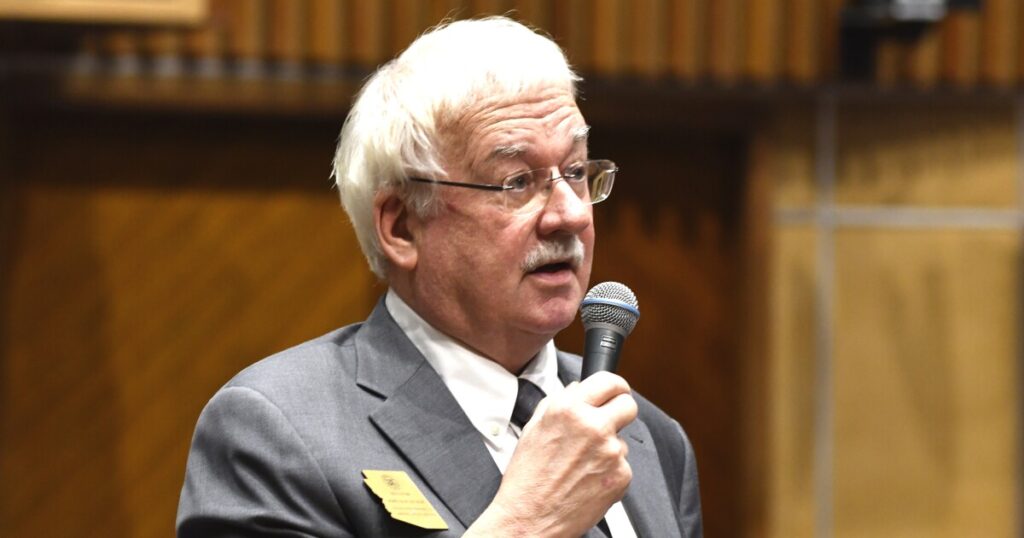
“I was on a town council where I had to certify an election,” said Fountain Hills Republican Sen. John Kavanagh. “I had no idea how the election was run. I didn’t run the election.” Kavanagh argues that it’s unreasonable to compel election officials to endorse results they cannot personally attest to as accurate.
To address this, Kavanagh’s proposed legislation suggests that supervisors and other officials should only “acknowledge without prejudice” the results of an election. “We’ll let them say what we know,” Kavanagh explained, emphasizing that officials would merely be recognizing the results provided by election authorities without confirming their correctness.
Republican officials in Cochise County refused Monday to certify the 2022 election ahead of the deadline amid pressure from prominent Republicans to reject a vote count that had Democrats winning for U.S. Senate, governor and other statewide races.
The legislation aims to prevent issues like those seen in Cochise County during the 2022 election. Republican supervisors Tom Crosby and Peggy Judd initially refused to certify election results over concerns about ballot tabulating machines, despite state assurances of their compliance with legal standards. Judd eventually complied after a court order, while Crosby has a pending trial for his refusal.
This incident is not isolated. In Mohave County, supervisors contemplated manual vote counting due to similar doubts about their equipment, a move they abandoned following a legal warning from Attorney General Kris Mayes.
While Kavanagh’s bill seeks to provide a way for supervisors to fulfill their legal obligations without asserting the accuracy of results, it faces opposition. Adrian Fontes, the current secretary of state, criticized the proposal, suggesting it might enable the spread of election misinformation without accountability. “Our office views SB 1003 as nothing more than an attempt to give elected officials that want the ability to spread misinformation about elections—but not be held accountable—a free pass,” said Calli Jones, Fontes’s press aide.
The Mohave County Board of Supervisors proposed a resolution in support of their Cochise County colleagues who face criminal charges for interfering with the 2022 election.
Jones further argued that the legislation could encourage officials to “stoke conspiracy theories about our elections” without legal repercussions. Kavanagh, however, insists the bill is not about denying election results but ensuring officials are not forced to vouch for results they cannot verify. “This is simply saying it’s not right to make people basically swear that these are correct results when they have no idea if they’re correct or not,” he stated.
SB 1003 is part of a broader political discourse on election integrity in Arizona, following a vetoed proposal last year that would have protected supervisors from legal action if they doubted election integrity based on supposed irregularities. Governor Katie Hobbs, in vetoing that measure, emphasized her commitment to upholding electoral law and accountability.
—
Read More Arizona News