Federal Tax Credit for Private School Tuition Sparks Debate
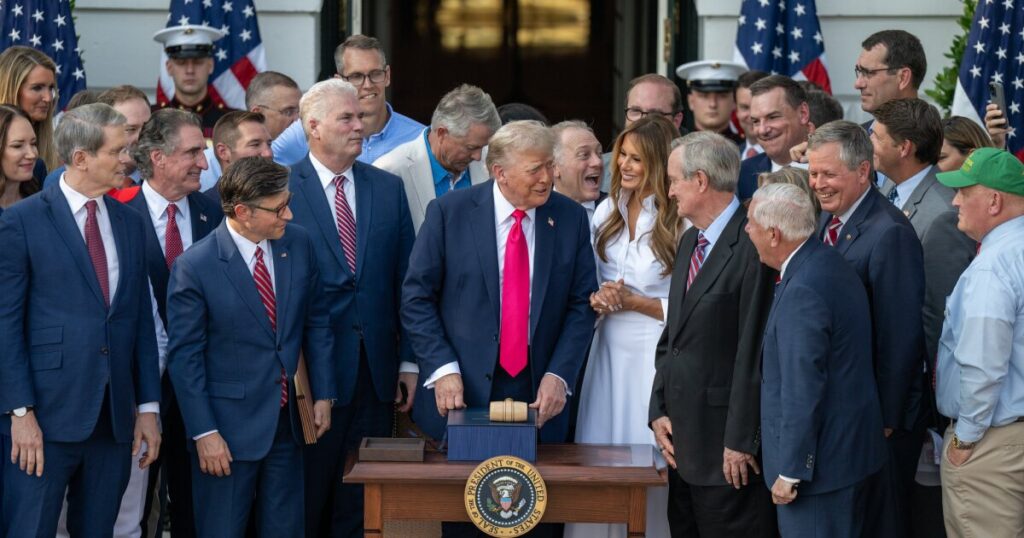
The introduction of a federal tax credit for private school tuition in President Donald Trump’s extensive legislation has sparked a nationwide debate. While proponents argue it offers parents more educational choices, critics claim it primarily benefits wealthy families and harms public education.
This new law permits individuals to donate up to $1,700 to nonprofit scholarship organizations and deduct the same amount from their federal income taxes. Zahava Stadler, project director at New America, a progressive think tank, remarked, “The average private school in the United States is upwards of $12,000 a year. Which makes it very unlikely that this tax credit will let anybody who is not already affluent access private schools.”
The tax credit will be available to taxpayers starting in 2027, contingent on state participation. Arizona’s Democratic Governor, Katie Hobbs, known for criticizing the state’s voucher program, has yet to announce her decision regarding participation. Her office has not responded to requests for comment.
According to the Institute on Taxation and Economic Policy, approximately 4.7 million children are already enrolled in private K-12 schools. If one parent per child utilizes this federal benefit, it could result in an $8 billion reduction in federal revenue. Carl Davis, the institute’s research director, stated, “There is no other cause – not children’s hospitals, veterans’ groups, or disaster relief – that taxpayers can contribute to and see the entire cost of their contribution bankrolled by the federal government.”
Robert Enlow, president and CEO of EdChoice, supports the tax credit, highlighting its permanence in the tax code. However, he notes its limitations, “What is good about this bill is that it is a permanent dollar-for-dollar tax code,” he said, “What is bad about this bill is it’s only $1,700 and it only applies to individuals.” Thirty states currently offer some form of school vouchers or tax deductions, with Arizona providing both.
The federal tax credit will supplement any existing state subsidies, potentially benefiting middle and lower-income families. Arizona’s tax credits for private education allow $3,062 for married couples and about half for individuals. In 2022, Governor Doug Ducey, a Republican, expanded a voucher program initially designed for disabled students to include all students, resulting in more than 84,000 enrollments costing $880 million.
Governor Hobbs has criticized the state’s Empowerment Scholarship Accounts (ESA) program as “unsustainable” and attempted to introduce a means test limiting benefits for higher-income families. These efforts were rejected by the Republican-controlled Legislature.
The federal tax credit law narrowly passed through Congress, with provisions allowing states like California and New York to opt out, reflecting the unpopularity of voucher proposals in these regions. For taxpayers to benefit, their state governors must opt in and submit approved organizations for donations.
Colleen Hroncich, a policy analyst at the Cato Institute, supports school choice but warns that federal involvement could lead to increased regulation, compromising school independence. She also criticizes the federal government’s role in education, stating, “There’s no mention of education in the Constitution. So as far as I’m concerned, the federal government shouldn’t be doing anything regarding education in most cases.”
This move follows the 2017 tax cuts expanding 529 plans to secondary education, part of Trump’s broader efforts to reduce federal oversight of education. Critics like Stadler view the tax credit as a strategic shift of resources away from public schools.
For more stories from Cronkite News, visit cronkitenews.azpbs.org.
—
Read More Arizona News