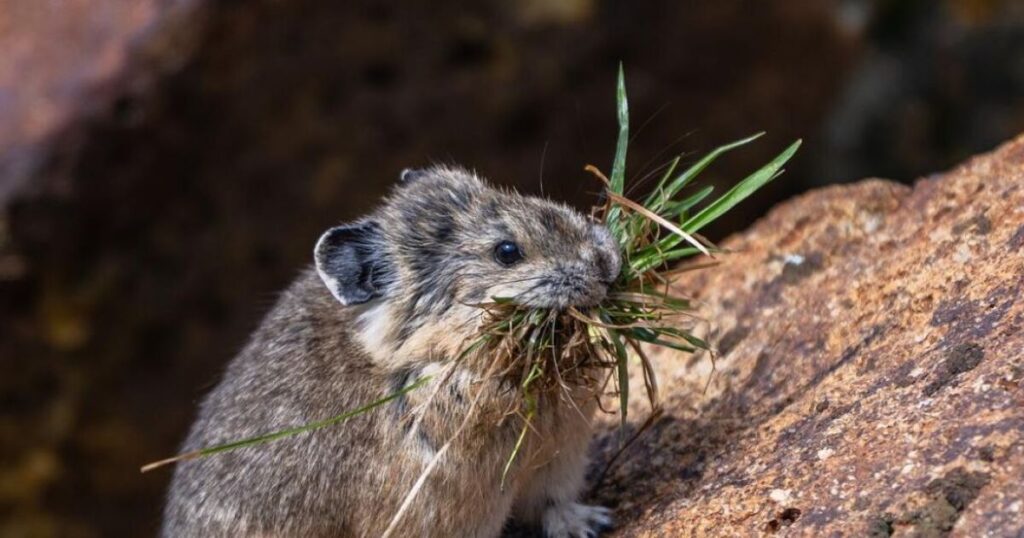
High Altitude Inhabitants: The Story of the American Pika
Among the rugged peaks of the western mountains, a small, charming mammal known as the American pika makes its home. These creatures, akin to rabbits, are easily recognized by their large ears, short legs, and round, furry bodies, measuring around 7 inches in length. They thrive in the rocky environments of talus slopes, typically found at or above the treeline.
PikaNet, a project initiated by the Mountain Studies Institute in Durango, Colorado, is dedicated to studying these elusive animals. By enlisting the help of citizen scientists, PikaNet is able to monitor pika populations across five distinct sites in Colorado’s San Juan Mountains.
Volunteers with PikaNet are trained to identify pikas through various means. While they might catch sight of the animals swiftly moving among the rocks and collecting plant materials during the summer, more often they hear the pika’s characteristic “eeekk” sound. Additionally, observers look for signs such as droppings and the distinctive hay piles that pikas create near their dens.
One of the most significant challenges facing pikas is heat. Even short periods with temperatures in the high 70s can prove dangerous, potentially leading to heat stroke. In addition, these animals rely on snow cover to insulate their dens during the winter months.
Due to their specific habitat needs, pikas serve as a crucial indicator species for the effects of climate change. As temperatures rise, these animals have limited options to escape the heat, since they cannot move to higher altitudes. Research indicates that pikas have already lost about a third of their habitat in regions across the West.
By contributing a decade’s worth of data, PikaNet aims to complement the efforts of other organizations and provide a comprehensive view of how these alpine creatures are coping with environmental changes.
This information was provided by Rose Houk and produced by KNAU and the Sustainable Communities Program at Northern Arizona University.
—
Read More Arizona News