During the festive holiday period, author Scott Thybony contemplates several pivotal life lessons that reshaped his outlook. In his recent Canyon Commentary, Thybony emphasizes the value of diving into pursuits, even when one might not feel adequately prepared for the challenges ahead.
One Christmas, Thybony embarked on compiling a series of anecdotes for his son, pulling from his past assignment field notes to offer insights into the broader world his son would encounter.
In a segment titled “Learning the Ropes,” Thybony discovered a recurring theme: the importance of breaking free from constraints and directly engaging with the world.
Robert Bal, a traditional woodcarver from New Mexico, embodies this lesson. Unlike the conventional path of inheriting the craft through family tradition, Robert taught himself. When inquiring about his learning process, he shared an enlightening encounter with his friend Don Pablo.
Upon returning home after years away, Robert found Don Pablo living comfortably, quite the change from his previous life as a poor woodcutter. Intrigued, Robert asked about the transformation.
“I’m a stone mason,” Don Pablo declared with pride.
“But Don Pablo,” Robert remarked, “you’re a woodcutter.”
“Don’t be a fool. See that wall over there?” Don Pablo gestured to a beautifully constructed stone wall. “I built it. Don’t ever think that you can’t do something. Do it and the job will teach you.”
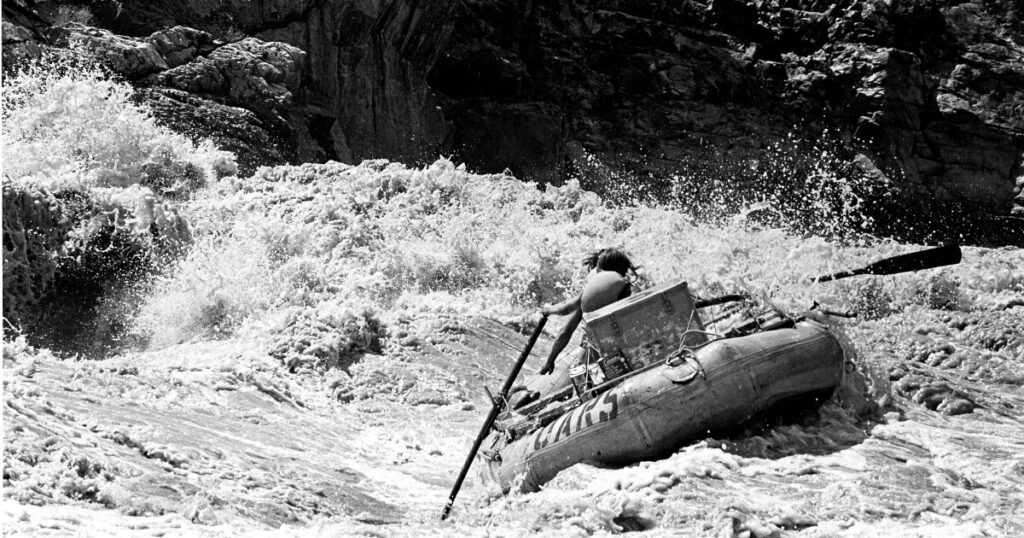
Some individuals must learn through direct experience. Lowell Lundeen, a swamper on the Colorado River for the Grand Canyon Dories, found himself in such a situation. His tasks involved bailing out the baggage boat and watching the boatwoman navigate rapids. Everything went well until they camped above the tumultuous Crystal Rapid.
Due to a family emergency, the boatwoman had to leave, leaving the raft without a rower. Lowell, unsure of what to do, asked the trip leader for advice.
“It’s your boat now,” the leader told him. “It’s up to you to get it downriver.”
Facing the formidable whitewater with no prior experience, Lowell set out the next morning. Although the waves battered him, he successfully navigated through without capsizing. “You’re not much of a boatman,” the trip leader remarked, “but you’re a good survivor.”
Another illustration is climber Todd Skinner, who targeted the daunting Great Trango Tower in the Karakoram Range. Described by Outside magazine as “the most fearsome big wall on the planet,” the challenge was immense.
Upon seeing the peak, Todd was taken aback. The massive granite formation loomed at over 20,000 feet, with a smooth 3,000-foot face.
“We were scared,” Todd admitted. “If we had seen the mountain first, we would never have tried to climb it.”
Realizing the need to act swiftly to overcome fear, they began their ascent and decided to remain on the vertical face without descending.

“Momentum,” he stated, “means more than strength.”
Despite enduring cuts that wouldn’t heal in the thin air and surviving a perilous nine-day storm, the team persevered until they reached the summit. Initially, Todd had proposed that the worst-case scenario would be a fifteen-day climb, yet they spent a grueling sixty days on the wall.
Todd humbly noted, “The mountain,” he said, “makes the climber.”
Scott Thybony resides in Flagstaff and shares his Canyon Commentaries through KNAU Arizona Public Radio, airing the last Friday of each month.
A landscape’s dramatic features can overwhelm first-time visitors. But sometimes the places that exist on a more human scale can have a greater impact. In his latest Canyon Commentary, author Scott Thybony tells how this happened to novelist Willa Cather in Walnut Canyon.
—
Read More Arizona News