Senate Hearing Scrutinizes DHS Training Amid Controversy
In a week marked by intense scrutiny, top Department of Homeland Security officials appeared before Congress to address concerns over immigration enforcement in Minneapolis under the Trump administration. The proceedings took center stage as criticisms continue to mount regarding the methods employed by immigration officers.
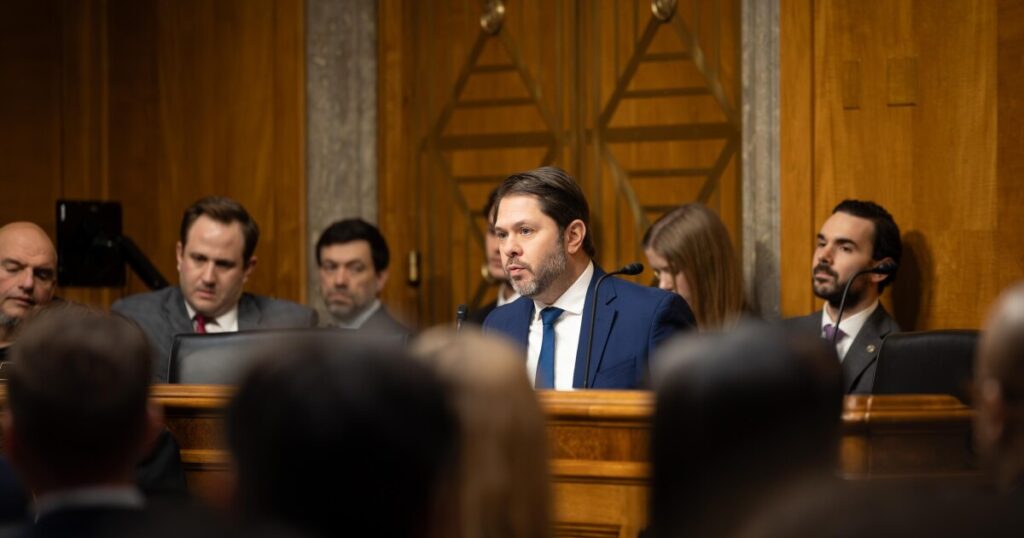
Arizona Senator Ruben Gallego played a prominent role in the hearings, directing pointed questions at key figures such as Acting ICE Director Todd Lyons and Acting Customs and Border Protection Commissioner Rodney Scott. A central theme of his inquiry was the training practices for officers from both agencies.
During Thursday’s session with the Senate Committee on Homeland Security and Government Affairs, Gallego posed a direct question to Scott: “Mr. Scott, have you ever been trained to use, maybe a pistol, to pistol whip somebody when you’re trying to detain them?” Scott, along with Lyons, responded that such an action is not part of their standard training due to the risk of accidental discharge.
Gallego expressed concern over repeated instances caught on video, suggesting potential issues within the command structure. “And the fact that they’re doing that, tells me there is a command structure element, because we consistently see it, consistently see it all the time, on video,” he remarked.
The senator also questioned Lyons about the conduct of an agent involved in a fatal incident last month in the city, particularly highlighting the use of a cellphone to record the event. Gallego criticized the practice, stating, “Maybe you shouldn’t be holding a camera, trying to be an influencer, and holding a weapon at the same time.” He further argued that such multitasking compromises the ability to appropriately assess situations and make critical decisions.
Lyons clarified that agents resort to using cellphones for documentation when body cameras are unavailable. In a prior hearing, he revealed that out of 13,000 ICE agents, approximately 3,000 are equipped with body cameras.
—
Read More Arizona News