As the Colorado River continues to dwindle, seven states that depend on this vital waterway are still struggling to agree on a sustainable plan for its use. At the heart of this challenge is the need to sustain both agricultural and urban demands in the U.S. West.
This pressing issue drew attention at the Colorado River Water Users Association’s annual conference in Las Vegas, where representatives from California, Nevada, Arizona, Colorado, New Mexico, Utah, and Wyoming, alongside federal officials and tribal leaders, sought solutions.
After missing a prior deadline in November, these states now face a new target set by the U.S. Bureau of Reclamation for February 14. However, Nevada’s chief negotiator expressed skepticism about reaching a comprehensive agreement by then.
“As we sit here mid-December with a looming February deadline, I don’t see any clear path to a long-term deal, but I do see a path to the possibility of a shorter-term deal to keep us out of court,” said John Entsminger of the Southern Nevada Water Authority.
An Indispensable Water Source
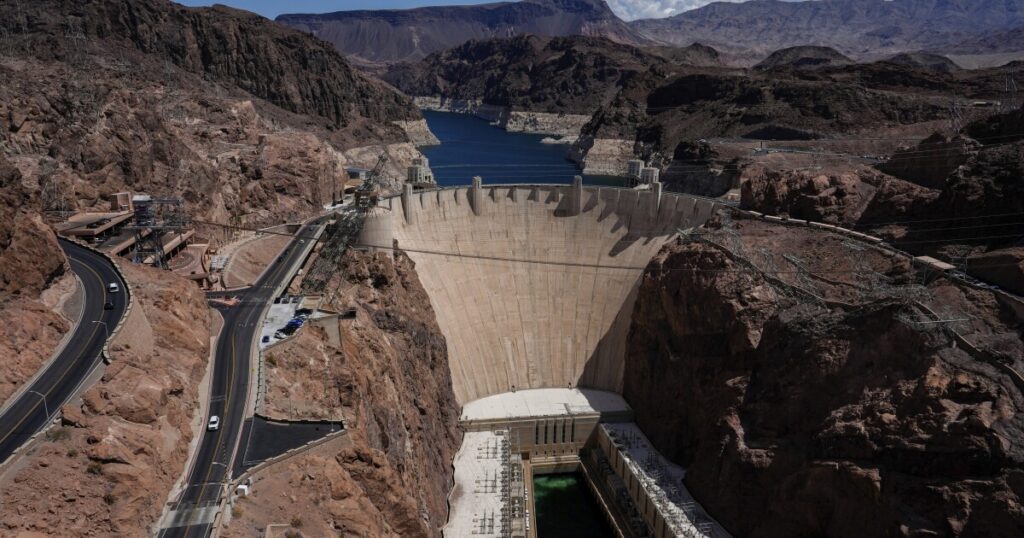
The Colorado River supports over 40 million people across the U.S., Mexico, and Native American tribes. It is crucial for agricultural production, particularly in California and Arizona, where it irrigates winter vegetables. Additionally, the river’s water and electricity are vital for homes and businesses throughout the region.
Ongoing drought conditions, excessive usage, and rising temperatures have intensified the urgency for a new agreement, as current water conservation measures are set to expire in 2026. Despite years of negotiations, a new framework remains elusive.
Negotiators missed a deadline to reach an agreement on Colorado River allocations, spurring a bipartisan call to action from Arizona leaders to the U.S. Department of the Interior.
The federal government encourages the states to broker their own resolution. However, failure to reach consensus could lead to a federally imposed plan, potentially resulting in prolonged legal disputes.
The conflict extends beyond state lines to individual municipalities, tribal nations, and numerous water agencies, all with vested interests. California alone boasts over 200 water agencies, each representing distinct constituencies.
“It’s a rabbit hole you can dive down in, and it is incredibly complex,” commented Noah Garrison, a water researcher at the University of California, Los Angeles.
Stalemate in Negotiations
During a recent panel discussion, state representatives remained steadfast in their positions, highlighting their respective conservation efforts and arguing why they cannot bear additional reductions. Suggestions for short-term measures, such as adjusting water releases from key reservoirs like Lakes Powell and Mead, were discussed.
Lower Basin states proposed cutting 1.5 million acre-feet annually to address water losses due to evaporation and absorption. However, they expect Upper Basin states to make equivalent concessions. Upper Basin representatives contend they should not be required to cut more, as they do not fully utilize their water allocation and must send water downstream.
“Our water users feel that pain,” stated Estevan López, representing New Mexico in the Upper Colorado River Commission. These states advocate for less water to be released from Lake Powell to Lake Mead.
Tom Buschatzke from the Arizona Department of Water Resources noted the absence of compelling proposals from the Upper Basin to justify additional concessions from Arizona lawmakers.
In the upcoming weeks, the Bureau of Reclamation is expected to outline various options, though it will refrain from endorsing a specific plan. Scott Cameron, the bureau’s acting commissioner, urged collaboration to avoid costly litigation.
“Cooperation is better than litigation,” he emphasized at the conference. “The only certainty around litigation in the Colorado River basin is a bunch of water lawyers are going to be able to put their children and grandchildren through graduate school. There are much better ways to spend several hundred million dollars.”
A group of nonprofits is calling for reductions to water demand, changes at Glen Canyon Dam and more transparent negotiations.
—
Read More Arizona News