The debate over the management of public lands in the United States is intensifying as the Trump administration proposes selling portions of these lands to state, tribal, and local governments. This initiative, put forward by the Interior Department, is intended to “decrease the size of the federal estate,” although details remain sparse.
According to agency officials, the plan would allow the government to concentrate its resources on lands deemed “nationally significant,” a term which has yet to be clearly defined. The specifics on which parcels might be sold and their locations are still undisclosed.
Opposition to the proposal has emerged swiftly, including from some lawmakers and former Interior Secretary Ryan Zinke, signaling potential challenges in Congress, especially with Democrats set to take the majority soon.
Focus on Energy and Economic Development
The Interior Department’s strategic plan for the next five years also advocates for land transfers and exchanges to boost energy production, aligning with the administration’s pro-fossil fuel stance. This underscores a broader perspective on public lands as assets primarily for use rather than conservation.
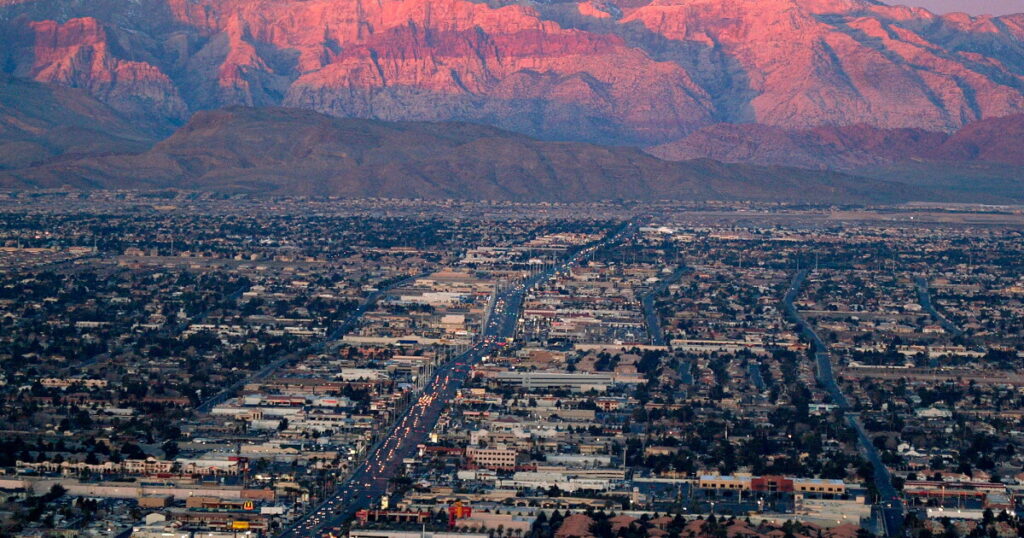
With oversight of over 750,000 square miles—larger than Texas and California combined—the Interior Department is pivotal in the ongoing debate about federal land control. Most of these lands are located in Western states, where government ownership sometimes restricts development opportunities, as is the case with nearly 80% of Nevada being federally controlled.
Proceeds from any sales would partly fund conservation efforts, although the feasibility of these sales without congressional support remains uncertain.
Legislative and Public Challenges
Mark Squillace, a natural resources law professor, notes that federal law imposes significant restrictions on selling public lands. Only lands not under protected status and meeting specific criteria, like economic unmanageability or serving public objectives, can be sold.
Ryan Zinke’s office has stated his strong opposition to the sale or transfer of public lands, intending to vote against related legislation before his congressional term ends.
Democratic leaders, empowered by recent election successes, have committed to resisting any land sales. Sen. Martin Heinrich of New Mexico emphasized that federal lands “belong to the American people, not private interests looking to cash in.”
Similarly, Rep. Jared Huffman of California vowed that Democrats would block such measures, asserting, “Americans love their public lands and sent a clear message last week: the Trump administration’s schemes to auction off our treasured resources and silence opposition must stop now.”
Previous Efforts and Future Prospects
Earlier attempts by Western lawmakers to sell large land areas in states like Utah and Nevada failed due to bipartisan resistance. For example, Sen. Mike Lee of Utah had proposed selling over 2 million acres to alleviate urban growth pressures.
The current plan outlines the Interior Department’s strategies from 2026 to 2030, yet future administrations may not adhere to it. The plan aligns with state and local officials’ calls for more control over activities such as mining, drilling, and recreation.
In a related initiative, Interior Secretary Doug Burgum and HUD Secretary Scott Turner have suggested using “underutilized” federal land for affordable housing, a need estimated at 7 million homes. This approach mirrors efforts under President Biden, albeit on a smaller scale.
State Route 89A through Oak Creek Canyon will be closed indefinitely after recent flooding damaged pavement, undermined the road and caused major soil erosion.
—
Read More Arizona News