Trump’s Monument Reductions in Utah: Land Management Reimagined
In a significant shift in federal land management policy, President Donald Trump announced substantial reductions to two national monuments in Utah on Monday. This move reverses protections established by previous administrations for lands considered sacred by many Native American groups.
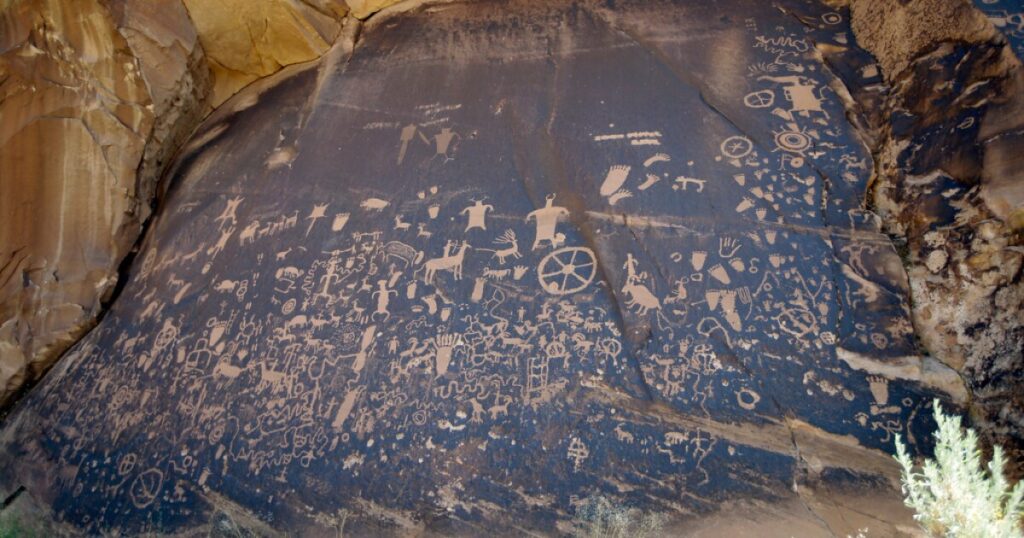
The monuments in question, Bears Ears and Grand Staircase-Escalante, are renowned for their ancient cliff dwellings, petroglyphs, and breathtaking canyons. However, they also sit atop valuable coal and uranium deposits that state officials are eager to develop.
Using his authority under the Antiquities Act, Trump issued proclamations to reduce the size of these monuments by about 90%. This action is part of a broader Republican-led effort to reshape the management of public lands, expanding opportunities for drilling, mining, and logging while pulling back on conservation and species protection efforts.
“They took the land from the people quite honestly,” Trump stated at a White House event. “We’re giving it back.”
Grand Staircase-Escalante was established by President Bill Clinton in 1996, and Bears Ears was designated by President Barack Obama in 2016, both utilizing the Antiquities Act to protect areas of historical and cultural significance.
Davina Smith-Idjesa, from the Navajo Nation and co-chair of the Bears Ears Inter-Tribal Coalition, expressed disappointment, calling the decision “heartbreaking” and criticized federal officials for not adequately consulting with affected tribal nations.
“From a Navajo perspective, Bears Ears is not simply a piece of federal public land,” Smith-Idjesa emphasized. “This is a living cultural site that holds our histories, our ceremonies, our traditional foods and medicines and our ancestors’ footprints.”
Utah officials, long opponents of the monument designations, argue that the state should manage its lands. Trump had already reduced the size of these areas during his first term, referring to their designation as a “massive land grab.” The monuments together cover over 3.2 million acres, an expanse almost equal to Connecticut.
“This is a big day for Utah,” declared Gov. Spencer Cox alongside Trump at the White House. “These monument designations are supposed to be the smallest area as possible to protect the antiquities.”
Bears Ears holds special significance as the first national monument proposed by tribal nations, home to ancestral villages, ceremonial sites, and features integral to the narratives of tribes such as the Navajo, Hopi, and Zuni.
The national monument status not only safeguards significant geological and archaeological features but also restricts mining and drilling activities. Advocates of Trump’s reductions argue these protections are overly expansive, restricting access to key mineral resources.
Biden had restored and expanded more than a dozen monuments and aimed to conserve 30% of U.S. lands and waters by 2030, a policy direction starkly contrasted by Trump’s resource extraction focus.
While the Supreme Court has upheld the president’s power to create monuments, the extent of authority to alter existing ones remains contested, drawing significant opposition from Democrats and conservationists.
Efforts by some Republican lawmakers to transfer federal lands to state control have largely failed, with proposals to sell large tracts of public lands removed from major legislative bills.
—
Read More Arizona News