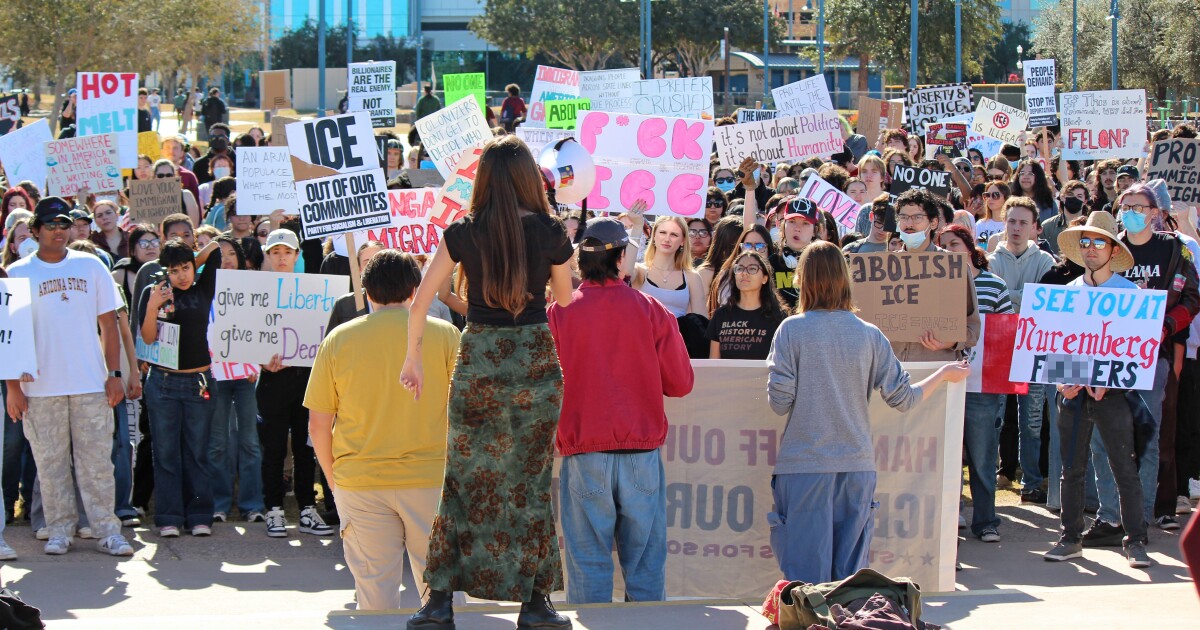
In a time of heightened immigration enforcement, many in the U.S. immigrant community are grappling with new challenges and fears. For Maria Dorie, who was brought from Mexico to the United States at the age of three, the current climate feels unprecedented. Living in Tucson during the era of Arizona’s SB 1070 law, Dorie is no stranger to the complexities of immigration enforcement. However, she notes a distinct shift in the atmosphere today.
“I feel like everything in the past — it does not compare to what’s going on now,” Dorie expressed. “At least back then, it felt like, ‘OK, they took my mom and dad, but we were able to see them the next week.’ Now it’s like, ‘they took my mom and dad, and I don’t know where they’re at.’”
Rising Concerns
Since President Donald Trump began his second term, executive orders on immigration have impacted various aspects, from asylum processes at the border to citizenship rights. Carolina Silva, executive director of Scholarships A-Z, explains that the situation is becoming increasingly precarious for immigrant families.
“Even if you have DACA, or you’re on a visa, or you have [Temporary Protected Status], you unfortunately are not going to be safe … Now, even as a citizen, you might not be safe,” Silva stated. She highlights the challenges in locating and securing the release of detained individuals.
Data supports these concerns. An analysis by the American Immigration Council reveals an 87% decrease in discretionary releases from ICE detention, with nearly 69,000 people currently held, compared to about 40,000 when Trump first took office. More than 70% of those detained do not have criminal records, a significant shift from previous enforcement practices.
Kathleen Bush-Joseph from the Migration Policy Institute notes an increase in “in-community arrests,” which are happening in public spaces and workplaces. “This is very visible, really public effort, because it’s happening in daylight, in the suburbs, where people live, at their workplaces,” she said.
Recent restrictions have further decreased border arrests, averaging just over 7,000 a month, the lowest since the 1970s. The Trump administration has deployed approximately 7,000 troops to the border, costing about $1.3 billion, according to a report by MPI.
Impact on Communities

Local communities like Tucson are experiencing these changes firsthand. Vice Mayor Lane Santa Cruz describes the situation as a “political theatre” that erodes trust. The city is seeking ways to limit ICE’s use of local property and has prepared contingency plans for potential federal interventions.
Maria Dorie, meanwhile, faces difficult conversations with her family about potential detentions. “It feels like the conversation of death, like if my mom dies, who will be in charge,” she confided. Her family’s concerns extend to everyday activities, as they navigate their new reality.
Dorie’s fears are not just about deportation but about the uncertainty of being found if detained. The situation is a stark reminder of the ever-evolving challenges faced by immigrant communities in the U.S.

This is Part 1 of a 2-part series exploring the impact of the Trump administration’s immigration policies on border communities.
—
Read More Arizona News