The Hidden Cycle of Ponderosa Pines: Needle Shedding Explained
While evergreen trees are renowned for retaining their greenery throughout the seasons, ponderosa pines introduce a fascinating exception to this rule. Unlike their deciduous counterparts, these conifers partake in a unique annual ritual of needle shedding.
In a typical autumn, the ponderosa pine releases bundles of needles, casting them to the forest floor. This is not a complete shedding like deciduous trees but rather a partial one, with only about 20-25% of the needles falling each year. This strategic loss allows the tree to conserve vital nutrients like nitrogen and phosphorus, which are reabsorbed into the tree’s system.
Each needle is equipped with a resilient, waxy coating, providing a robust defense against drought conditions. These needles decompose at a glacial pace, sometimes taking up to a decade to completely break down. However, their accumulation around residences poses a dual threat: they can become a significant fire hazard and hinder moisture absorption, affecting the growth of nearby grasses and flowers.
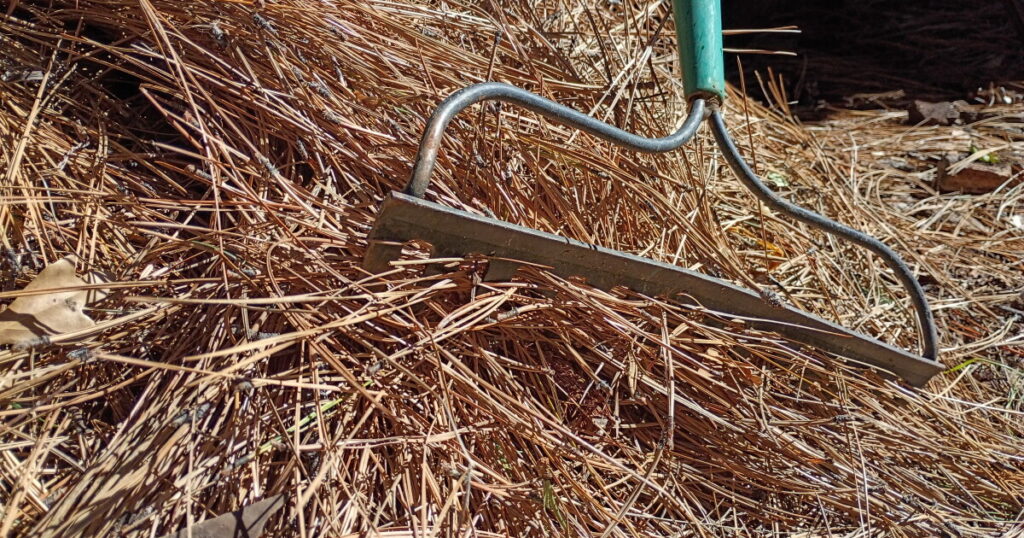
For residents living among these towering giants, regular raking of fallen needles is not just a chore but a prudent safety measure. These needles, once gathered, find new life as garden path liners, mulch, or even in the creation of artisanal pine needle baskets. Such practices reflect a harmonious existence with the majestic ponderosa forests of the Southwest, underscoring the importance of having a rake within reach.
This Earth Note was written by Rose Houk and produced by KNAU and the Sustainable Communities Program at Northern Arizona University. It originally aired in 2002.
—
Read More Arizona News