The Unseen Perils of Quicksand on the Colorado Plateau
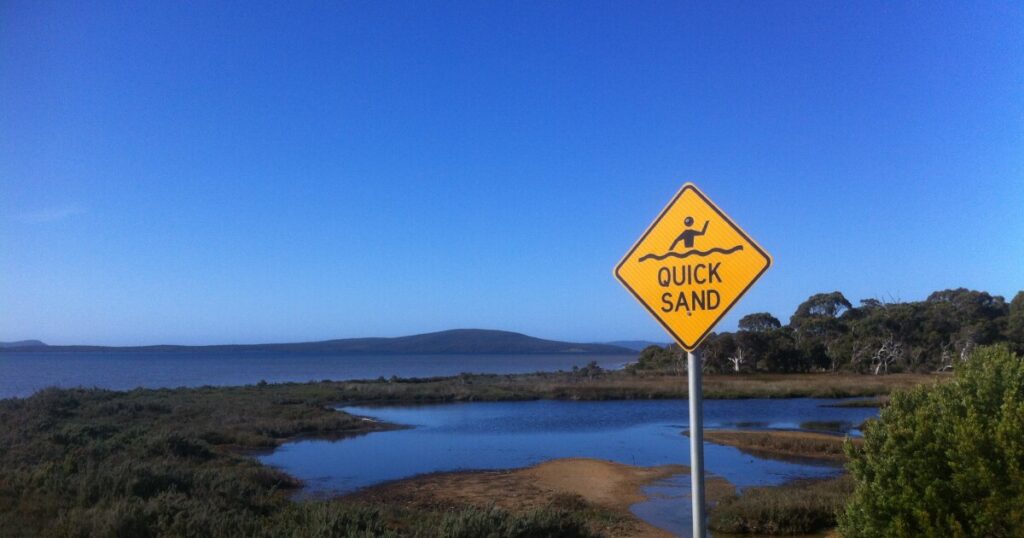
In the serene landscapes of the Colorado Plateau, lurking beneath certain low-lying areas, quicksand can unexpectedly appear. This natural hazard is prevalent near water bodies such as lake shores and creek beds, notably around Paria Canyon and Lake Powell.
Quicksand forms through a delicate process where sand and clay particles are suspended in water. This mixture, appearing stable, is held together by weak electrical charges between clay particle surfaces. However, the introduction of salts into the water can reduce these stabilizing forces, rendering the quicksand even more precarious.
A slight pressure can cause this seemingly solid surface to collapse dramatically, decreasing the viscosity of quicksand almost a million times. Despite its appearance as solid ground, stepping on quicksand leads to an abrupt give-way, as dense sediments re-settle around the feet, requiring significant effort to escape.
Interestingly, while quicksand’s density is about twice that of the human body, it prevents a person from sinking entirely. Typically, an individual may only sink to waist level. Although not inherently life-threatening, the real dangers of quicksand arise from potential dehydration, hypothermia, or rising water levels while trapped.
If caught in quicksand, maintaining composure is crucial. Gently rocking your legs can help re-liquefy the surrounding sand, facilitating escape. Once free, it’s advisable to spread your body weight and crawl to more stable ground.
This Earth Note was authored by Diane Hope and produced in collaboration with KNAU and the Sustainable Communities Program at Northern Arizona University.
“`
—
Read More Arizona News