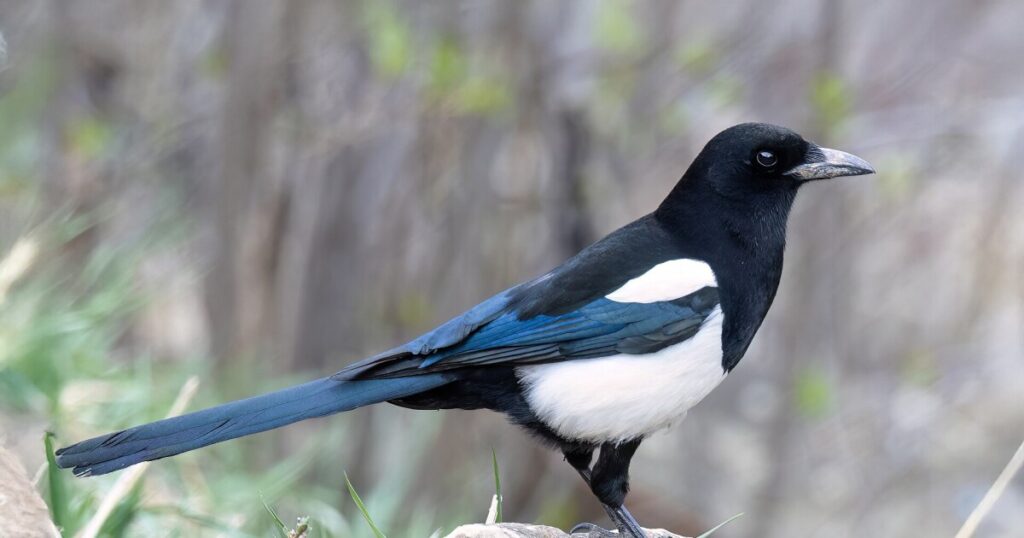
The Intriguing Life of the Black-Billed Magpie: More Than Just a Birdyard Bully
The black-billed magpie, a striking member of the corvid family, often finds itself at the center of controversy. Known for its bold black and white plumage and long, elegant tail, this bird is as recognizable as it is misunderstood.
These birds are notorious for their boisterous behavior and are frequently labeled as nuisances. They have a penchant for rummaging through trash, targeting crops, and even preying on other animals. Despite their reputation, magpies are an integral part of the ecosystem, primarily inhabiting the intermountain West. Curiously, they seldom venture into Arizona, a mystery that continues to intrigue ornithologists.
Magpies thrive along streams, pastures, and roadsides, with a diet that mainly consists of insects and rodents. However, their tendency to consume the eggs and young of other birds adds to their notoriety. Their robust nature is evident in their nesting habits; they build large, domed nests with meticulous care, using sticks and mud, and they often form lifelong pair bonds.
During the breeding season, which can begin in winter, both male and female magpies participate in nest building. The male plays a vital role in feeding the female during the incubation period, which lasts two to three weeks. Once the chicks hatch, these birds become fiercely protective of their territory. Fascinatingly, some studies have noted cooperative behavior between magpies and hawks in safeguarding their offspring.
Upon vacating their nests, other birds and animals frequently take over, benefiting from the magpies’ architectural skills. Despite their troublesome reputation, magpies are safeguarded by law, making it illegal to harm them or disrupt their nests.
This Earth Note is funded in part by Pink Jeep Tours, written by Rose Houk and produced by KNAU and the Sustainable Communities Program at Northern Arizona University.
—
Read More Arizona News