Innovative Wearable Technology Aims to Revolutionize Elder Care and Frailty Diagnosis
In a significant stride towards enhancing elder care, researchers at the University of Arizona have unveiled a pioneering wearable device. This innovation is poised to transform how frailty is diagnosed and managed in older adults, potentially reducing incidences of falls and the need for hospitalization.
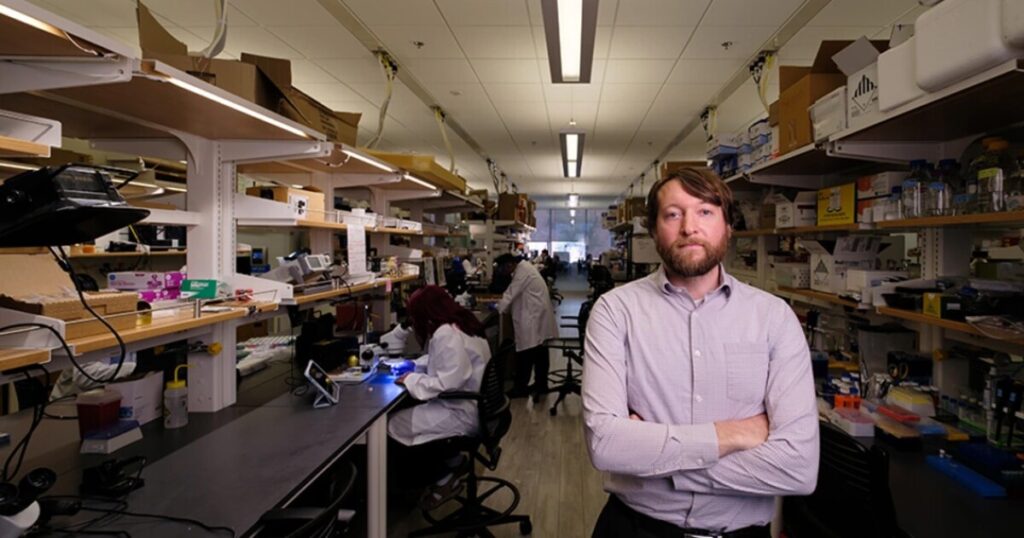
Developed under the guidance of biomedical engineering professor Philipp Gutruf, the device is a sophisticated mesh sleeve designed to be worn on the leg. It leverages artificial intelligence to minimize the necessity for extensive data transfers and frequent recharging, offering a practical solution for continuous monitoring.
Gutruf elaborates on the testing phase, stating, “So we have tested this technology on more than 20 people. So the devices, you can think about them as like a mesh that you wear over our sleeve, that you wear on your arm or your leg — in this particular case, the leg.”
While the initial trials have been promising, the pathway to commercial availability will require further development. Gutruf notes that a larger study is essential, involving hundreds of patients to comprehensively assess the device’s efficacy and safety. “In order to get this to the market, we need to still run a larger study with trying to gather resources at the moment to do that,” he explained.
The ultimate aim of this project is to streamline the diagnosis process, making it more efficient and accessible. For those interested in the detailed findings and methodology, the research has been published in the Nature Communications journal.
—
Read More Arizona News