Often, the most impactful experiences emerge not from grandeur landscapes but from those that resonate on a personal level. In his latest Canyon Commentary, author Scott Thybony recounts how novelist Willa Cather was profoundly influenced by her journey through Walnut Canyon, a site now closed to the public. Accompanied by archaeologists who rediscovered the ancient Water Trail, Thybony retraces Cather’s steps.
Willa Cather’s Transformative Journey
In 1912, the celebrated novelist Willa Cather embarked on a three-day exploration of Walnut Canyon near Flagstaff. Describing it as “a cleft in the heart of the world,” this experience marked a pivotal moment in her life.
Cather, who had become disenchanted with her successful magazine editing career in New York City, sought rejuvenation. Upon arriving in Winslow, Arizona, she felt ready for change. Although she had paused her writing, her mind brimmed with stories. “I dream about them at night,” she confided to a friend. These dreams ultimately inspired her novel, The Song of the Lark, setting the stage for her literary success.
Aime Dupont, New York/Willa Cather Archives
Rediscovery of the Ancient Water Trail
Cather was captivated by the ritualistic atmosphere of the canyon as she traversed the ancient Water Trail in her canvas shoes with red rubber soles, which she deemed “good for rock climbing.” The trail, once used by the Sinagua people to collect water from canyon basins, had become obscured over time. It wasn’t until 2008 that park archaeologist Ted Tsouras and his team uncovered the trail once more.
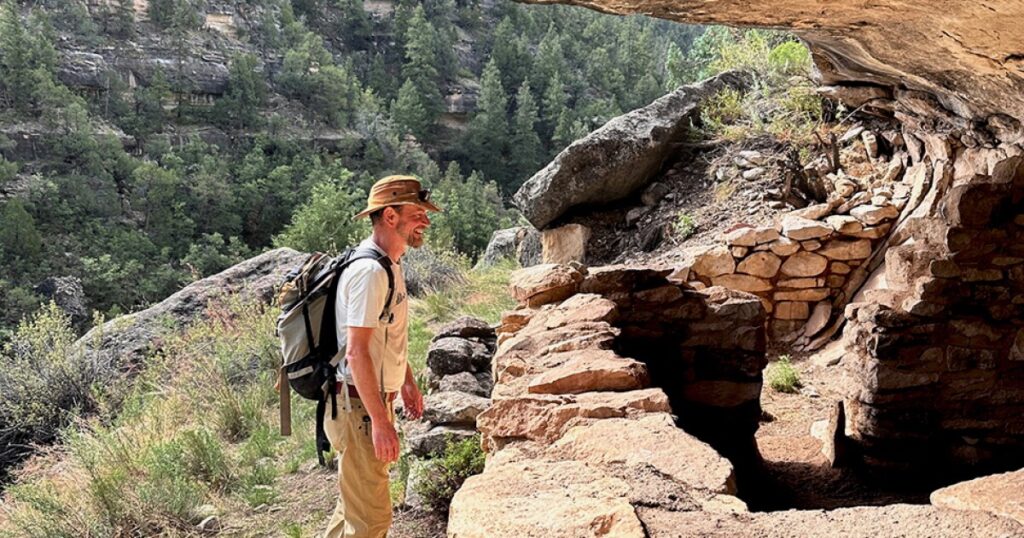
Thybony, along with Tsouras and Bernie Netseway, a Hopi archaeologist from the original discovery team, explored the trail. They stumbled upon a well-preserved route, initially unaware that they were on the ancient path. Tsouras was the first to notice the substantial stonework, leading to the realization that they had discovered the long-lost Water Trail.

Unveiling the Past
The rediscovered trail revealed imposing boulders, some weighing over two tons, suggesting the community’s collective effort in its construction. The team conducted a comprehensive study to document this remarkable feature.
As the group descended, they encountered remnants of the Sinagua civilization, including a two-room cliff dwelling. The masonry, tinted like antique ivory, seamlessly integrated with the cliff’s geology, aligning with Cather’s descriptions. She once wrote of the “empty houses” as being “haunted by certain fears and desires; feelings about warmth and cold and water and physical strength … A dream had been dreamed there long ago, in the night of ages …”
As they ascended from the canyon, a storm rolled in, showering the landscape with much-needed rain. The experience, like Cather’s, left an indelible imprint on those who traversed the ancient trail.
Scott Thybony is a Flagstaff-based writer. His Canyon Commentaries are produced by KNAU Arizona Public Radio and air on the last Friday of each month.
—
Read More Arizona News