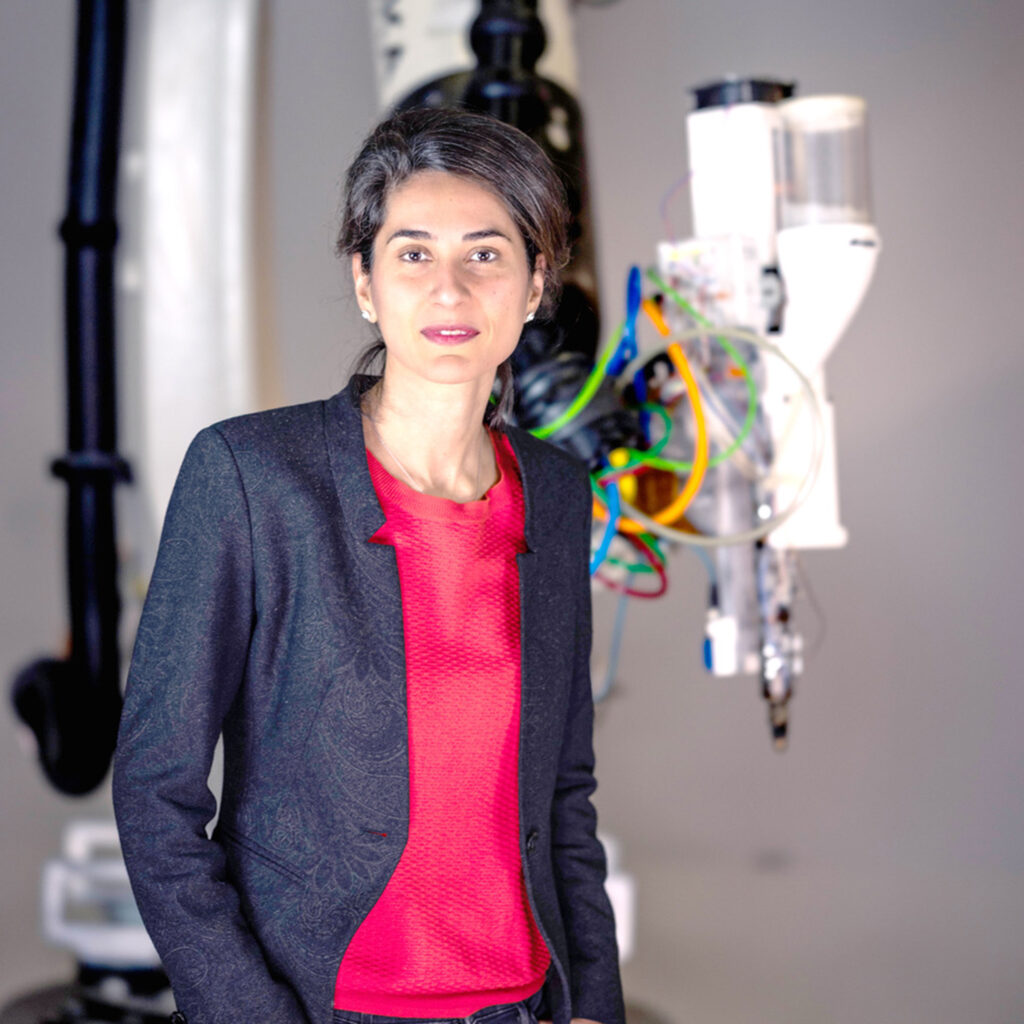
Modern urban development faces significant challenges, including labor shortages and ambitious energy goals, alongside climate risks like flooding, earthquakes, and wildfires. Mania Aghaei Meibodi, assistant professor of architecture at Taubman College, views these challenges as opportunities to innovate in design and construction. Utilizing 3D printing and machine learning, she aims to revolutionize how cities are built, boosting performance and reducing waste in construction.

Aghaei Meibodi emphasizes that 3D printing and machine learning can enhance the built environment by enabling mass customization and increasing productivity. Her work focuses on computational design for large-scale manufacturing, where machine learning aids in recognizing patterns for 3D printing intricate structures. “AI works with designers to predict and generate high-performance components,” she stated. The integration of robotics in construction allows for the creation of complex, high-performance parts that are optimized for material use.
Developing this capability involves designing computational models and robust robotic 3D printing systems. Aghaei Meibodi’s team at Taubman College’s Digital Architecture Research and Technology (DART) Laboratory has been at the forefront of these innovations. Supported by a National Science Foundation CAREER Award, her project aims to advance robotic 3D printing of reinforced concrete. “It’s an opportunity for us to be at the frontier of the field,” Aghaei Meibodi said.

The research aims to overcome the challenges posed by the variable properties of concrete and the vast data required for machine learning. The goal is to radically transform the construction industry by reducing environmental impacts and addressing housing shortages. Aghaei Meibodi notes that current 3D printed elements are not aesthetically or functionally superior to traditional methods, but the potential for improvement is vast.
The DART team is developing machine-learning models that learn from the entire printing process. These models will help predict printability, generate new geometries, and recommend control parameters. By validating these methods through large-scale demonstrations, they aim to showcase the advantages over conventional techniques. “These forms need collaboration between humans and AI to ensure reliable printing,” Aghaei Meibodi explained, emphasizing the role of AI in solving complex architectural challenges.
The project also supports educational initiatives, developing curricula to prepare a new generation for skilled roles in 3D printing and construction technology. Taubman College is introducing new courses and workshops, and even creating educational tools for young learners to understand robotic construction. “AI-driven, robotic 3D printing in construction will create new job opportunities,” Aghaei Meibodi said, highlighting the future demand for diverse skill sets in this evolving field.
NOMINATE A SPOTLIGHT
- The weekly Spotlight features faculty and staff members at the university. To nominate a candidate, email the Record staff at urecord@umich.edu.
Aghaei Meibodi envisions a future where these technologies lead to new markets and collaborations across industries. “You could imagine startups specializing in 3D printing homes or reinventing building elements,” she said, noting the untapped potential of this technology. As these efforts advance, breakthroughs in design and construction are anticipated, marking the beginning of a transformative era in building innovation.
—
Read More Michigan News