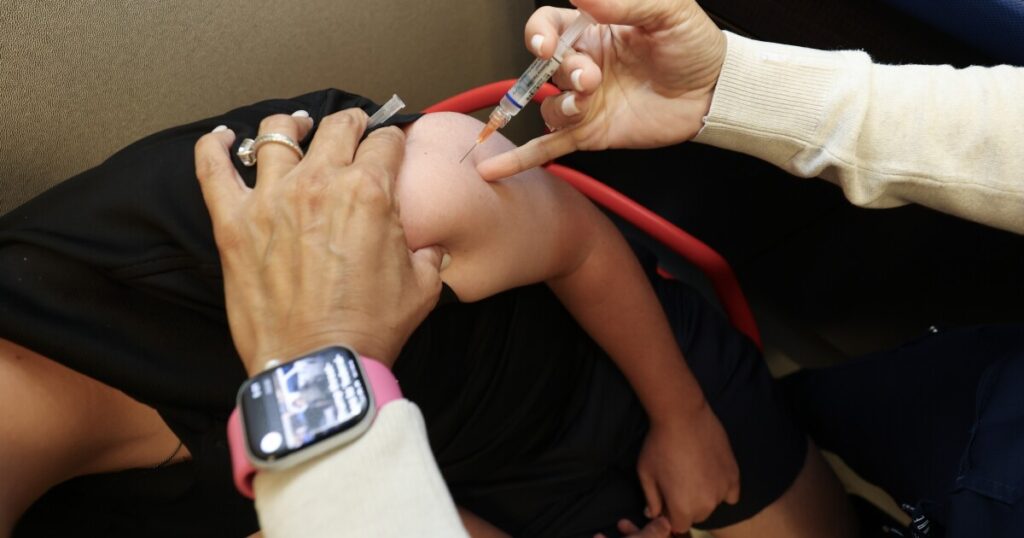
A Shift in Childhood Vaccination Recommendations: CDC Reduces Routine Inoculations
In a move that marks a significant shift in U.S. health policy, the Centers for Disease Control and Prevention (CDC) has reduced its list of vaccines recommended for all children from 17 to 11. This adjustment reflects a new approach to vaccinations, emphasizing individualized decision-making over blanket recommendations.
The updated guidelines now suggest that vaccines such as those for rotavirus, hepatitis A and B, meningitis, and seasonal flu, which were once universally recommended, are now advised primarily for high-risk groups or following a discussion with a healthcare provider, under a process known as “shared decision-making.”
Health Secretary Robert F. Kennedy Jr., a long-time critic of certain childhood vaccines, has spearheaded this initiative to streamline the immunization schedule. The move is in response to a presidential memorandum that tasked the Department of Health and Human Services and the CDC with comparing the U.S. vaccine recommendations with those of other developed nations. On the same day this directive was issued, vaccine advisers voted to remove the universal recommendation for newborns to receive the hepatitis B vaccine immediately after birth.
The decision was influenced by evidence from countries like Denmark, which administers fewer vaccines, and insights from legal experts in vaccine-related litigation. “President Trump directed us to examine how other developed nations protect their children and to take action if they are doing better,” Kennedy stated in a press release. He emphasized the importance of aligning U.S. policies with an international consensus while enhancing transparency and informed consent.
This shift came after a “comprehensive scientific assessment” was carried out by Martin Kulldorf, chief science officer at a unit of HHS, and Tracy Beth Høeg, acting director of the FDA’s Center for Drug Evaluation and Research. This examination compared the U.S. schedule with that of 20 other nations.
Unlike previous policy alterations, these adjustments were made without public input or consultation with vaccine manufacturers, bypassing the typical process involving the CDC’s Advisory Committee on Immunization Practices.
Critics, such as epidemiologist Michael Osterholm from the Vaccine Integrity Project, have expressed concerns about the rapid implementation of these changes. Osterholm stated, “Eliminating vital U.S. childhood vaccine recommendations without public discussion of the potential impacts on children in this country, or a transparent review of the data on which the changes were based, is a radical and dangerous decision.”
Senior officials from the Department of Health and Human Services cited a decline in vaccination rates, including measles, as a reason for the new strategy, aimed at restoring public trust in vaccines. They clarified that while certain vaccines have been reclassified, they remain accessible and covered by insurance when decided upon through shared clinical decision-making.
In addition, HHS plans to conduct placebo-controlled trials to investigate vaccine timing and long-term effects. These trials, already underway at CDC, with plans for similar studies at the FDA and National Institutes of Health, are expected to span several years.
—
Read More Michigan News