Congressional Efforts to Limit Trump’s Military Actions in Iran Face Challenges
A significant debate is unfolding in Congress as lawmakers prepare to vote on resolutions seeking to limit President Trump’s military actions in Iran. This bipartisan initiative aims to reassert congressional authority over war declarations, a power that has seen previous challenges without success.
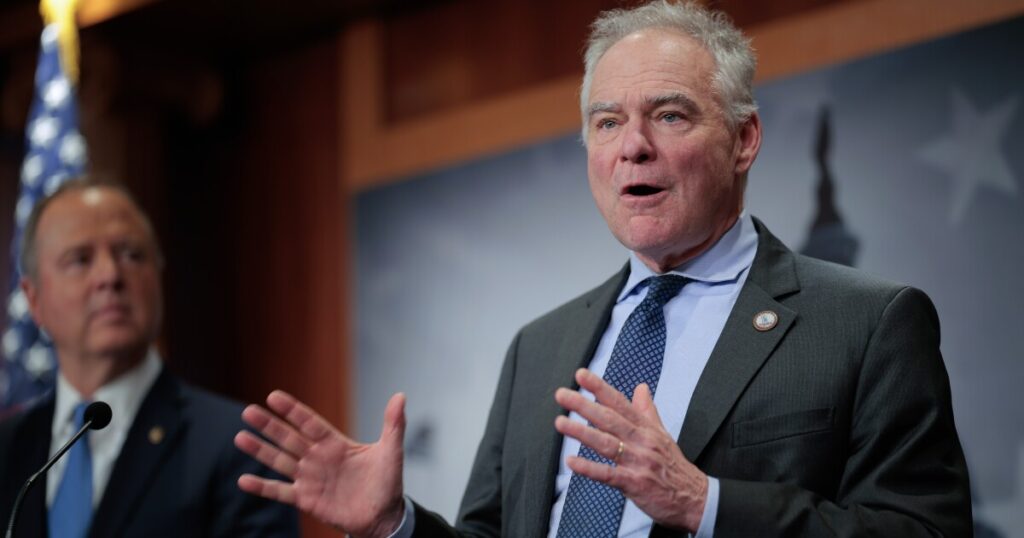
Despite the hurdles, a coalition of Democrats and some Republicans in Congress are pushing for constraints on Trump’s military operations. This move follows recent U.S. and Israeli strikes in Iran, which have resulted in the first American casualties. Sen. Tim Kaine, D-Va., a co-sponsor of the Senate resolution, emphasized the importance of congressional involvement, stating, “The Constitution says we’re not supposed to be at war without a vote of Congress.” He urged for a prompt return to Washington to vote on the matter.
These war powers resolutions were initially set for discussion and voting before the unexpected attacks on Iranian leaders. However, with the conflict now underway, the extent to which these resolutions might impact ongoing military actions remains uncertain.
Although Sen. Kaine has called for earlier voting, it is anticipated that the votes will occur mid-week. Yet, the potential for a Trump veto looms large, and it is uncertain if there is sufficient support to achieve even initial passage, let alone the two-thirds majority required to override a veto.
Should the measures become law, they would restrict further U.S. military involvement in Iran without Congressional consent, in accordance with the 1973 War Powers Resolution. This law was enacted during the Vietnam War to impose checks on executive war-making authority. Sen. Mark Kelly, D-Ariz., another supporter, expressed concerns about the lack of a strategy to prevent an escalation that could endanger more servicemembers.
In a video posted online, President Trump indicated that U.S. military operations in the Middle East would persist until objectives are achieved, although specific goals were not detailed. White House officials, including top defense and intelligence leaders, are expected to brief lawmakers on the situation in the Middle East on Tuesday.
‘A Disastrous Vote for Democrats’
Rep. Ro Khanna, D-Calif., estimates a 40% to 60% chance of the House resolution advancing. He expressed concerns about potential Democratic support for Trump’s military actions, noting, “I believe that this is a disastrous vote for any Democrat — to vote for Donald Trump’s war in the Middle East.” Rep. Josh Gottheimer, D-N.J., a known opponent of the resolution due to concerns about restricting military flexibility, has yet to comment on his voting intentions.
Most Republicans are expected to align with Trump’s stance on Iran, with Sen. Tom Cotton, R-Ark., predicting strong Republican support. However, Rep. Thomas Massie, R-Ky., highlighted divisions within the GOP, arguing that the conflict is not “America First,” demonstrating his consistent opposition to some administration policies.
Among Democrats, Sen. John Fetterman, D-Pa., plans to vote against the resolution, describing it as an unnecessary and “empty gesture.” This legislative effort follows a series of unsuccessful attempts to limit Trump’s military authority without Congressional approval, including a failed Senate vote on Iran war powers in June and a narrowly advanced but ultimately unsuccessful resolution concerning Venezuela in January.
—
Read More Michigan News