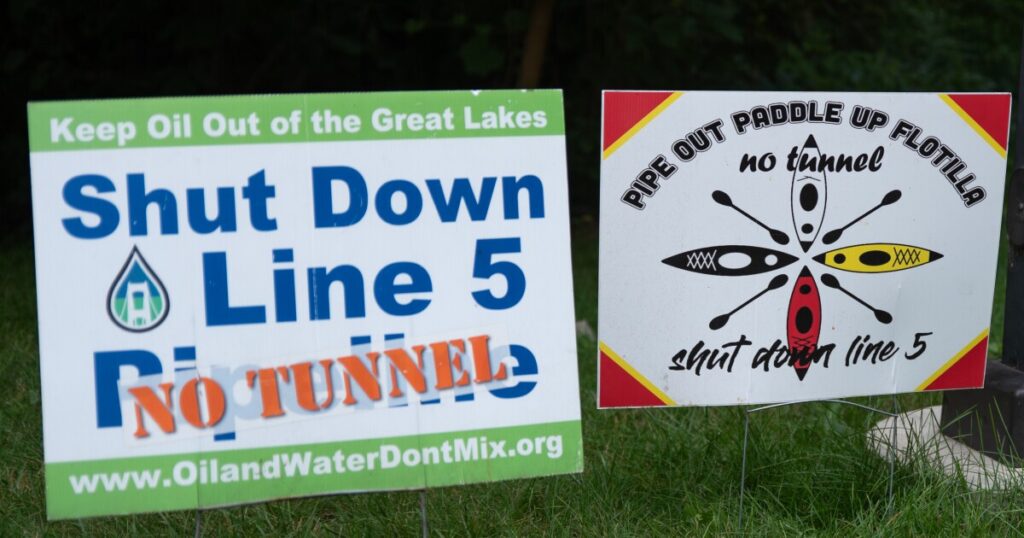
Amid the tranquil setting of Historic Bridge Park near Battle Creek, environmental advocates recently assembled to commemorate a solemn milestone—the 15th anniversary of the devastating oil spill into the Kalamazoo River. The gathering underscored ongoing concerns about the potential risks posed by the Enbridge Line 5 pipeline, which traverses the Great Lakes, as activists urged for its shutdown.
Fifteen years ago, Enbridge’s Line 6b ruptured, releasing 1.2 million gallons of oil into the Kalamazoo River and its tributaries, prompting a massive cleanup effort. This calamity remains one of the largest inland oil spills in U.S. history. Environmental groups, represented through various tented booths, highlighted the long-lasting impacts and the need to prevent similar disasters.
Dr. Denise Keele, Executive Director of the Michigan Climate Action Network, emphasized the importance of learning from past mistakes. “The message remains the same: to shut down Line 5 and no oil tunnel. We are here today on the 15th anniversary of the Kalamazoo River oil spill so that history does not repeat itself,” she stated, stressing the urgency of addressing fossil fuel reliance and climate disruption.
Residents who experienced the aftermath of the spill echoed these sentiments. Iris Potter from Kalamazoo Remembers recalled the spill’s immediate effects: “The massive Enbridge oil spill into our Kalamazoo River was so toxic that when we went that day to see it firsthand, we quickly left, feeling ill from the smell. We knew it must never happen again.”

As the Michigan Department of Environment, Great Lakes, and Energy (EGLE) reviews Enbridge’s permit applications for a proposed tunnel under the Straits of Mackinac, environmentalists voice concerns about potential environmental impacts. Nichole Keway Biber, Mid-Michigan Organizer for Clean Water Action, highlighted the aging infrastructure of Line 5, which is over 70 years old.
Beth Wallace from the National Wildlife Federation criticized EGLE for not thoroughly assessing the environmental risks posed by the proposed tunnel. “Our own state agencies, the ones that were stuck here sucking oil out of the river, seem to be playing right into the hands of Enbridge,” she said, questioning the adequacy of the environmental review process.
During the event, Sean McBrearty, Coordinator of the Oil and Water Don’t Mix campaign, emphasized the need for vigilance against corporate negligence. “This was entirely man-made. And it was only as big as it became because of the negligence of the people who know, the U.S. Army Corps of Engineers, and the federal government are asking us to trust the Great Lakes with,” McBrearty stated, calling for continued activism to protect the Great Lakes from potential oil spills.

Enbridge, responding to the concerns, emphasized their commitment to safeguarding the Great Lakes through the construction of the tunnel. “Enbridge’s commitment to safeguarding the Great Lakes, natural resources, and communities continues to drive our work behind building the Great Lakes Tunnel, and locating a new, replacement section of the Line 5 pipeline inside the protection of the tunnel, deep under the lakebed,” the company stated, highlighting their openness to public input.
EGLE is currently accepting public comments on the proposed tunnel construction until August 29. Comments can be submitted online or by mail. Additionally, EGLE will host a virtual Q&A session on August 12 and a formal public hearing on August 19, offering opportunities for public engagement in the decision-making process.
—
Read More Michigan News