Stay informed with our weekly Education newsletter.
The Federal Communications Commission (FCC) is reevaluating a long-standing initiative that provides schools and libraries with discounted internet access. This scrutiny has sparked concerns among educators and advocates about potential reductions or even the elimination of funding.
The E-Rate program, established in the 1990s, enjoys bipartisan support. However, the FCC’s renewed focus on this program has left many, including David Thurston, anxious about its future.
Thurston, who manages technology for 33 school districts in California’s San Bernardino County, explains the diverse landscape they cover: “We have mountain regions, far-flung desert regions, and then our urban and suburban areas. We’re a really diverse county,” he says.
The county has built the necessary infrastructure to extend internet access from Los Angeles to the state’s eastern border. But ongoing expenses persist beyond installation. “There’s no doing without,” Thurston states, highlighting the financial burden of monthly internet bills, which E-Rate currently helps alleviate.
A “healthy” program
Since its inception by Congress in 1996, E-Rate has dramatically increased internet accessibility in schools and libraries from 14% to nearly universal coverage. Despite this success and bipartisan oversight, the FCC’s recent announcement of a full program review has raised questions.
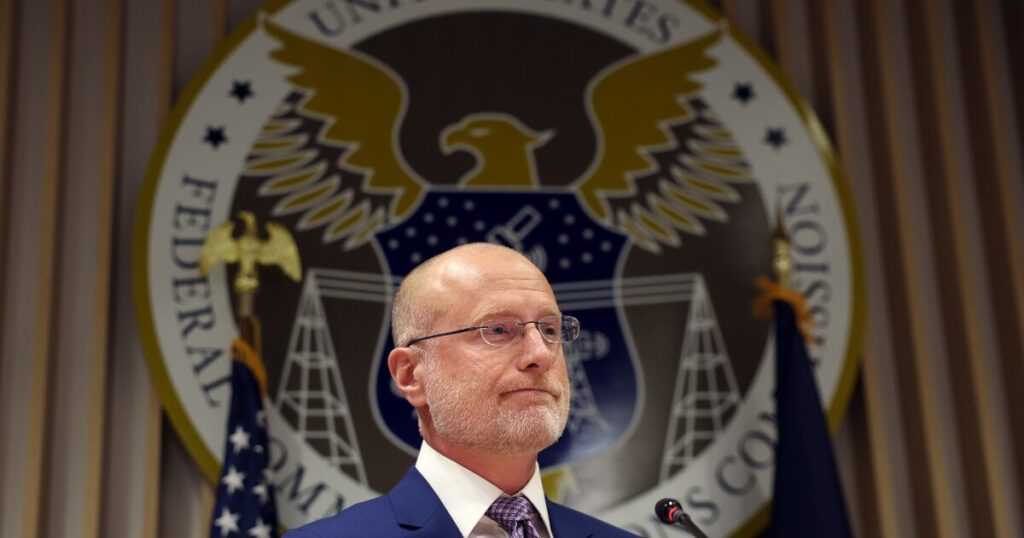
“By its own data and its own measurement, the program is healthy,” Thurston remarks. Yet, the Project 2025 blueprint had already highlighted federal broadband policy as a potential area for spending cuts, with FCC Chairman Brendan Carr contributing to the document. The focus on screen time as a rationale for review adds an unexpected dimension to the discussion.
Chairman Carr’s comments at a June commission hearing emphasized the dangers associated with excessive screen time for children. In response, states like Alabama, Tennessee, Utah, and Virginia have passed legislation addressing technology’s role in education, and more states are considering similar restrictions.
Josh Golin, the executive director of Fairplay, argues for a balanced approach: “We believe there are ways of strengthening school policies to promote more limited and privacy-protecting use of EdTech without taking away critical E-Rate funding,” he asserts.
While some advocate for reduced screen time, the necessity of internet access remains unquestioned. Schools depend on online systems for essential functions like attendance tracking, bus route monitoring, and state-mandated testing. According to the National Center for Education Statistics, 48 states now incorporate online components in exams.
Bob Bocher from the American Library Association (ALA) expresses concern over potential program changes. Although the E-Rate is part of the Telecommunications Act of 1996, making total elimination unlikely, the FCC could complicate its implementation. “It’s like death by a thousand cuts,” Bocher warns, fearing an overly burdensome process might deter participation.
Keeping up with the rest of the world
Despite increased internet access since 1996, Bocher and others note that pricing and competition have not evolved as anticipated. While urban areas might benefit from competitive markets, rural regions often face limited options. Patrick Mayer, superintendent of Alaska Gateway School District, illustrates this with his district’s reliance on a single provider.
Mayer’s district, serving under 400 students, incurs over half a million dollars annually to maintain internet access across its six schools. This connectivity enables students to engage in online courses and access virtual therapies. “It means the difference between having a school in the 21st century,” Mayer states, “or a school in the 20th century.”
Mayer emphasizes the difficulty of replacing lost funding, which would necessitate cuts to staff and services. As the FCC prepares to open the review process for public comment, Mayer and others are actively advocating for the program’s continuation, including meeting with legislators in Washington, D.C.
Edited by: Nirvi Shah
Visual design and development by: LA Johnson
Copyright 2026 NPR
“`
—
Read More Michigan News

![ICE Pursuit Ends in Fatal Grand Rapids Crash, Details Emerge[embed]https://www.youtube.com/watch?v=m6UY04VfQ-U[/embed]](https://www.kitchentablenews.org/wp-content/uploads/2026/10/ICE-Pursuit-Ends-in-Fatal-Grand-Rapids-Crash-Details-Emergeembedhttpswwwyoutubecomwatchvm6UY04VfQ-Uembed.com2F0d2Fef2F2fd3ad944f8596721c8fe9408c3e2Fimg-978.jpeg "ICE Pursuit Ends in Fatal Grand Rapids Crash, Details Emerge[embed]https://www.youtube.com/watch?v=m6UY04VfQ-U[/embed]")