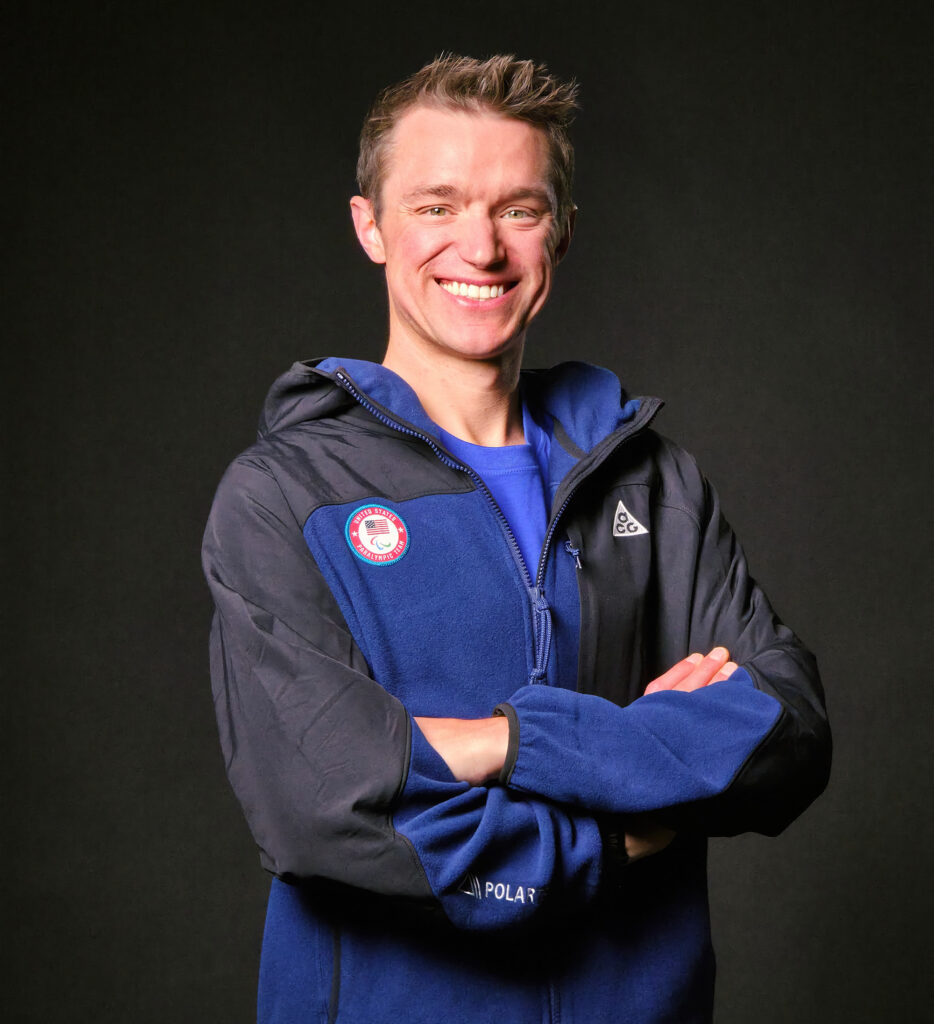
Geoff Burns, a University of Michigan alumnus with impressive credentials, landed his dream job as a sports scientist. His extensive education in biomedical engineering and kinesiology, coupled with experience as a biomechanics engineer, positioned him for success. Burns serves as an adjunct assistant professor in the School of Kinesiology and a sports physiologist for the U.S. Olympic and Paralympic Committee, contributing to the training of top U.S. athletes.
In 2022, a rare opportunity arose in his field, and Burns seized it, becoming a crucial part of the athletes’ preparation for the Winter Olympic Games in Milan and Cortina, Italy, and the Paralympic Games. He thrives under pressure, saying, “That’s why I love this job…that is where I feel I’m at my best.”
Burns collaborates with athletes and coaches to optimize training through biological assessments, integrating skills from the Tauber Institute program. His focus on process improvement and optimization, learned at U-M, now informs his work in sports.
One major strategy involves planning backward from the competition year to ensure success. Athletes recover post-Games, start training a year later, and finalize plans two years out, creating muscle memory through rehearsal. Burns, who began with the USOPC four years ago, will support athletes at the Milan Cortina Games, primarily focusing on the Paralympic cross-country and biathlon teams.
Burns also emphasizes environmental preparation, crucial for adapting to varying altitudes and climates. “Summer Games have always been hot, but they’re getting hotter,” he said, highlighting the need for readiness.
A suitable role
Burns’ role extends beyond coaching; he refines athletes’ training using scientific data. His responsibilities include environmental preparation, ensuring athletes adapt to elements like altitude. Burns’ experiences from the 2024 Paris Summer Games revealed the emphasis placed on Summer Games compared to Winter ones.
In Paris, Burns worked with the U.S. Paratriathlon team, contributing to their record medal haul. He noted the sold-out venues for both Olympics and Paralympics, underscoring the Games’ widespread appeal.
From Paris
As the Milan Cortina Games approach, Burns will spend a month in Italy, aiding athletes in acclimating to the altitude. His attention is also on the 2028 Los Angeles Summer Games, where he aims to harness the energy of a home Games to invigorate athletes.
Burns’ blend of engineering and physiology expertise plays a vital role in the athletes’ success, especially in snow sports where conditions can alter performance. He acknowledges the importance of ski waxing, a complex process that can impact competition outcomes.
With an eye on the 2028 Games, Burns is committed to preparing athletes to excel on home soil, believing the American public’s love for sports will create an unforgettable experience.
—
Read More Michigan News