ICE Operations Strain Local Resources and Budgets Across U.S. Cities
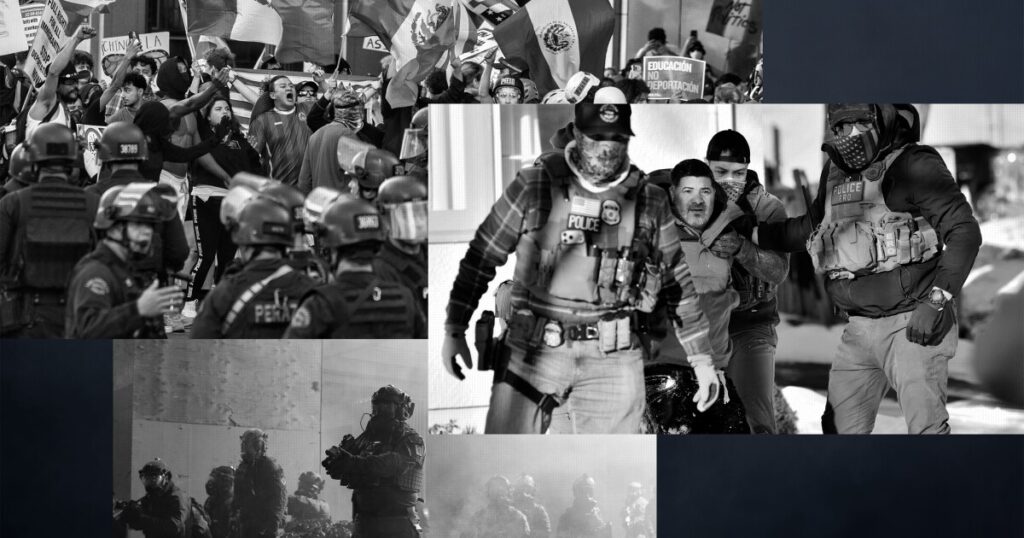
Recent immigration enforcement operations have left several American cities grappling with the aftermath of stretched police departments, disrupted local economies, and financial strain. As part of President Trump’s intensified immigration policies, Immigration and Customs Enforcement (ICE) deployments have significantly impacted cities like Los Angeles, Minneapolis, and Portland.
In Los Angeles and Minneapolis, the increased ICE activity led to soaring overtime costs for local law enforcement. Meanwhile, in Portland, Ore., the reduced availability of police officers resulted in delayed response times to emergency calls.
The operation, known as Operation Metro Surge, brought about financial challenges for businesses in cities like Bloomington and St. Paul, Minn., as they faced revenue losses and increased operational costs.
Local law enforcement agencies, not authorized to assist federal immigration operations, found themselves compelled to maintain order during these ICE actions. This led to a spike in police overtime, as officers were deployed for protests, additional patrols, and security around federal buildings. Los Angeles and Minneapolis, already dealing with staff shortages, saw their budgets stretched thin.
In Los Angeles, the LAPD’s overtime spending reached $41 million in June 2025, significantly surpassing the usual monthly expenditure of $18 to $30 million, as per the city controller’s office. The situation in Minneapolis was similarly dire, with overtime costs exceeding $6 million in a single month, more than double the annual budget for police overtime.
Abigail Jackson, a White House spokeswoman, stated that “Illegal aliens cost American taxpayers over $150 billion in 2023 alone and expenditures for benefits provided to the illegal aliens who entered during the Biden surge will add $177 billion in mandatory federal spending through 2034.”
Impact on Los Angeles
In June 2025, ICE initiated aggressive raids in Southern California, prompting weeks of protests. “The first three weeks of it, we were really balancing and teetering on martial law,” LA councilwoman Eunisses Hernandez remarked. The LAPD recorded $17 million in expenses from June 8 to 16, with nearly $12 million allocated to overtime, according to city reports.
LA’s financial situation was already precarious, and these operations compounded the issue, forcing the city to dip into reserve funds. The LAPD did not disclose specifics about the activities leading to the overtime, and Mayor Karen Bass did not provide comments on the economic ramifications.
Challenges in Portland
Portland’s police faced similar challenges, with Chief Robert Day noting that most overtime efforts were focused on the ICE facility. The department, long facing staffing shortages, recorded 38,213 overtime hours for “event response” in 2025, a significant rise from the 19,166 hours in 2024. Protests damaged the ICE facility, requiring substantial police presence.
During DHS Secretary Kristi Noem’s visit in October, 456 officers were deployed, resulting in nearly 3,000 overtime hours. Chief Day expressed concerns over the prolonged strain on his officers and the broader impact on city services, with response times to priority calls doubling.
Minneapolis Cops Report PTSD Symptoms
As ICE operations intensified, Minneapolis Police Chief Brian O’Hara faced daunting challenges. The deployment of approximately 3,000 federal agents overwhelmed the city, which had only about 600 police officers. O’Hara implemented several measures, such as staffing the operation center with civilian officers to monitor ICE activities.
The surge led to the cancellation of officers’ days off, with the department spending $6.4 million on overtime between January and February. The chaos mirrored the unrest following George Floyd’s death in 2020, with officers reporting PTSD symptoms amid the ongoing tumult.
Minneapolis reported a $203 million economic impact from these operations, with businesses closing and residents losing jobs. Mayor Jacob Frey criticized ICE’s actions for spreading fear within the community.
Wider Implications Across Cities
Neighboring St. Paul assisted Minneapolis by lending officers, incurring significant overtime costs. City Council President Rebecca Noecker described the situation as untenable, with local law enforcement caught between assisting protesters and complying with federal operations.
Bloomington, Minnesota, also saw spillover effects, with police responding to protests at local hotels and increased racial profiling incidents. Police Chief Booker Hodges expressed frustration over the lack of federal reimbursement for overtime expenses, emphasizing the need for comprehensive immigration reform.
Copyright 2026 NPR
—
Read More Michigan News