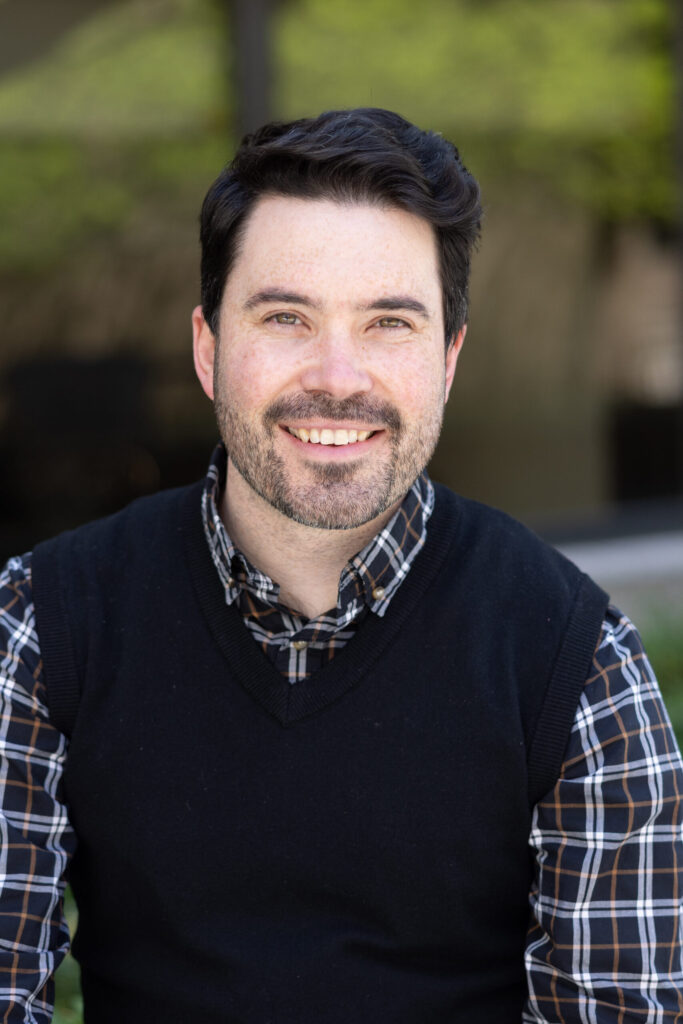
James Cech’s role as a senior American Sign Language interpreter at Michigan Medicine is far from ordinary. He bridges communication between patients and medical providers across a wide range of clinical environments, from emergency departments to outpatient care. Cech’s presence extends to Michigan Medicine’s town halls, ensuring accessibility while gaining insights from institutional leaders. His work highlights the linguistic complexity of ASL, setting him apart in the field.

Cech describes his workdays as diverse, covering everything from the emergency department to clinical buildings in Saline, Northville, and Flint. His regular participation in town halls offers a backstage view of decision-making processes. “I’ve done every town hall except maybe two since the pandemic began,” Cech shared, underscoring the depth of his involvement.
Interpreters like Cech possess a deep understanding of ASL beyond just knowing signs. “It’s understanding sentence structure, regional variations, and how medical histories like intellectual developmental disorders affect language use,” Cech explains. His expertise allows him to interpret varied signing patterns and adapt to individual communication styles. “Every person has a slightly different sign,” he notes, likening it to accents in spoken language.

Becoming an Interpreter
Cech’s introduction to ASL began with a childhood friend, Daniel, who is deaf. Initially, Cech didn’t consider interpreting as a career. After a period as an actor in Los Angeles, he returned to Michigan where his stepmother’s college offered an interpreter training program. Intrigued, Cech pursued it and found his calling.
Graduating in 2010, Cech became certified, passing the necessary rigorous exams to practice. To work at Michigan Medicine, he obtained a medical mental health endorsement, showcasing his specialized skills and experience.
A Career Shaped by Performance
Cech’s acting background significantly influences his interpreting. “ASL is mostly about how you move your face,” he explains, emphasizing the importance of visual dynamism in conveying urgency or concern. His musical talents, though a hobby, contribute to his interpretive performance, as seen in his starring role as Dewey in “School of Rock.”

Cech reflects on how performance enhances his medical interpreting. “Visually reconstructing what’s happening in your body requires a lot of performance,” he states, noting that being dynamic improves interpretation and fosters better patient understanding.
—
Read More Michigan News