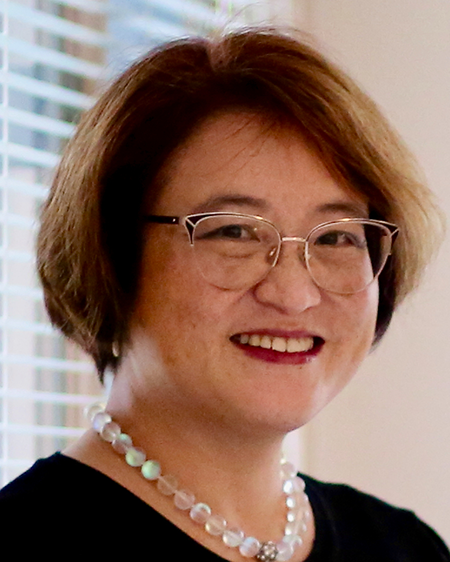
At the University of Michigan’s Lieberthal-Rogel Center for Chinese Studies, two leaders’ cultural journeys have intertwined. Ann Chih Lin, a U.S.-born academic with Chinese heritage, experienced her first Chinese immersion in Taiwan during seventh grade. Lin, now a public policy professor at Michigan, used her experiences to guide students through China’s evolving policies as models or cautionary tales. Ian Shin, an assistant professor of history and American Culture, immigrated from Hong Kong to California in 1993. His interest in Chinese American history was sparked by a book of anti-Chinese cartoons, leading him to explore racial issues at the intersection of empire and migration.


Lin and Shin have taken their personal journeys to shared leadership roles at LRCCS, aiming to foster an understanding of China that embraces nuance, diversity, and lived experience. Lin feels a responsibility to accurately explain China, while Shin emphasizes the importance of situating Chinese Americans within a broader racial context in the U.S. “Chinese Americans are part of a much larger conversation about racism in the United States,” he said.
Research and teaching shaped by identity
Shin’s academic work delves into the interpretation of Chinese culture by Americans. His book, “Imperial Stewards,” examines how early 20th-century collectors positioned America as a caretaker of Chinese culture, influencing today’s “pivot to the Pacific.” Lin has focused on advocating for Chinese American scientists, addressing issues of loyalty and immigration amid U.S.-China tensions. She stresses the importance of protecting immigrant researchers while promoting “open science.”
Both professors encourage students to look beyond stereotypes. Lin’s courses invite students to examine Chinese social and policy challenges in a global context, while Shin’s teachings on Chinese American history highlight complex narratives and lesser-known stories.
Securing the future of Chinese studies at U-M
Lin and Shin are committed to strengthening Chinese studies in the U.S., especially as universities pull back from area studies and U.S.-China tensions rise. Lin focuses on rebuilding faculty expertise in modern China, while Shin emphasizes supporting Chinese and China-studies students. They warn that without investment in faculty and students, the U.S. risks misinformed policy decisions about China. Both see storytelling as a form of advocacy, aiming to share the rich history and capabilities of U-M’s China center.
Lin and Shin urge young scholars to embrace their identities and advocate for themselves. Lin advises students to “lean into” their unique perspectives, while Shin encourages curiosity and boldness. He tells students, “What you’re really saying when you advocate for yourself is ‘I dare to expect more from my community, my institutions, and my government.'” Together, they envision an LRCCS rooted in deep engagement with China and committed to training a new generation ready to interpret China for a complex world.
—
Read More Michigan News