As the number of data centers in Michigan continues to grow, concerns are arising about whether the state’s water infrastructure can support this development. With aging systems and significant funding gaps, residents and officials are questioning the long-term sustainability of Michigan’s water management capabilities.
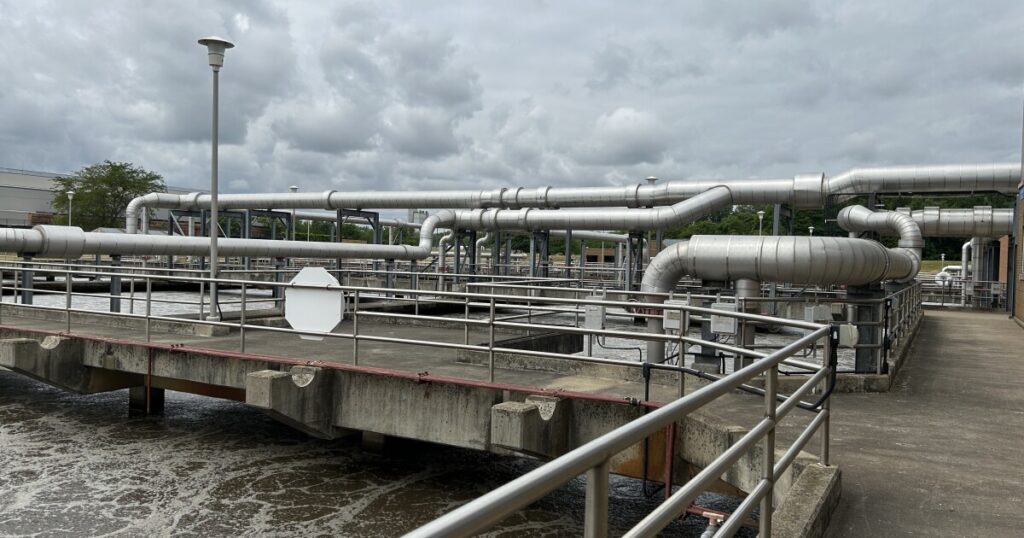
According to a 2023 report by the American Society of Civil Engineers, Michigan’s infrastructure received concerning grades: a C in wastewater management, D+ in drinking water, and a D in stormwater management. The report highlights that much of the state’s infrastructure is over half a century old and emphasizes the urgent need for sustainable funding solutions to address these issues.
The financial shortfall is stark, with the state facing an annual gap of $860 million to $1.1 billion in water infrastructure spending, largely due to deferred maintenance needs. The Environmental Protection Agency (EPA) has identified a necessity for approximately $6 billion in funding for stormwater improvements, adding to the challenge.
Jeff Johnston, a spokesperson for the Michigan Department of Environment, Great Lakes, and Energy (EGLE), noted that the state’s Clean Water State Revolving Fund offers loans to municipalities for critical wastewater and stormwater projects. In 2024, EGLE allocated $907.4 million to 34 projects across Michigan.
Climate change is compounding these challenges, with extreme weather conditions like increased flooding becoming more common. Since 1900, total annual precipitation in the Great Lakes region has risen by 14%, according to ASCE, which reports that current storm sewer systems lack the capacity to handle such events safely.
Johnston also mentioned that rising infrastructure costs and a shortage of qualified contractors add to the complexity of addressing these issues. Meanwhile, the city of Mason, located just south of Michigan’s capital, is taking proactive steps to prepare for potential demands from new data centers. Mayor Russell Whipple stated that the city is conducting an extensive water and aquifer study to assess the capacity of its water systems, including wells, pipes, water treatment, and wastewater facilities.
The results of this study will inform a proposed ordinance aimed at setting standards for the maximum water usage allowed for large consumers, such as data centers. Whipple expressed concern that, while Mason has existing ordinances, they lack specific standards to address potential issues associated with data centers.
“The fact is the data center could walk into Mason tomorrow and we have an ordinance that they would fall under, but it has no standards to mitigate the primary issues that come with the data center,” Whipple explained.
Public apprehension about data centers has led to significant turnout at city council meetings, with residents expressing fears about water contamination and excessive energy use. Whipple reassured that most of these concerns stem from misinformation, saying, “I’ve researched them, and I’ve not been able to find any evidence that points to a data center just by its existence is going to be a danger to anyone.”
Johnston from EGLE confirmed that data centers would undergo inspections to ensure compliance with environmental regulations. They may require permits for air emissions, water usage, wastewater discharge, or impacts on wetlands and streams.
Despite some aging infrastructure, Whipple is confident in Mason’s ability to manage its water systems effectively. “I’m very comfortable that we’ve got a very good handle on what our water infrastructure status is,” he said. “And any impact to that from a large user such as the data center would be paid for by the data center.”
—
Read More Michigan News