Raw Milk Legislation Moves Forward in Michigan Amid Debate Over Safety and Consumer Choice
In Michigan, a series of legislative proposals are progressing through the state Legislature with the aim of permitting the direct sale of raw milk to consumers. These measures, identified as HB 5217-5219, are championed by State Representative Matt Maddock (R-Milford) and seek to authorize the farm-to-consumer sale of raw milk alongside other unpasteurized dairy products such as cream, buttermilk, and cheese.
Last month, the House Government Operations Committee reviewed the bills, which advanced without Democratic support. They were subsequently discussed in a hearing by the House Rules Committee.
Advocating for the bills, Michigan farmer Ashley Armstrong shared her perspective. Armstrong, along with her sister, co-founded Nourish Food Club near Kalamazoo. The farm faced regulatory challenges leading to a mandated disposal of raw dairy products in 2024 due to violations. Armstrong stressed the significance of consumer choice, stating, “At its core, this issue today is bipartisan. It is about consumer freedom of choice and creating space for small farmers to survive in a food system that increasingly favors large scale industrial operations.”
Federal regulations, as outlined by the CDC, prohibit the interstate sale of raw milk, leaving states to set their own policies. Despite the health warnings issued by the CDC and the FDA regarding potential pathogens in raw milk, Armstrong argues for informed consumer decisions. “All food carries risk, and adults are allowed to make informed decisions involving known risks every single day. Alcohol, vape pens, marijuana, raw cookie dough, sushi with raw fish, and raw oysters. In those cases, the government doesn’t ban access. It provides information, and then allows adults to decide for themselves,” she noted.
The demand for raw milk has surged, partly influenced by figures such as RFK Jr. and movements like Make America Healthy Again, as reported by Politico. Armstrong emphasizes that current policies do not align with this growing interest, stating, “Many consumers are increasingly frustrated with the conventional food system and want access to traditional farm-fresh foods. Yet right now, they do not have the freedom to choose them. Our policies have not kept pace with growing public demand.”
Despite the legislative momentum, the proposed bills face opposition from various quarters. Mikaylah Heffernan, a legislative liaison with the Michigan Department of Agriculture and Rural Development, submitted a statement highlighting the health risks associated with reduced oversight of raw milk sales.
Jackie Klippenstein, Senior Vice President at Dairy Farmers of America, also expressed concerns about the potential negative impact on the dairy industry. “When consumers become ill due to consuming raw milk, regardless of the dairy’s size or nature of [the] incident, the entire industry is negatively impacted. These cases not only hurt dairy farmers, dairy processors and manufacturers, but they also undermine the public’s trust in the dairy products they consume daily. Pasteurization is the most proven and secure method of ensuring that harmful and life-threatening bacteria and other pathogens are removed from the milk supply. Pasteurization offers consumers assurance that their milk is safe,” she stated.
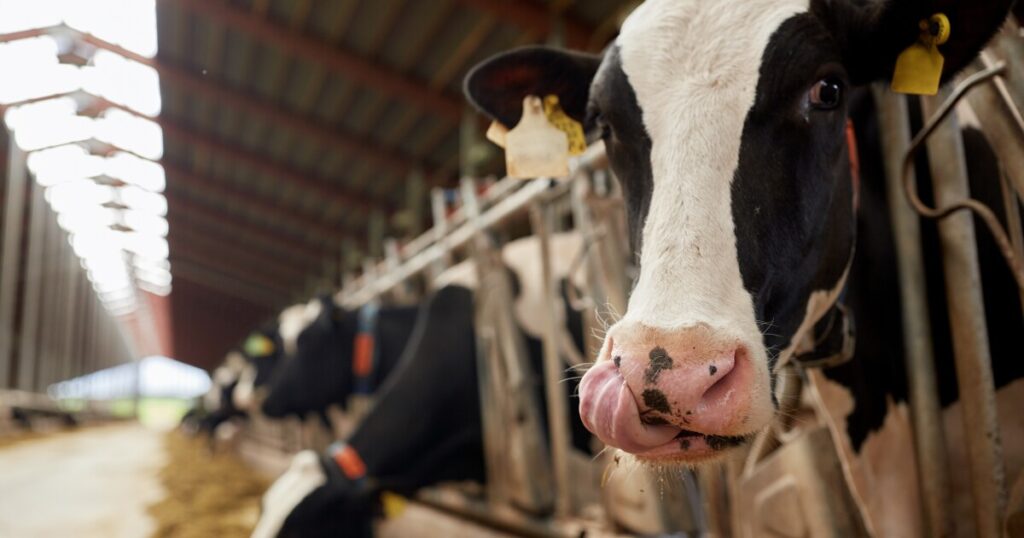
Health experts, including Dr. Pamela Ruegg from Michigan State University, have raised alarms over the inherent risks of unpasteurized dairy products. Dr. Ruegg explained that contamination is a persistent challenge, even under stringent sanitary conditions. “It is extremely difficult to harvest milk, meaning milking the cow into a milking machine, which then moves it to a tank without any of that milk becoming contaminated with bacteria,” she said. Potentially harmful bacteria such as Campylobacter, Salmonella, E. coli, and Listeria can still be present, as evidenced by a recent incident in New Mexico involving a Listeria infection.
While the debate continues, the future of raw milk sales in Michigan remains uncertain, as legislators balance consumer freedom with public health concerns.
—
Read More Michigan News