Michigan Election Campaigns Under Spotlight as Candidates Discuss Reforms and Security
In a virtual meeting with journalists, Michigan’s Lieutenant Governor Garlin Gilchrist introduced a proposal aimed at reforming the state’s campaign finance regulations. As a Democrat contending for the secretary of state position against Republican Macomb County Clerk Anthony Forlini, Gilchrist emphasized the necessity for enhanced transparency in campaign funding.
“So I’m going to push for stronger disclosure rules, so voters can see who’s funding the political messages coming across their TVs, their phones, and their mailboxes, social feeds, and streaming,” Gilchrist stated, underscoring the importance of visibility in political financing.
The proposed reforms by Gilchrist also include a collaboration with the state attorney general’s office to expedite the enforcement of campaign finance laws, ensuring that violations are met with prompt and significant repercussions. “The rules should be simple. If you break Michigan campaign finance law, there should be meaningful consequences quickly,” he affirmed.
Another aspect of Gilchrist’s plan is to impose restrictions on the quantity of leadership political action committees associated with federal officeholders that candidates are permitted to maintain.
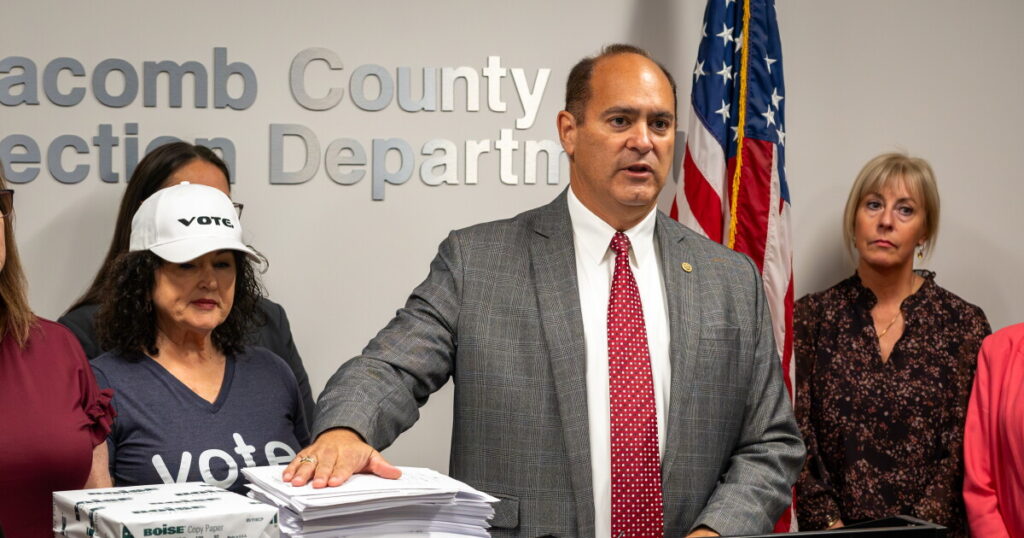
Conversely, Anthony Forlini has prioritized election security in his campaign. During a news conference, Forlini, who is currently serving as the Macomb County Clerk, highlighted issues related to third-party involvement in voter registration processes.
Forlini reported that his office had handled over 5,000 voter registration applications recently, many of which involved individuals already registered. He remarked, “It takes time away from serving legitimate voters. It takes time away from preparing for an election, and it puts another workload on people who are already carrying a tremendous responsibility.”
While acknowledging that these third-party groups generally comply with the law, Forlini questioned their necessity, asking, “Many organizations conduct legitimate voter registration drives, but Michigan voters deserve to ask a very simple question: ‘Why should sensitive personal information have to pass through an unnecessary middleman when a voter can submit that information directly to the government?’”
Forlini noted that, so far, there has been little interest from state legislators in curbing the operations of these groups.
—
Read More Michigan News