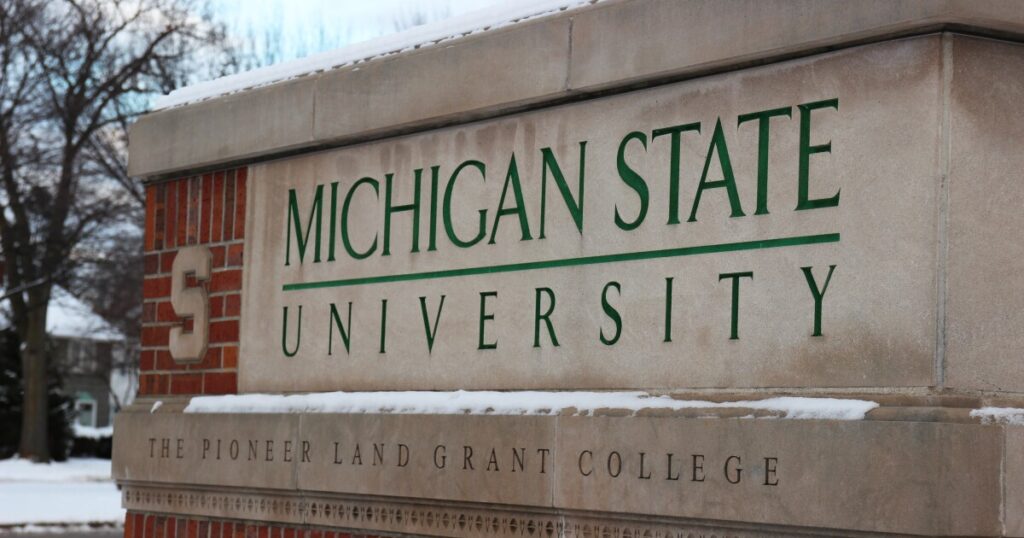
Facing financial challenges due to stagnant state funding and rising expenses, Michigan’s public universities are increasing tuition fees this fall. As they navigate these economic hurdles, many institutions are simultaneously enhancing financial aid programs to mitigate the financial burden on students.
Tuition Increases at Leading Universities
This fall, all ten of Michigan’s largest public four-year universities have endorsed tuition hikes for in-state undergraduates. Here are the respective percentage increases:
- The University of Michigan: 3%
- Michigan State University: 4.37% for new freshmen, 3.99% overall
- Wayne State University: 4%
- Grand Valley State University: 4%
- Western Michigan University: 4%
- Oakland University: 3.9%
- Central Michigan University: 4%
- Eastern Michigan University: 2.5%
- Ferris State University: 3.7%
- The University of Michigan – Dearborn: 3.9%
Stagnant State Funding Amid Rising Costs
Despite a contentious budgetary process, Michigan legislators finalized a state budget in early July. According to Mia Murphy, chief policy officer at the Michigan Association of State Universities, universities often establish their budgets before knowing the state’s final funding allocations, complicating financial planning.
State contributions to university operating revenues have drastically declined from around 70% in 1979 to about 22% today, as noted in a report. This year’s budget maintained flat base funding, supplemented by a temporary funding boost, which universities find insufficient for long-term planning.
Inflation and escalating costs, including energy and imports, are affecting consumers and universities alike. “They’re buying a power plant’s worth of fuel and trying to provide food for residence halls for a bunch of pretty hungry 18 to 24 year olds,” Murphy explained. Universities continue to seek adequate state funding to manage these financial pressures.
Student Concerns and Financial Realities
Michigan State University faces a $12 million budget deficit due to reduced state funding, rising operational expenses, and declining enrollment. Maddie Hanes, MSU’s student body president, expressed concerns over tuition hikes, stating, “I am paying for my college by myself, so every year I’m here is definitely another year that I know that I’m seeing that price tag go up.”
Hanes emphasized that increasing tuition should not be the default solution for financially struggling universities, especially when it could disproportionately affect students from low-income backgrounds. “They so often say the only solution possible is, ‘Well, if we don’t have enough money going forward, students will just pay their increased bill,'” she remarked.
Nonetheless, some experts argue that college remains more affordable than it appears. Jamie Jacobs of the Michigan College Access Network highlighted that the “sticker price” often does not reflect the actual cost due to state, federal, and institutional aid. “For just the average person who’s taking in information, the assumption would be the cost is rising — it will cost me more than it did before,” she said. “But it’s not actually accurate.”
Editor’s note: The University of Michigan holds Michigan Public’s broadcast license.
—
Read More Michigan News
![Jody White’s Unconventional Michigan Supreme Court Candidacy Explored[embed]https://www.youtube.com/watch?v=8NfxFIPE4ac[/embed]](https://www.kitchentablenews.org/wp-content/uploads/2026/10/Jody-Whites-Unconventional-Michigan-Supreme-Court-Candidacy-Exploredembedhttpswwwyoutubecomwatchv8NfxFIPE4acembed.com2F842F0e2Fc7223daa43c9876b36a4e00773a42Fme-supc.png "Jody White’s Unconventional Michigan Supreme Court Candidacy Explored[embed]https://www.youtube.com/watch?v=8NfxFIPE4ac[/embed]")