Hi! You’re reading the It’s Just Politics newsletter. Subscribe here to get it delivered to your inbox, and listen to the It’s Just Politics podcast for all the political news you need each week.
Before we jump into the news this week, just a quick thank you! Thank you to everyone who’s given so far during our spring membership drive. Your support powers reporting from D.C. to Lansing and makes shows – and newsletters – like It’s Just Politics possible! Now, let’s jump into the news:
Michigan’s Same-Sex Marriage Laws Under Review
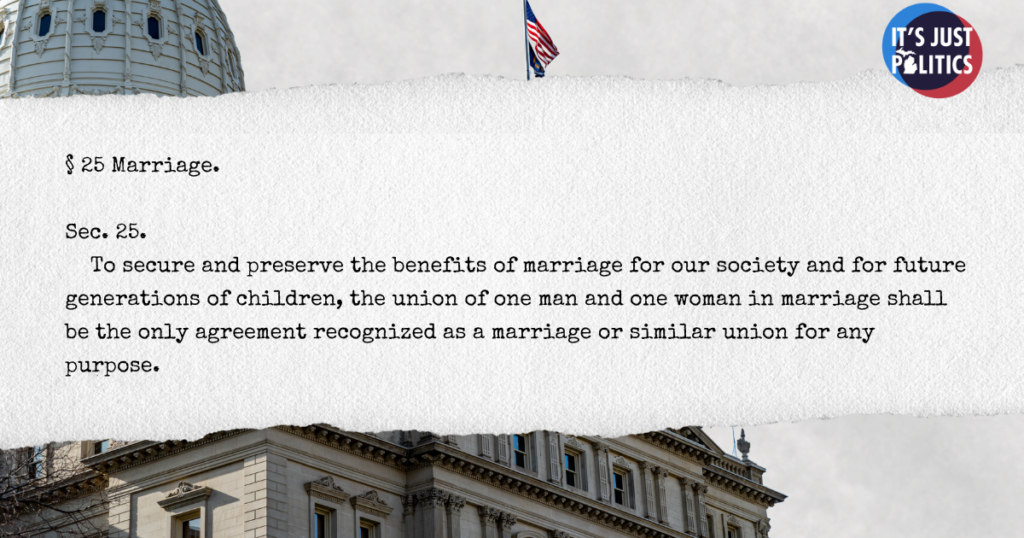
The state of Michigan might be approaching a pivotal moment regarding its stance on same-sex marriage. This week, a legislative committee in the Michigan Senate examined a proposal that could potentially eliminate the constitutional ban on same-sex marriage in the state.
Historical Context
Throughout the 1990s, Michigan was among several states that implemented laws to prohibit the formal recognition of same-sex marriages and civil unions. In 1995, the state’s Legislature, with the endorsement of Republican Governor John Engler, enacted laws to ban such unions and declined to acknowledge those solemnized in other states. This opposition was not unique to Michigan, as it mirrored a national sentiment; in 1996, Democratic President Bill Clinton signed the Defense of Marriage Act, denying federal recognition of same-sex unions.
By 2004, Michigan voters went a step further by embedding the ban into the state constitution.
Judicial Developments
Twelve years ago, Judge Bernard Friedman of Detroit’s U.S. District Court ruled against Michigan’s ban, prompting hundreds of same-sex couples to marry until a federal appeals court intervened. This legal battle eventually led to the U.S. Supreme Court, which in 2015, invalidated same-sex marriage bans in Michigan, Ohio, Kentucky, and Tennessee, citing violations of the due process and equal protection clauses of the Constitution. However, shifts in the Supreme Court’s composition have raised concerns about the potential for similar cases to reemerge, particularly following the court’s Dobbs decision on abortion rights.
Efforts to Repeal the Ban
State Senator Jeremy Moss (D-Bloomfield Township) expressed concerns on this matter. “In Michigan, we have that now-unconstitutional language in our constitution banning same-sex marriage, so we have to get rid of it,” he stated. Efforts to reverse similar bans are occurring in several other states.
While the Senate committee has yet to advance Moss’s resolution, which could pass on a party-line vote, Moss aims to garner bipartisan support. He believes more Republican lawmakers might support the initiative, as evidenced by the House GOP leadership’s reluctance to endorse a resolution urging the Supreme Court to reconsider the marriage ruling.
House Speaker Matt Hall (R-Richland Township) assigned that resolution to a committee unlikely to act on it, citing division within the House GOP caucus. Achieving the required supermajority in a divided legislature to include the question on the ballot remains a significant challenge, with potential impacts on voter turnout and resource allocation.
_______________________
Have questions about Michigan politics? Or, just want to let us know what you want more of (less of?) in the newsletter? We always want to hear from you! Shoot us an email at politics@michiganpublic.org!
_______________________
A ballot proposal to tax the wealthy folds, Michigan’s “fake electors” threaten a lawsuit, and could future primary election dates change? It’s a Lansing roundup edition of It’s Just Politics.
_______________________
Additional Political Developments
More constitutional amendments? Michigan House Speaker Matt Hall is contemplating another constitutional amendment. He proposes that new bills in the lame duck session, the time after elections but before new lawmakers take office, require supermajority votes to pass. Hall argues this period should address routine matters rather than controversial issues. Such a proposal would need two-thirds majorities in both legislative chambers to proceed to a statewide ballot.
Petition fraud sentencing: In a scandal affecting Michigan’s 2022 gubernatorial race, Shawn Wilmoth, involved in falsifying petition signatures, received a four-year prison sentence. The Associated Press noted that “five Republicans” were affected by this scandal. While Wilmoth can stay out of prison pending appeal, his case highlights issues in the campaign process.
Doctor licensing agreement: A bipartisan legislative deal aims to keep thousands of doctors practicing in Michigan by rejoining an interstate compact recognizing out-of-state physician licenses. The agreement, essential for the state’s healthcare, must be finalized within a week as the previous membership expired last year.
_______________________
Yours in political nerdiness,
Rick Pluta & Zoe Clark
Co-hosts, It’s Just Politics
_______________________
IJP ON THE ROAD
Join Michigan Public’s Political Director Zoe Clark, Senior Capitol Correspondent Rick Pluta, and their FAQ Squad panelists as they give you the facts of the upcoming election cycle!
—
Read More Michigan News