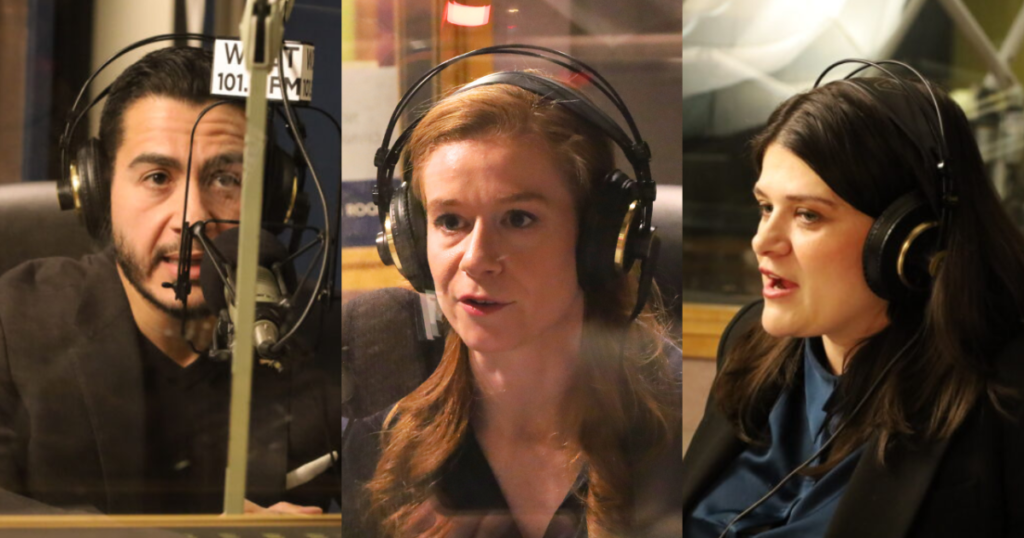
As Michigan becomes a focal point in the U.S. political landscape, the state hosts one of the most scrutinized and costly Senate races. Former Republican candidate Mike Rogers is set to challenge Democrat Elissa Slotkin once more. Meanwhile, the Democratic field is heating up with Congresswoman Haley Stevens, State Senator Mallory McMorrow, and Dr. Abdul El-Sayed all competing for the party’s nomination to replace Gary Peters.
Healthcare Policy Perspectives
Dr. Abdul El-Sayed, known for his advocacy in healthcare, champions a “Medicare for All” approach, arguing it should be accessible to everyone regardless of employment status. El-Sayed asserts, “If you like your insurance through your employer or through your union, I hope that will be there for you. But if you lose your job, if your factory shuts down, you shouldn’t be destitute without the health care that you need and deserve so.”
Conversely, Mallory McMorrow supports a public option, maintaining private insurers but introducing government-backed plans. She believes, “I think it’s too big of a challenge. Admittedly, we are a country of more than 360 million people. When I talk to people all across the state, they don’t say that they want one single system. They say, I want the insurance that works for me.”
Haley Stevens focuses on expanding the Affordable Care Act, emphasizing the need to make tax subsidies permanent, which have lapsed under Republican leadership, resulting in decreased enrollments.
LGBTQ Rights and Democratic Alliances
As Republican efforts target the rights of transgender individuals, Democratic candidates are tasked with addressing these challenges. McMorrow believes economic frustrations are misdirected towards trans communities and advocates for addressing core issues to mitigate such targeting. Stevens has actively supported LGBTQ rights, voting against discriminatory legislation like the Protection of Women and Girls in Sports Act.
El-Sayed calls for strong Democratic support for trans rights, emphasizing, “I believe that rights are rights are rights. And when you assent to somebody taking away somebody else’s rights, you are at some point assenting to somebody coming for yours.”
Immigration and ICE
Immigration policy remains contentious, with differing views on the role of ICE. Stevens advocates for an overhaul of ICE, while McMorrow supports its existence with significant reforms to focus on border security rather than community intimidation. El-Sayed, however, argues for the agency’s abolition, criticizing its militarized approach.
The Ethics of Billionaire Existence
The debate over wealth concentration continues with McMorrow affirming the ethical existence of billionaires, referencing figures like Mark Cuban. El-Sayed, however, criticizes the systemic creation of billionaires, advocating for an economic structure that supports basic dignities for all. Stevens stresses the importance of fair taxation for the wealthy.
Campaign Financing
Campaign funding sources are under scrutiny, with El-Sayed and McMorrow rejecting corporate contributions for their campaigns. El-Sayed highlights his history of avoiding corporate money, contrasting with Stevens, who embraces various funding sources, including support from AIPAC.
Middle East Policy
In response to ongoing conflicts, Stevens supports a two-state solution for Israel and Palestine, advocating for dignity and peace on both sides. McMorrow reluctantly acknowledges the grave impacts on Palestinians, while El-Sayed unequivocally condemns U.S.-backed Israeli actions as genocide, calling for an end to financial support for such activities.
Democratic Leadership and Party Direction
Amid declining support for Democratic leadership, McMorrow calls for rejuvenated leadership within the party, while El-Sayed highlights a disconnect with the party’s base. Stevens deflects leadership questions, focusing on Michigan’s future rather than national party dynamics.
Supreme Court Reforms
Following controversial rulings, candidates propose reforms for the Supreme Court. Stevens supports ethics reforms, McMorrow contemplates structural changes, and El-Sayed proposes a systematic approach to judicial appointments to ensure constitutional integrity.
—
Read More Michigan News