Political Tensions Rise as Michigan Legislature Faces Critical Year
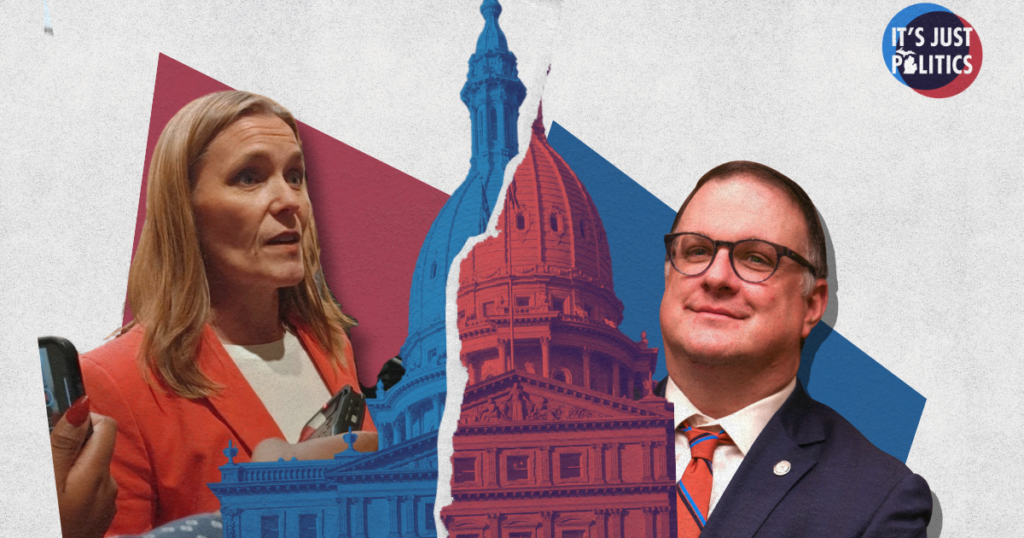
As the political landscape in Michigan heats up in 2026, the lack of communication between key leaders is raising eyebrows. Senate Majority Leader Winnie Brinks and House Speaker Matt Hall have yet to speak this year, signaling potential challenges ahead.
With the 2026 election season looming, the stakes are higher than ever. The divided Michigan Legislature, which struggled with budget deadlines last year, faces pressure to perform within a limited timeframe before campaign activities dominate.
“Certainly every election year, the first half of the year is the most productive,” Brinks stated on the podcast. “It becomes more difficult thereafter. That’s true not just in Michigan, but in every state. So I’m hopeful that we will be able to have a productive conversation around the budget, that it will get done on time and delivered to the people of Michigan so that they know what to expect.”
The crucial numbers in Lansing politics—56 in the House, 20 in the Senate, and 1 for the governor’s signature—remain unchanged. Yet, the challenge of securing these numbers persists, especially after the Legislature’s previous struggles.
House Speaker Hall has suggested bypassing Democratic legislators in negotiations, advocating for direct talks with Governor Gretchen Whitmer. He remarked, “So, you know, fortunately, there’s a great leader of the Democrat party, Governor Gretchen Whitmer, and I’m the leader, kind of the default leader of the Republican Party in the Legislature as the Republican speaker. And, I think working with Governor Whitmer, who I have talked to recently, we can take on a lot of issues.”
This strategy leaves Senate Minority Leader Aric Nesbitt, a GOP gubernatorial hopeful, in a precarious position, potentially excluded from key discussions.
The University of Virginia’s Center for Politics’ “Crystal Ball” places Michigan’s House and Senate as toss-ups in the upcoming elections, noting a potential Democratic advantage in a midterm setting.
What’s Brewing in Michigan Politics?
Third Party Dynamics: The upcoming special election in Michigan’s open 35th Senate District introduces a Libertarian option alongside the usual Democrat and Republican candidates. Ali Sledz, nominated by the Libertarian Party, will appear on the May 5 ballot. This race, with significant attention on the major parties, features ten Republican and Democratic contenders in the February 3 primary. More insights will be shared in the upcoming IJP podcast episode.
Presidential Primaries: Michigan Democrats aim for an early spot in the 2028 presidential primaries, submitting an application to amplify the state’s influence in the Democratic field. The New York Times highlights the strategic significance of early-state status but notes potential challenges given Michigan’s political dynamics.
Engage with Us: As Michigan braces for a unique election year, we invite readers to share their thoughts on election coverage through the It’s Just Politics survey.
—
Read More Michigan News