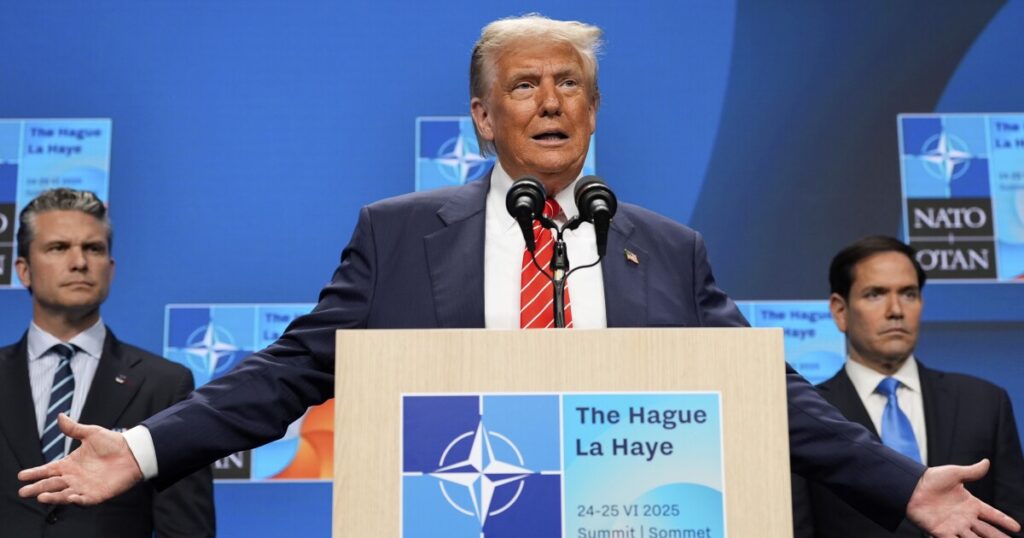
NATO’s recent summit in The Hague has been hailed as a pivotal moment, marking a major shift in the organization’s strategic direction. “We’re witnessing the birth of a new NATO,” declared Finland’s President Alexander Stubb, emphasizing the transformative nature of the discussions.
Tens of Billions in Defense Investments
The summit saw the endorsement of a significant increase in defense investments among NATO’s European members and Canada, amounting to tens of billions of dollars. This new framework aims to reach 3.5% of GDP in defense spending by 2035, a considerable rise from the current target of 2%. Weapons and ammunition provided to Ukraine will contribute toward this target, easing the burden somewhat, though economic challenges persist for some nations like Canada and several European countries.
Furthermore, 1.5% of GDP will be allocated to modernizing infrastructure crucial for military deployment, such as roads and airfields. The progress of these commitments is set to be reviewed in 2029, post the next U.S. presidential election. However, not all NATO members are fully aligned, with Spain opting out and countries like Belgium, France, and Italy facing difficulties in meeting these ambitious goals.
Reaffirming Collective Defense
During the summit, NATO leaders reiterated their strong commitment to the alliance’s collective defense clause, Article 5. Former U.S. President Donald Trump, who had previously questioned the U.S.’s role in defending its allies, acknowledged the renewed spending commitments, stating, “I left there saying that these people really love their countries. It’s not a ripoff. And we’re here to help them protect their country.”
Ukraine’s Position in NATO Discussions
This summit marked a departure from previous gatherings, where Ukraine’s potential membership was a central topic. Instead, the focus shifted to ongoing support for Ukraine amid its conflict with Russia. Ukrainian President Volodymyr Zelenskyy was present, engaging in discussions with various leaders. Although NATO’s final statement didn’t explicitly mention Ukraine’s membership, it affirmed continued support for the nation.
Despite the sideline nature of Ukraine’s role, foreign ministers held a NATO-Ukraine Council meeting. The summit identified Russia as a significant security challenge, aligning with NATO’s strategic objectives.
U.S. Influence and Summit Dynamics
The summit underscored the United States’ influential position within NATO. In preparation, a brief agenda was crafted to accommodate U.S. President Trump. NATO Secretary-General Mark Rutte praised Trump’s achievements, stating in a text message, “Europe is going to pay in a BIG way, as they should, and it will be your win.”
Post-summit, Trump expressed newfound appreciation for NATO, describing the leaders as a “nice group of people” and noting their gratitude towards the United States, asserting that “almost every one of them said ‘Thank God for the United States.'”
—
Read More Michigan News