Governors Push for Microplastics Monitoring by the EPA
In a significant move to address the growing concern over microplastics, Governor Gretchen Whitmer of Michigan, along with six other governors, has called upon the U.S. Environmental Protection Agency (EPA) to begin tracking and gathering data on these contaminants. This initiative aims to include microplastics in the EPA’s list of unregulated contaminants, which are not currently mandated for monitoring under the Safe Drinking Water Act.
Inclusion on this list would subject microplastics to the Unregulated Contaminant Monitoring Rule (UCMR). This would facilitate the accumulation of data and the establishment of a comprehensive monitoring program for drinking water nationwide.
The governors, all Democrats from Michigan, New Jersey, Delaware, Illinois, Maryland, Wisconsin, and Connecticut, argue that a specific provision within the Safe Drinking Water Act obligates the EPA to act, given the collective endorsement from seven governors.
Tami Renkoski, co-founder of the Michigan Microplastics Coalition, expressed her excitement over Governor Whitmer’s involvement. “We appreciate all the work she has done to protect our Great Lakes and our beautiful state of Michigan,” Renkoski commented. She noted that existing water treatment systems are not equipped to handle microplastics or PFAS, indicating that upgrades will be necessary to effectively remove these substances.
Renkoski highlighted the challenges posed by microplastics as an emerging contaminant, stating that ongoing research aims to determine safe consumption levels. “In the few testings that have been done with drinking water, we are definitely seeing microplastics,” she mentioned, adding, “But how much is too much, we don’t know yet.”
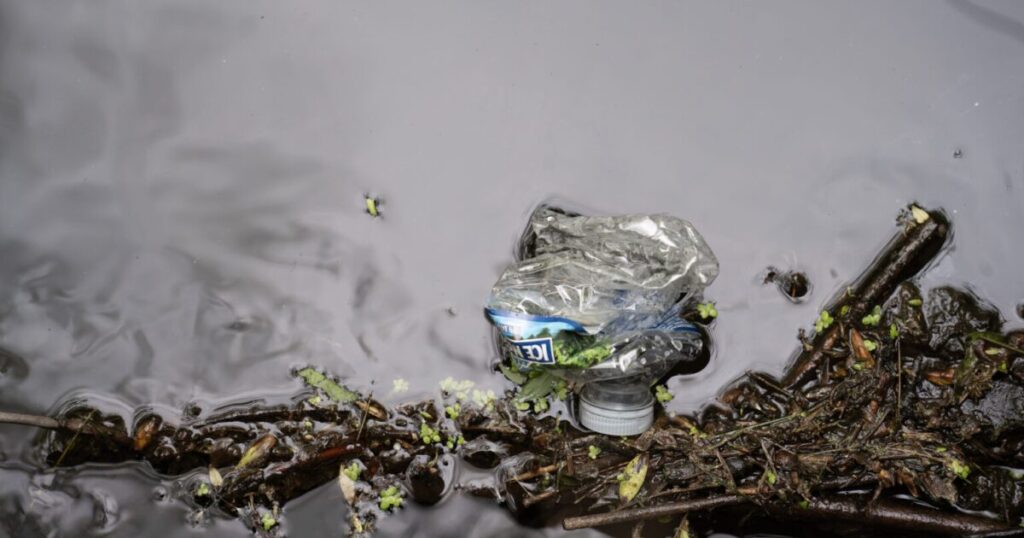
The pervasive nature of microplastics is alarming, with reports of their presence throughout the human body and in Great Lakes fish. “It’s like we have the faucet and the bathtub turned on, and it’s overflowing,” Renkoski said. “It’s nonstop. We have created so many plastic products, they’re everywhere.”
Research into the environmental and health impacts of microplastics is ongoing. However, Renkoski believes that the petition marks a positive step towards understanding and mitigating the issue.
—
Read More Michigan News