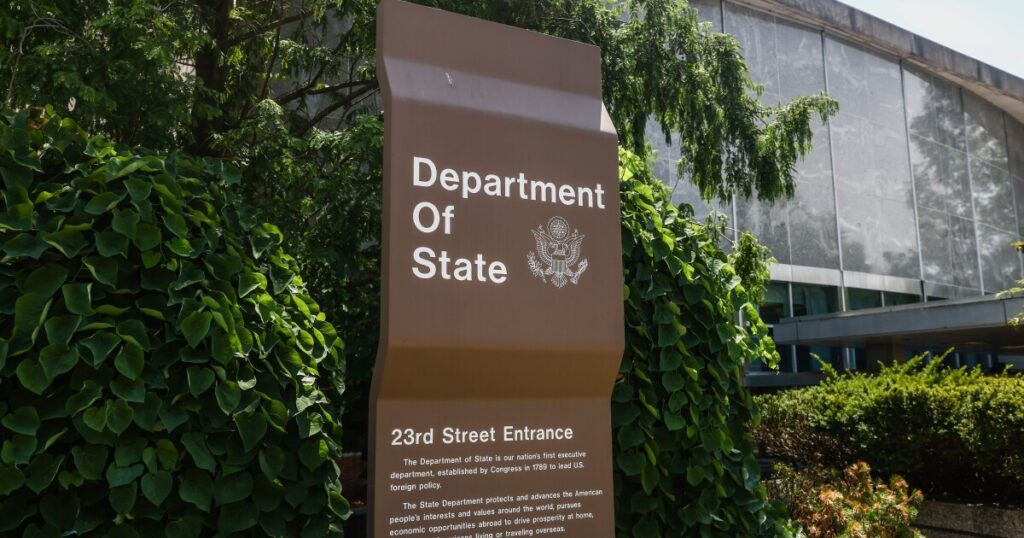
In a move set to redefine its operational framework, the State Department is undergoing a significant reduction in its workforce based in Washington, D.C. The planned 15% staff cut marks the most substantial restructuring within the department in recent memory, with early retirements already in motion and numerous layoffs expected by the end of the week.
Deputy Secretary of State for Management Michael Rigas announced that notifications regarding this “reduction in force” will soon be communicated to those impacted.
At the helm of this transformation is Secretary of State Marco Rubio, who is closing down 132 offices labeled as unnecessary bureaucracy. The department’s internal procedures have been revised to enable termination of foreign and civil service members whose roles are now obsolete.
Rubio argues that this streamlining is crucial for enhancing efficiency, noting that excessive layers of bureaucracy hinder prompt decision-making. “There were 40 boxes on this piece of paper,” he defended during a Senate hearing in May. “That means 40 people had to check off ‘yes’ before it even got to me. That’s ridiculous. And if any one of those boxes didn’t get checked, the memo didn’t move. That can’t continue.”
Despite Rubio’s justification, the shake-up has drawn criticism from former diplomats. The American Academy of Diplomacy, which includes past ambassadors committed to U.S. diplomatic efforts, has criticized Rubio’s approach as damaging to the department’s institutional expertise, referring to it as “an act of vandalism.”
“This isn’t just about trimming fat,” commented Thomas Shannon, a former undersecretary under the Trump administration. “We’re removing a significant chunk of our civil service and foreign service employees and restructuring in ways that reflect a diminished global agenda.”
Shannon cautions that the overhaul could yield long-term repercussions, particularly as the U.S. diminishes its focus on human rights and democracy. He emphasized the closure of USAID and the loss of highly skilled experts in languages and cultures as detrimental to U.S. global influence.
“We’re going to end up cutting a lot of really talented individuals,” Shannon observed. “They’ll be like players in a game of musical chairs — suddenly finding themselves without a seat.”
Though the immediate effects might not be apparent, Shannon warned that these changes could eventually cause the U.S. to fall behind international competitors like China.
Copyright 2025 NPR
—
Read More Michigan News