Trump Administration’s Proposal Could Shift Control Over Federal Research Grants
The Trump administration is considering a significant change to how federal research grants are managed, potentially allowing for increased political influence. This adjustment could impact a range of research areas, with health and science funding facing the most significant effects.
Holden Thorp, editor of Science magazine, criticized the proposal, stating, “Although research has bipartisan support in the US Congress, and trust in science is above 75% across the country, the Trump administration seems as determined as ever to mortally wound the nation’s scientific enterprise.” His editorial underscores the potential consequences of the rule change.
The proposed changes, which appeared in the Federal Register on May 29, could formalize strategies that some experts argue might dismantle specific study areas in the U.S. The proposal would grant new authority to advance presidential policy priorities, affecting fields like public health, vaccine testing, biotechnology, social and behavioral science, and climate science.
This move has sparked action among advocacy and science groups nationwide. Cole Donovan from Stand Up for Science remarked, “This would be the end of American science as we know it. We’re gonna make sure that it doesn’t fade quietly into the night.”
Potential Impact on Peer Review
Since World War II, peer review has been a cornerstone for maintaining research integrity and guiding federal funding decisions. Federal agencies typically rely on recommendations from independent advisory committees on various issues, from vaccine schedules to environmental standards.
While peer review is not legally binding, it has been a crucial component of governmental norms. Donovan noted, “While it’s been true that peer review panels have always been treated as advisory by agencies, it was usually the combination of peer review with a non-political career expert at an agency that made the determination of whether to issue an award or not.”
The proposed rule does not eliminate peer review but mandates political appointees, who may lack scientific backgrounds, to review grants before decisions are made, potentially giving them veto power over projects approved by scientific peer review.
Historians and scientists have expressed concerns about the implications of such changes. Historian Tim Snyder likened the proposal to “late Stalinism,” warning of a situation where non-scientists make critical decisions. Others compared it to the scrutiny seen during the McCarthy era in the U.S.
The Infectious Diseases Society of America issued a statement titled, “Proposed rule would replace scientific merit with McCarthy era politics.”
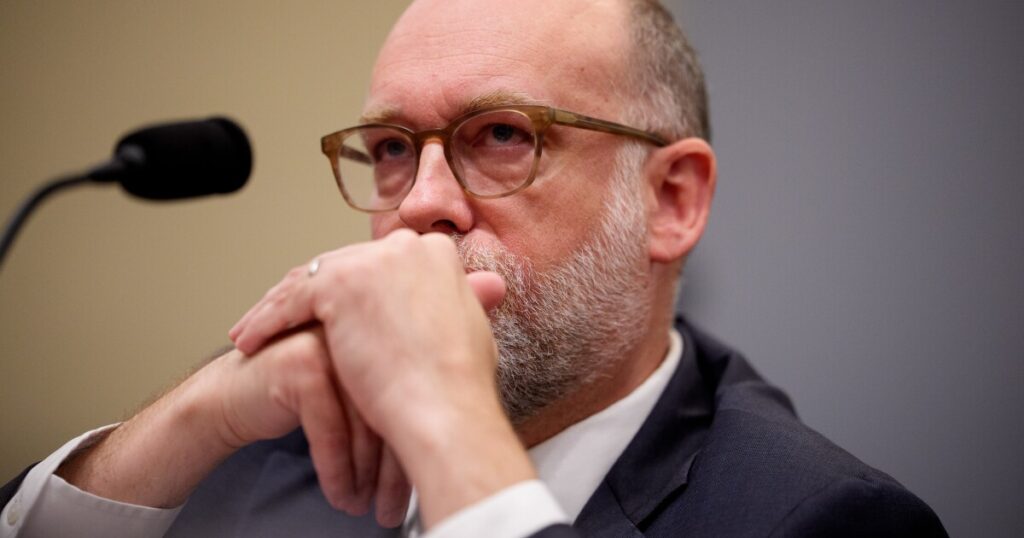
The White House’s Office of Management and Budget, led by Director Russell Vought, proposed the rule change. An OMB spokesperson claims it aims to enhance efficiency, stating it will “improve the ability of agencies to identify and respond to waste, fraud, and abuse.” Critics, however, argue there is no evidence of such issues within the existing peer-review system.
Elizabeth Ginexi, formerly of the National Institutes of Health, questioned the wisdom of allowing non-scientists to influence scientific decisions, asking, “When we’re designing a study to a new cancer therapeutic, do you want Russell Vought — who is not a scientist — to determine which immunotherapy is ready to go into a phase three trial?”
The rule change also includes a ban on research related to diversity, equity, and inclusion or gender as grant conditions and limits international scientific collaborations. Donovan emphasized the importance of international collaboration for high-impact research.
Limited Congressional Influence
Democratic lawmakers, including U.S. Rep. James Walkinshaw of Virginia, have voiced concerns, asserting that political agendas should not dictate research funding. Walkinshaw warned, “The question isn’t whether politics will influence research under this proposal. That’s the point.”
Despite calls for public action, Congress is unlikely to intervene directly. The proposal is open for public comment until July 13, after which the OMB will review the feedback before deciding whether to proceed with the final rule. Donovan anticipates that if the rule is enacted, it will “almost certainly” face legal challenges.
—
Read More Michigan News

![Botched Ad Mix-Up: Super PAC Error in Arizona Congressional Race[embed]https://www.youtube.com/watch?v=bEMgIlCkHz0[/embed]](https://www.kitchentablenews.org/wp-content/uploads/2026/10/Botched-Ad-Mix-Up-Super-PAC-Error-in-Arizona-Congressional-RaceembedhttpswwwyoutubecomwatchvbEMgIlCkHz0embed.com2F0e2F962Fe971102f49e7a4f2a64fd3cc60a22Fjonatha.png "Botched Ad Mix-Up: Super PAC Error in Arizona Congressional Race[embed]https://www.youtube.com/watch?v=bEMgIlCkHz0[/embed]")