Updated July 23, 2025 at 4:12 PM EDT
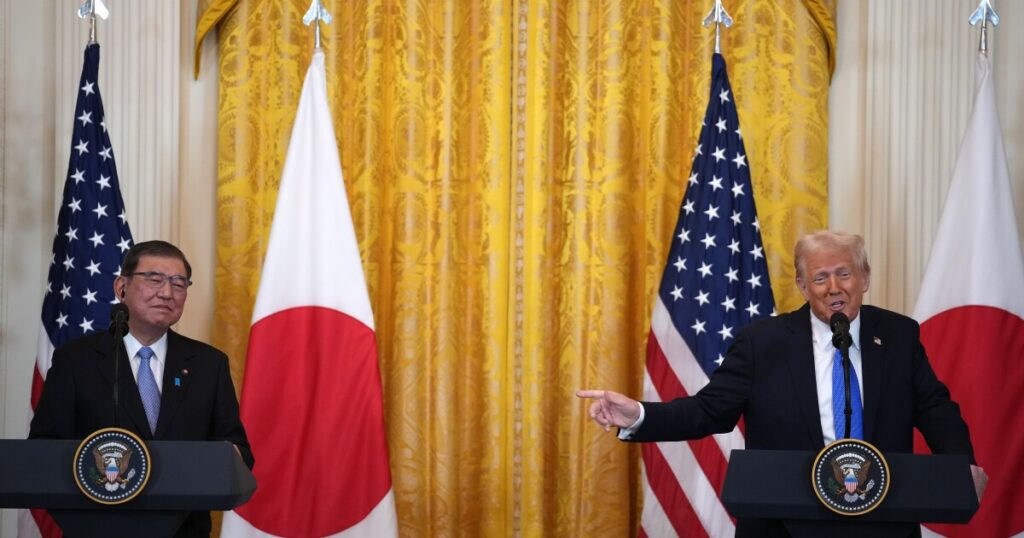
The U.S. and Japan have reached a new trade agreement under President Trump’s administration, establishing “reciprocal” tariffs of 15%. Announced on Tuesday via social media, the deal is touted by Trump as a groundbreaking agreement that will lead to Japan investing $550 billion in the U.S. economy. The deal is expected to expand trade, including sectors like automotive and agriculture.
President Trump emphasized the significance of the agreement, stating it will generate “Hundreds of Thousands of Jobs — There has never been anything like it.” Japanese Prime Minister Shigeru Ishiba also recognized the mutual benefits of the deal, according to AP.
In 2024, the U.S. faced a $70 billion trade deficit with Japan, according to USTR data. The agreed tariff rate of 15% is significantly lower than the 24% and 25% rates previously threatened by Trump, which were slated for implementation on August 1.
Trump has been actively negotiating with multiple countries, including the Philippines, Indonesia, and Vietnam, achieving similar tariff reductions. The White House released details showing Japan’s $550 billion investment will span several industries, such as energy infrastructure, semiconductor production, and pharmaceutical manufacturing. The U.S. is set to hold 90% of the profits from these investments, aiming to benefit American workers and communities.
Additionally, Japan plans to purchase 100 Boeing aircraft and will relax its restrictions on U.S. cars and trucks, marking a significant opening for American automakers in the Japanese market. This development comes after Trump personally engaged in tariff discussions with Japanese officials, aiming to establish a framework other nations could emulate.
The announcement follows a challenging period for Ishiba, whose ruling party suffered a setback in recent elections, leading to increased pressure for his resignation.
Averting a “National Crisis”?
Earlier this year, Trump threatened a 24% tariff on Japanese goods, prompting Ishiba to describe the situation as a “national crisis”. Despite being one of the first foreign leaders to visit Trump after his inauguration, Ishiba’s efforts to shield Japan from tariffs proved insufficient.
In April, Ishiba called the tariffs “extremely regrettable and disappointing” and assured lawmakers that Japan would not compromise excessively to expedite negotiations. Initially, Japan considered leveraging its $1.3 trillion in U.S. government debt and weapons purchases in negotiations, but later decided to separate these issues.
Trump has long criticized Japan for taking advantage of U.S. trade and defense agreements, viewing the nation as emblematic of a wealthy ally that benefits disproportionately from U.S. commitments.
Copyright 2025 NPR
—
Read More Michigan News