Updated August 7, 2025 at 3:52 PM EDT
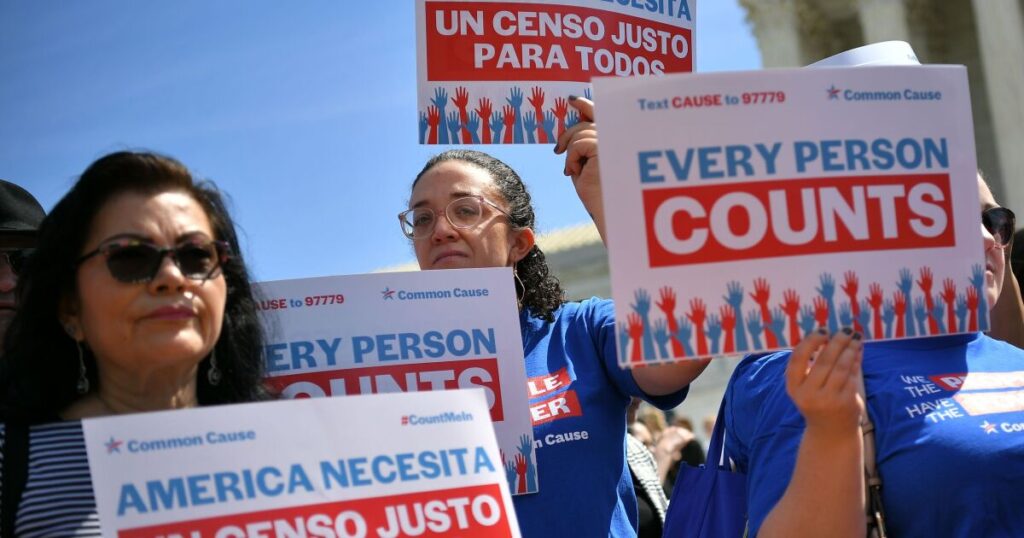
In a bold move regarding the upcoming 2030 census, President Trump announced plans for a “new” census that excludes millions of individuals living in the U.S. without legal status. This proposal marks a significant departure from traditional census procedures dating back to 1790.
The 14th Amendment mandates that the “whole number of persons in each state” be counted for the crucial task of determining electoral representation. However, details from the Trump administration remain scarce, leaving questions about whether this plan pertains to the 2030 census or an earlier count.
President Trump, through a social media post, indicated that the Commerce Department, which supervises the Census Bureau, has been directed to start work on this new census using “the results and information gained from the Presidential Election of 2024,” though it’s unclear how election results are relevant to census-taking.
The President’s Role and Congressional Authority
While Article 1 of the Constitution assigns Congress the responsibility of conducting the census, the President does not hold final authority over it. According to Title 13 of the U.S. Code, the commerce secretary can oversee a mid-decade census, but its results cannot be used to allocate congressional seats or Electoral College votes. The topics for such a census need to be reported to Congress years in advance.
Trump’s initiative seems to align with a House bill introduced by Rep. Marjorie Taylor Greene, which proposes excluding noncitizens from apportionment numbers and calls for a new census before the 2026 midterm elections. Trump expressed confidence in the bill’s passage, stating, “It’s going to get in. It’s going to pass, and we’re going to be very happy.”
Republican lawmakers have also reintroduced legislation to exclude noncitizens from the 2030 census counts. Trump’s recent comments further coincide with his push for redistricting in states like Texas, sparking a political clash as Democrats prepare countermeasures.
Legal Challenges and Implications
The American Civil Liberties Union has signaled potential legal challenges, with Sophia Lin Lakin emphasizing that excluding residents without legal status defies the Constitution and federal law. “We won’t hesitate to go back to court to protect representation for all communities,” Lakin stated.
Legal experts note that Trump’s successor or Congress might have the chance in 2029 to eliminate any census questions regarding immigration status before the 2030 census forms are finalized. The Census Bureau is actively preparing for the 2030 census, including conducting a major field test in 2026.
Meeta Anand from the Leadership Conference on Civil and Human Rights expressed concerns over data integrity, stating, “To me, that represents an attempt to undermine and sow doubt on existing data and to raise the specter of manipulating data going forward.”
Historical Context and Previous Attempts
Trump’s current efforts echo his first administration’s attempt to add a citizenship question to the 2020 census, which the U.S. Supreme Court blocked. The court did not rule on the exclusion of individuals without legal status from apportionment counts. Former President Biden reinstated the practice of counting all residents for apportionment with a 2021 executive order, which Trump revoked upon returning to office.
The Census Bureau’s research indicates that asking about citizenship status could lead to inaccurate data and discourage participation from households with Latino or Asian American residents. Such data is crucial for the allocation of federal funding for public services.
While some past censuses included citizenship questions, Trump’s proposal to apply this to all residents marks a departure from historical practice. As the debate continues, the potential impact on representation and federal funding distribution remains a critical concern.
—
Read More Michigan News