Dental caries, or tooth decay, is the most prevalent chronic disease among children in the United States, surpassing asthma and hay fever. Untreated tooth decay can cause pain, infection, missed school, and long-term health complications. It is particularly common in poverty-stricken areas with limited healthcare access.
Fewer than 10,000 pediatric dentists practice nationwide, with rural and low-income areas lacking specialty care. This disparity underscores the need for advanced training to prepare new clinicians for service in underserved communities.
The University of Michigan, supported by a $2.1 million Health Resources and Services Administration grant, is addressing these disparities through its longstanding partnership between the School of Dentistry and School of Public Health, aligning with U-M’s strategic vision for Human Health & Well-Being.

With this grant, each pediatric dentistry resident will earn a Certificate in Social Epidemiology during their 30-month residency.
This initiative exemplifies the interdisciplinary collaboration prioritized by both schools and the broader U-M community, uniting future clinicians with public health researchers to bridge gaps between science, practice, and policy.
Building on a legacy of collaboration
The collaboration between the School of Dentistry and School of Public Health dates to the 1930s and 1940s, when Dr. Kenneth Easlick was instrumental in establishing pediatric dentistry and dental public health as formal disciplines. His integrated approach positioned U-M as a national leader in oral health education and research.
Pioneers like Dave Striffler, Brian Burt, and Stephen Eklund expanded these efforts through joint research, dual-degree programs, and shared faculty appointments, influencing global education and care.
Today, the Department of Epidemiology provides the David Striffler Fund Scholarship to support students interested in dental public health, highlighting this enduring partnership.

Integrating public health into clinical training
The Certificate in Social Epidemiology, introduced by the Center for Social Epidemiology and Population Health in 2021, has become one of the most sought-after programs at the School of Public Health.
It involves 12 credits of coursework, starting with core epidemiologic methods and focusing on health equity and social determinants.
Residents learn to analyze health disparities, interpret public health data, and develop strategies for underserved populations, bringing clinical insights to public health classrooms.
This interdisciplinary setting enhances courses and broadens learning, linking public health science with practical care.
Developing leaders through community immersion
Leadership development is key to this enhanced residency program. Central to the experience is a clinical rotation at Mott Children’s Health Center (MCHC) in Flint, specializing in pediatric services for low-income families.
Residents spend a year at MCHC providing direct dental care, encountering the complexities of care in communities facing health disparities and emphasizing culturally responsive approaches.
This exposure shows residents how social contexts affect children’s dental health, especially in underserved areas, preparing them to improve care, advocate for change, and impact their communities.
By participating in the Social Epidemiology Certificate Program and working with multidisciplinary teams at MCHC, residents acquire skills to lead oral health programs and contribute to public health initiatives.
Tackling disparities, training leaders

This leadership focus continues the tradition started by pioneers like Dr. Easlick, whose work positioned U-M as a leader in pediatric dentistry and dental public health. The grant-funded program expands that legacy, equipping pediatric dentists to address social and structural factors in oral health inequities.
Training pediatric dentists to consider broader community contexts advances health equity, enabling efforts to tackle oral health disparities in Michigan and share best practices nationally.
As a public university, there is a duty and privilege to provide access to cutting-edge resources and train future leaders in oral health. This grant is a significant step, honoring a history of collaboration while preparing graduates for future challenges.
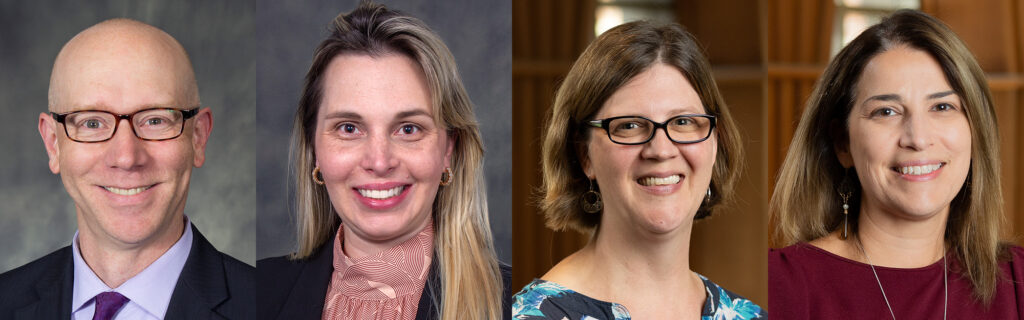
— By James Boynton, Giovana Anovazzi, Nancy Fleischer, and Briana Mezuk. James Boynton is a clinical professor in the Department of Orthodontics and Pediatric Dentistry and the program director for the Pediatric Dentistry Residency Program at the School of Dentistry. Giovana Anovazzi is a clinical assistant professor in the Department of Orthodontics and Pediatric Dentistry at the School of Dentistry and co-principal investigator on the HRSA grant. Nancy Fleischer is a professor of epidemiology and co-director of the Center for Social Epidemiology and Population Health at the School of Public Health. Briana Mezuk is a professor of epidemiology and co-director of the Center for Social Epidemiology and Population Health at the School of Public Health.
—
Read More Michigan News