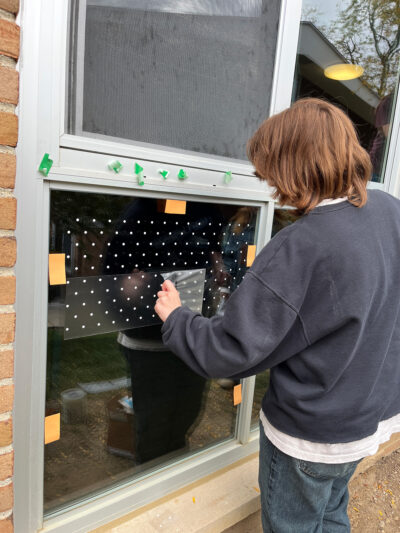
At the University of Michigan, small actions are fostering a culture of sustainability with lasting impact. This fall, first-year students from the Michigan Sustainability Community at Oxford Houses collaborated with the Office of Campus Sustainability (OCS) to install bird-friendly window film on high-collision windows. This initiative aims to protect migratory birds and enhance campus biodiversity.
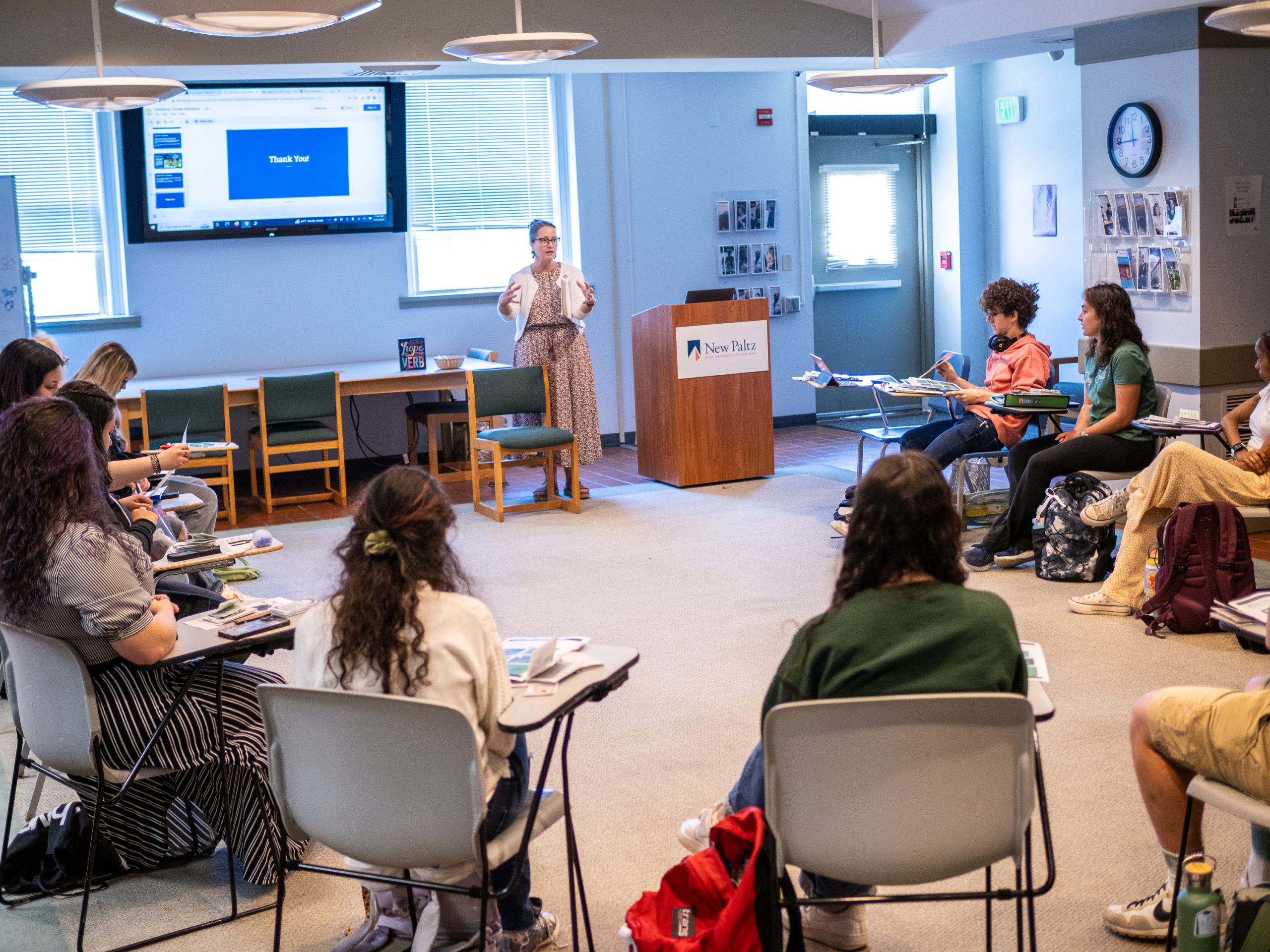
The project began in the “Campus as a Sustainability Lab” course, taught by Joseph Trumpey, director of the Michigan Sustainability Community and professor at the Penny W. Stamps School of Art & Design. Students, through the course, identify sustainability challenges and create practical projects to solve them. The Oxford team focused on bird safety, linking classroom learning with real-world applications.
“The students were eager to take on something visible and immediate — something they could experience every day,” said Daisy Hall, assistant director for the Michigan Sustainability Community. “It connects what they’re learning in the classroom with the place they call home.”
The patterned film helps birds see glass as a barrier, reducing collisions while maintaining visibility for occupants. For students, this project was a chance to apply research and understand the intersection of design, behavior, and environmental data.
“These kinds of student-led projects are at the heart of what we mean by a living learning laboratory,” said Shana Weber, associate vice president for campus sustainability. “They blend art, science and collaboration — and they help us translate ideas into action and then learn from them together.”
The Oxford Houses project is part of U-M’s Bird Protection Program, a campus-wide initiative led by OCS to decrease bird collisions and boost biodiversity. Building collisions are a major cause of bird mortality, killing an estimated 1 billion birds annually in the U.S.
The program integrates research, monitoring, and prevention, combining faculty-led collision data collection with operational pilots like Oxford Houses. Insights inform both short-term mitigation and long-term design guidelines.
OCS, in partnership with the Museum of Zoology, conducts bird-collision inventories each migration season to pinpoint high-risk locations. Volunteers are trained to document any dead, injured, or stunned birds, with data interpreted by OCS and Ben Winger, associate professor of ecology and evolutionary biology.
Buildings like the Biological Sciences Research Building have reflections that contribute to bird-window strikes, highlighting the need for targeted solutions. Smaller installations allow meaningful action while planning for larger-scale solutions, strengthening cross-unit relationships and learning effective strategies before campus-wide implementation.
In collaboration with Biological Sciences faculty, OCS and volunteers collect data on collision patterns, exploring how building features, lighting, and landscaping influence these incidents. Findings will guide preventive actions, including film applications and lighting adjustments.
The Oxford team also explored hands-on biodiversity efforts by studying the impact of dead and dying trees on cavity-nesting birds and building nesting boxes from campus logs. The boxes are being installed at the Campus Farm and Nichols Arboretum.
This effort reflects U-M’s Campus as Lab approach, connecting academic research with operational practice to tackle sustainability challenges. Through this model, students and faculty work with staff to design, test, and evaluate solutions that enhance campus systems, from energy use to biodiversity and building design. Each project offers hands-on learning and measurable impact.
OCS will continue partnering with faculty and students, expanding monitoring to additional high-risk buildings and piloting further bird-safe interventions, aiming for long-term updates to campus design standards and biodiversity goals.
MORE INFORMATION
- U-M’s bird-protection initiatives
- Campus as Lab projects
- Michigan Sustainability Community at Oxford Houses
—
Read More Michigan News