Article Summary –
The U.S. has reduced the number of vaccines recommended for children, now advising vaccination against 11 diseases, while other vaccines like those for flu and hepatitis are recommended only for high-risk groups or based on doctor consultation. This change, driven by the Trump administration and Health Secretary Robert F. Kennedy Jr., aims to align U.S. recommendations with other countries but has been criticized by medical experts for potentially increasing preventable diseases and lacking a transparent review process. Many in the medical community, including the American Academy of Pediatrics, have voiced concerns over the decision’s potential impact on public health and have criticized the lack of input from advisory committees and scientific justification for the changes.
WASHINGTON (AP) — The U.S. has made a historic decision to reduce the number of vaccines recommended for children, a move that medical experts warn could weaken protection against multiple diseases.
The immediate change by the U.S. Centers for Disease Control and Prevention (CDC) now advises vaccinations against 11 diseases. Vaccines for flu, rotavirus, hepatitis A, hepatitis B, certain meningitis types, and RSV are now recommended only for high-risk groups or upon doctors’ advice in “shared decision-making.”
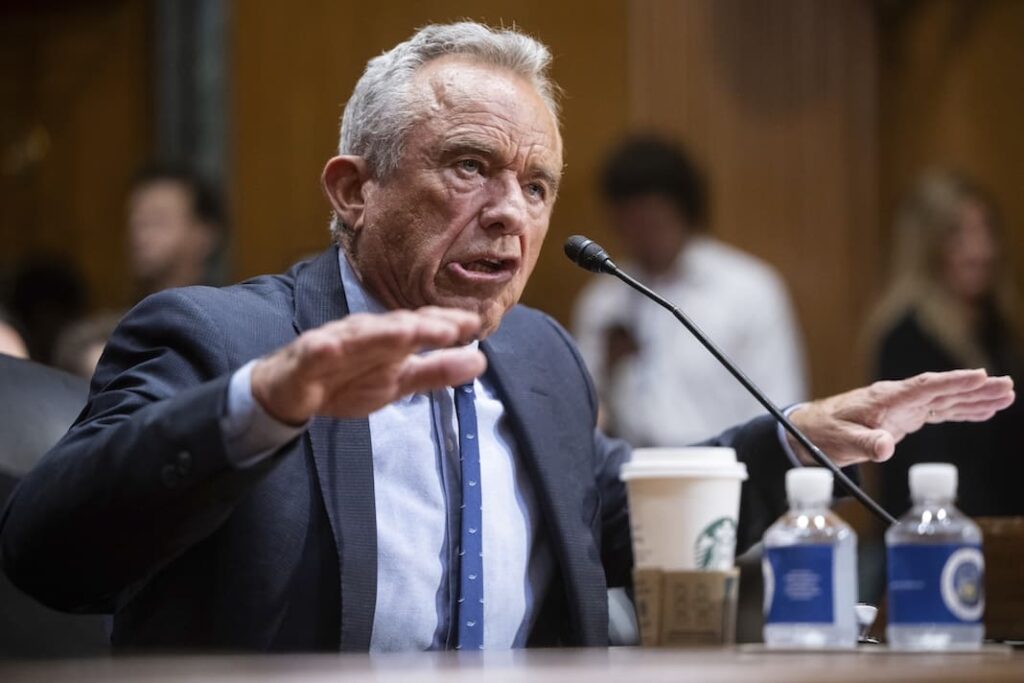
Officials from the Trump administration, particularly Health Secretary Robert F. Kennedy Jr., claim families seeking these vaccines will still have access through insurance. However, medical professionals argue this could cause parental confusion and potentially increase preventable diseases.
State governments, not federal authorities, decide vaccination requirements for schoolchildren. Although CDC guidelines typically influence state laws, some states are countering the Trump administration’s vaccine guidance.
U.S. vaccination rates are declining, while exemptions among children have reached record highs. Diseases preventable by vaccines, like measles and whooping cough, are on the rise, Federal data shows.
Review Initiated by President Trump
The U.S. Department of Health and Human Services (HHS) states President Donald Trump requested a review of vaccine guidance compared to peer nations. The review found the U.S. was an “outlier” in vaccine numbers and doses, prompting the change to boost public trust by focusing on essential vaccines.
Kennedy claimed the decision “protects children, respects families, and rebuilds trust in public health.” Trump praised the new schedule on Truth Social, stating it aligns the U.S. with other developed nations.
Vaccines for measles, whooping cough, polio, tetanus, chickenpox, and HPV remain on the universal list, though HPV shots reduce from two or three to one for most children.
Experts criticized the changes for lacking public discussion and a transparent data review, potentially risking children’s health.
Michael Osterholm from the Vaccine Integrity Project cautioned that reducing recommendations for flu, hepatitis, and rotavirus vaccines, without public risk-benefit analysis, could increase hospitalizations and preventable deaths.
Dr. Sean O’Leary from the American Academy of Pediatrics warned that countries tailor vaccine recommendations to their disease levels and healthcare systems. “You can’t just copy and paste public health,” he noted.
Most high-income nations recommend vaccinations against 12-15 serious pathogens. France, for example, advises vaccinations against 14 diseases, compared to the U.S.’s new 11 under the current schedule.
Doctors’ Groups Oppose Decision
O’Leary criticized political appointees for changing recommendations without evidence of harm from current guidelines. The pediatricians’ group maintains its vaccine schedule, still recommending demoted vaccines.
O’Leary highlighted the flu vaccine’s exclusion, despite government and expert advice for almost everyone over six months. He deemed the decision “tone-deaf” amid a severe flu season and after 280 child flu deaths last winter.
Rotavirus, previously causing winter hospitalizations, might resurge if vaccine uptake declines.
Senior HHS officials noted the advisory committee typically involved in vaccine decisions wasn’t consulted, and the public wasn’t informed of collaborative efforts among federal health agencies.
CDC scientists presented international vaccine schedules to political leaders but weren’t part of decision-making, according to the National Public Health Coalition.
Dr. Sandra Fryhofer of the American Medical Association emphasized the need for careful review, expert and public input, and clear scientific reasoning in decisions of this magnitude. The AMA supports ongoing access to nationally recommended childhood immunizations.
Kennedy’s Long-standing Vaccine Skepticism
Kennedy, known for his anti-vaccine stance, has used his position to influence national vaccine policies. In May, he ceased CDC recommendations for COVID-19 vaccines for healthy children and pregnant women, causing expert backlash due to a lack of supporting data.
In June, Kennedy dismissed a 17-member CDC vaccine advisory committee, appointing vaccine skeptics as replacements.
In November, Kennedy directed the CDC to abandon its stance that vaccines do not cause autism, without presenting new evidence.
—
Read More Michigan News