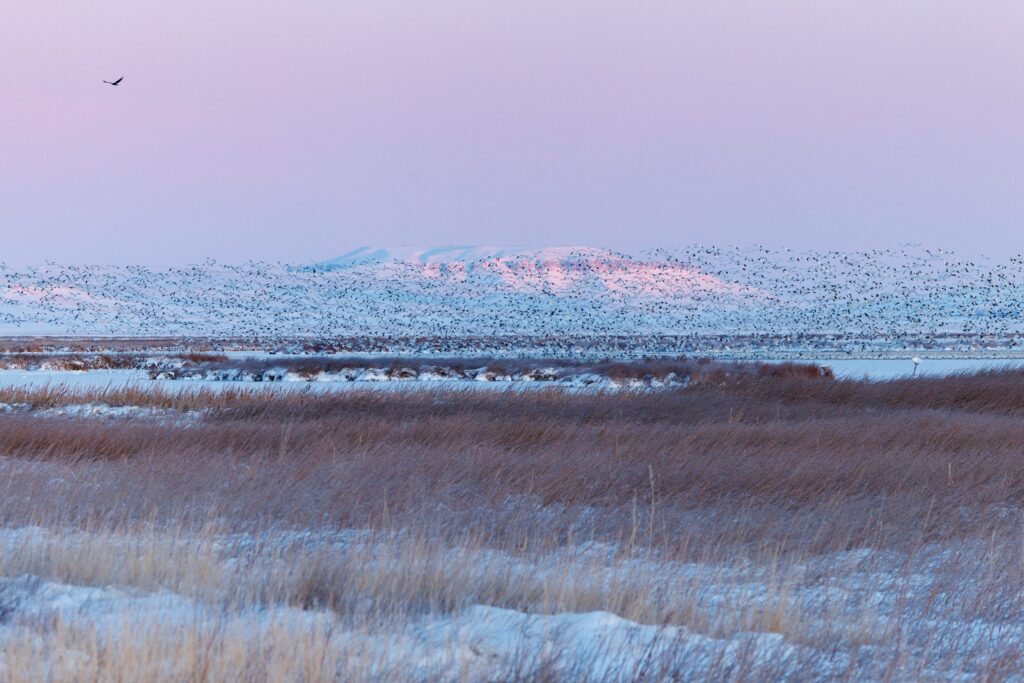
As morning light spreads over Freezeout Lake near Choteau, the soft sound of thousands of wings fills the air in Montana’s eastern Rocky Mountain Front. Visitors gather nationwide to witness this incredible spectacle where light geese, swans, and other waterfowl arrive in massive numbers during their 2,000- to 3,000-mile northward migration. This breathtaking event, which usually kicks off in late March, is anticipated to reach its peak this weekend.
Beyond the mesmerizing view, this migration offers an invaluable chance for environmental education, as highlighted by organizers and researchers. “Birding is a huge thing. There is tremendous interest in all things birding,” stated Brent Lonner, a biologist with Montana Fish, Wildlife and Parks. Sharing knowledge about Freezeout Lake and bird migration patterns enriches public understanding.
Montana’s strategic location is pivotal for both the Central and Pacific Flyways, serving as a midway point for numerous migratory bird species traveling from Central America to the Arctic. Freezeout Lake is an ideal stopover due to its network of lakes, ponds, and nearby agricultural fields, providing essential resources for the birds.
The site gives observers a unique glimpse of vast migratory patterns up close. “Birding is something universal, regardless of age or demographics, because it’s free,” remarked Maggie Carr, an outfitter and Wild Wings Festival organizer in Choteau. “Watching the migration is an amazing experience, even if you don’t know much about birds.”
This year, visitors might notice shifts in migration patterns due to changing weather and climate conditions. Warmer, drier weather has impacted water levels at Freezeout, traditionally sustained by snowpack. Lonner noted historically low water levels, impacting species like swans and diving ducks that require deeper waters.
According to the Freezeout Lake real-time dashboard, current bird counts, especially swans, are below average. Lonner explained this change reflects birds redistributing to find better habitats rather than a decline in populations.

Lonner emphasized the educational value of understanding the broader context of bird migration, advocating for respectful observation practices. Visitors are encouraged to avoid disturbing the birds, especially during their rest and refuel times in the morning and afternoon.
Rob Domenech, founder of the Raptor View Research Institute, highlighted the migration’s potential for citizen science, aiding researchers in tracking and data collection. Observing the migration fosters a deep appreciation for nature and the landscape. “The spectacle of the geese migration at Freezeout Lake is a great opportunity to watch wildlife,” Domenech noted, underscoring its role in enhancing public connection to nature.
LATEST STORIES
The pinnacle of Freezeout Lake migration expected this weekend
Visitors flock from all over the country for the renowned spectacle where light geese, swans, and other waterfowl birds descend in the hundreds of thousands over the course of a monthlong, 2,000- to 3,000-mile migration north. The projected pinnacle of that migration, which typically starts in late-March, is expected to take place the weekend of March 21.
Montana nears deadline for landlords to avoid second-home tax
After a multi-week extension, Montana’s state revenue department prepared for a March 20 deadline to stop accepting applications from landlords seeking to shield themselves from the state’s impending second-home tax.
Montana oil politics heat up as war in Iran continues
Whether rising oil prices, brought about largely by shipping challenges in the battle-plagued Strait of Hormuz, become a liability in elections this year will depend on how long fuel prices pinch consumers. But war-related increases are already stirring speculation about what comes next for Montana’s share of the Bakken shale formation — and concern about fuel prices.
—
Read More Montana News