For years, manufactured home builders have worked to change the perception of trailer homes, often seen on city outskirts. A recent shift in federal policy might now integrate these homes into more neighborhoods. The 21st Century ROAD to Housing Act, passed this summer, repealed a 1974 mandate requiring manufactured homes to be built on a nonremovable steel chassis. Experts believe this could unlock thousands of affordable housing options nationwide.
The change, however, requires states to update old regulations blocking the potential of the manufactured home industry. According to Pew Charitable Trusts’ housing initiative, around 30 states may need regulatory updates to comply with new federal laws. Removing the chassis could transform manufactured homes into multi-family developments, explains Stephanie Hawke from the Terner Center for Housing Innovation at UC Berkeley. The absence of heavy steel will also make stacking homes easier, reducing costs by $5,000 to $10,000 per home.
Manufactured homes, built entirely in factories and governed by U.S. Housing and Urban Development codes, are significantly cheaper than traditional site-built homes. The Manufactured Housing Institute reports they cost 50% less per square foot. This regulatory change may also see home designs integrating multi-story and duplex units, providing more affordable rental options.
UMH Properties, a real estate company, sees the chassis rule change as transformative. Founder Eugene Landy stated in a 2026 earnings call that it will enable two-story homes on existing lots, enhancing affordability and space utilization. Mark Brunner, president of the Manufactured & Modular Home Association of Minnesota, highlights another benefit: manufactured homes will blend more seamlessly into subdivisions without the chassis.
States must certify compliance with the new law by July 11, 2027, treating all manufactured homes equally, regardless of chassis. North Carolina, Tennessee, and Texas have already modernized their definitions to align with HUD. Rachel Siegel from Pew’s housing initiative notes that over 30 states will need to revise legal language around chassis requirements, which currently appear in various state statutes.
From temporary housing to mobile home parks
After World War II, mobile homes evolved from temporary shelters to more permanent community fixtures, often zoned in rural or suburban areas. Once referred to as mobile homes until the early 1970s, these homes, built in factories and transported to mobile home communities, are significantly cheaper than site-built houses. According to the U.S. Census Bureau, the average sales price for a new manufactured home rose from $81,900 in 2019 to $127,200 in 2025.
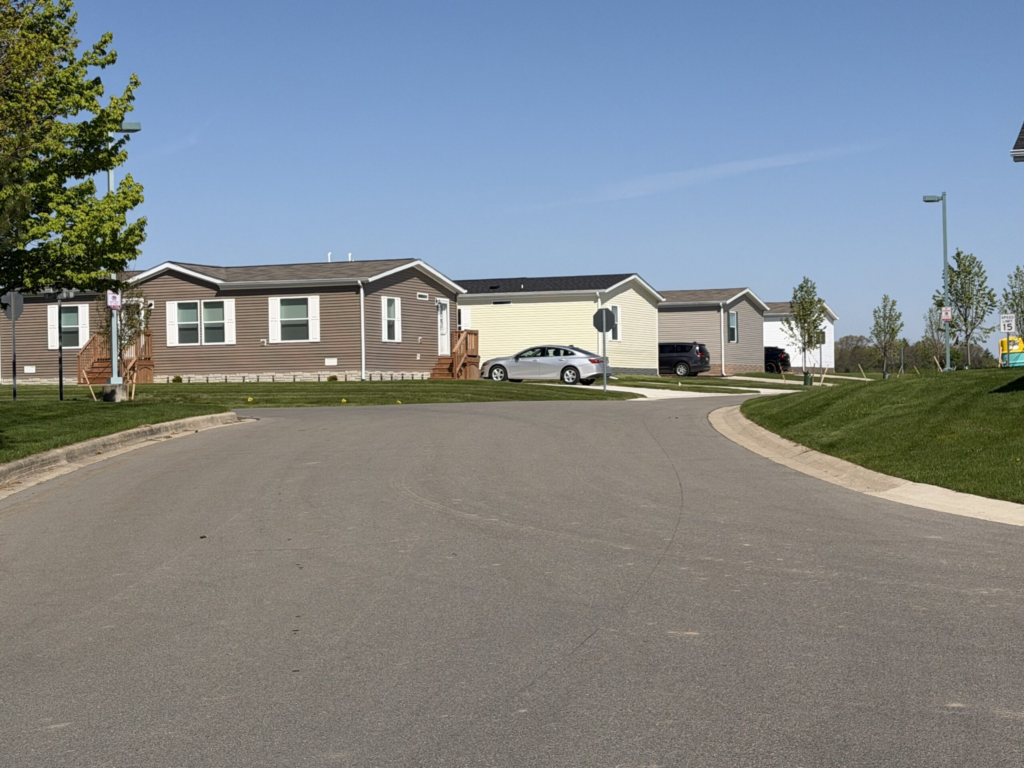
Despite a drop in factory-built home sales since the late 1990s, due to restrictive zoning and rising land costs, an estimated 20 million people live in these communities. Modern manufactured homes are increasingly indistinguishable from site-built houses, featuring similar construction materials. Dustin Brakemeier, a community owner, emphasizes their equivalence: “They have the same walls, ceiling, sheetrock, windows and shingles.”
Changing zoning, mortgage rules
Pennsylvania Republican state Rep. Dan Moul faced zoning challenges when expanding his manufactured home park, as zoning laws favored detached single-family homes. The removal of the chassis requirement could lead to state interventions against restrictive local zoning policies. The National Zoning Atlas analysis in Texas found that 33% of localities have restrictions on manufactured housing.
Recent legislative moves in Kentucky and Texas have banned local ordinances that unreasonably restrict manufactured home placements. Georgia, Maine, and New York have made it easier for manufactured homeowners to convert properties to real estate, gaining mortgage access. Alex Rodino, a real estate agent, notes a shift in perception as construction quality improves and traditional housing becomes less affordable.
Rachel Siegel suggests that states should reevaluate regulations, including whether manufactured homes can be defined as real estate. This would enhance mortgage access, potentially saving borrowers substantial amounts over the life of a loan. As states align with HUD regulations, there’s an opportunity to streamline processes to reflect modern housing realities.
—
Read More Montana News