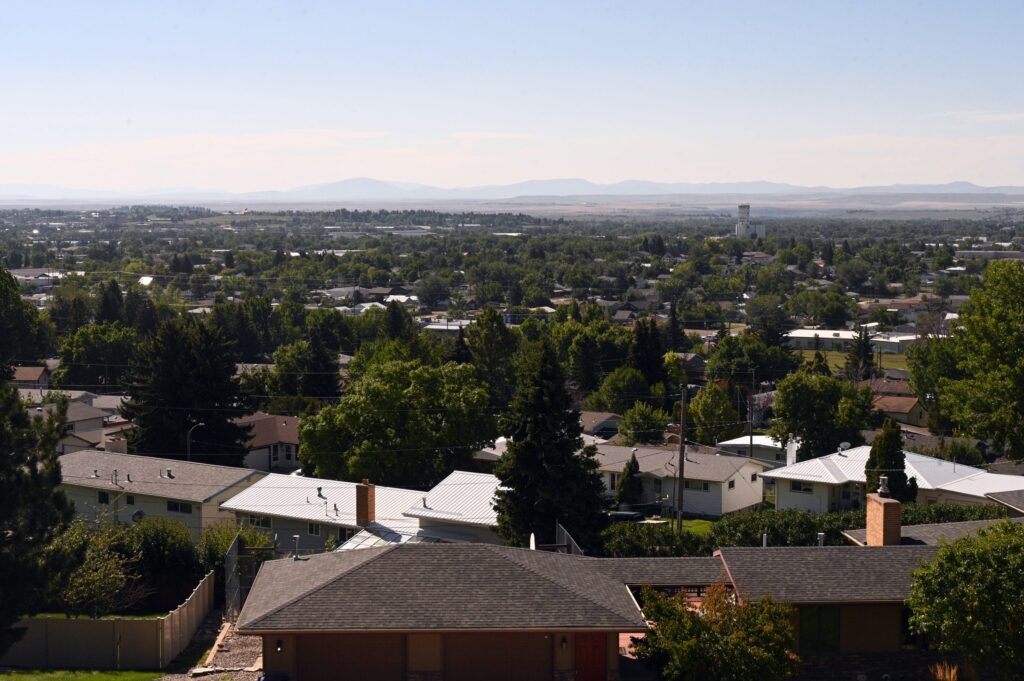
Great Falls has unveiled a draft of its new growth policy, intended to steer development within Montana’s slowest-growing major city. The policy is designed to guide urban planning and incorporates requirements from the 2023 state Legislature. A future land use map is included, focusing on neighborhood characteristics and infrastructure to define suitable commercial and residential densities.
City planning and community development director Brock Cherry emphasized the importance of mixed-use and infill development. This strategy enhances the property tax base without expanding city services like water or public safety. The policy document categorizes land use into ten types, aiming to make them more mixed and comprehensive.
Less dynamic categories like airports and industrial zones remain unchanged. Major commercial areas usually align with main thoroughfares, including 10th Avenue South and Third Street Northwest. For residential areas, the policy introduces more nuanced land-use designations, avoiding strict single-family or commercial classifications. “Rural fringe neighborhoods” are expected to grow slowly and include areas like Lower River Road and Central Avenue West.
“Traditional neighborhoods,” such as parts of Fox Farm and Riverview, mix single-family homes, apartments, and small businesses, located further from the city’s core. The core of Great Falls, designated as an “urban neighborhood,” offers potential for higher-density residential and commercial development, providing diverse housing options.

City commissioner Joe McKenney highlighted diverse housing possibilities, stating, “A residential area doesn’t just have to be single-family housing. It can be duplexes, townhouses, or small retail.” The draft policy indicates that redevelopment in “traditional” and “urban” neighborhoods yields higher tax returns due to their density and existing services.
Infill development, using underutilized spaces, is a priority as it generates tax revenue without needing new infrastructure. McKenney noted its importance, stating, “That’s at the top of the list because we don’t have to put infrastructure in.” Despite its benefits, attracting developers remains challenging.
Great Falls approved projects like Meadowview Village, aiming for 163 homes, but large-scale development space is limited. NeighborWorks Great Falls plans to replace a vacant home on Second Avenue South with affordable housing, proceeding one house at a time if needed.
The policy draft prioritizes smaller lot sizes, duplexes, and accessory dwelling units to promote affordable infill development. Despite slow population growth, with only a 2% increase since 2013, the new policy considers potential scenarios for up to an 18% growth by 2045.
Cherry noted, “We review it every year,” ensuring the policy evolves with clearer growth insights. The draft is open for public review until Feb. 28, with final approval expected in late spring. Details and commenting options are available here.
—
Read More Montana News