Teens who face suspension or juvenile justice often find themselves trapped in a cycle of falling behind academically and losing social connections. Amy Shattuck, assistant superintendent for Missoula high schools, notes that this can exacerbate the issues they face. In response, Missoula County Public Schools have partnered with the Center for Restorative Youth Justice (CRYJ) to offer an alternative path. Instead of traditional disciplinary actions, students learn to take responsibility and repair situations through this restorative justice model.
The Kalispell-based nonprofit, CRYJ, initially started as a youth peer court in 1998. According to Catherine Gunderson, the executive director, it shifted to collaborate more with law enforcement to keep students out of the juvenile justice system. The expansion to Missoula became a logical progression due to the interest from school officials and other partners. The partnership with Missoula County Youth Court, which funds the initiative, allows CRYJ to operate in four high schools.
“We’re excited for them to have that opportunity for accountability but also to really be the best version of themselves as they learn new skills and are challenged to think about and talk about their role in the community in a different way,” said Gunderson.
CRYJ’s program emphasizes repairing community harm and building relationships, contrasting with punitive approaches that often lead to further isolation. Kaya Juda-Nelson, a co-director of the Missoula program, explains that teens are still developing decision-making skills. The process provides a platform for students to learn from their mistakes rather than face legal consequences.
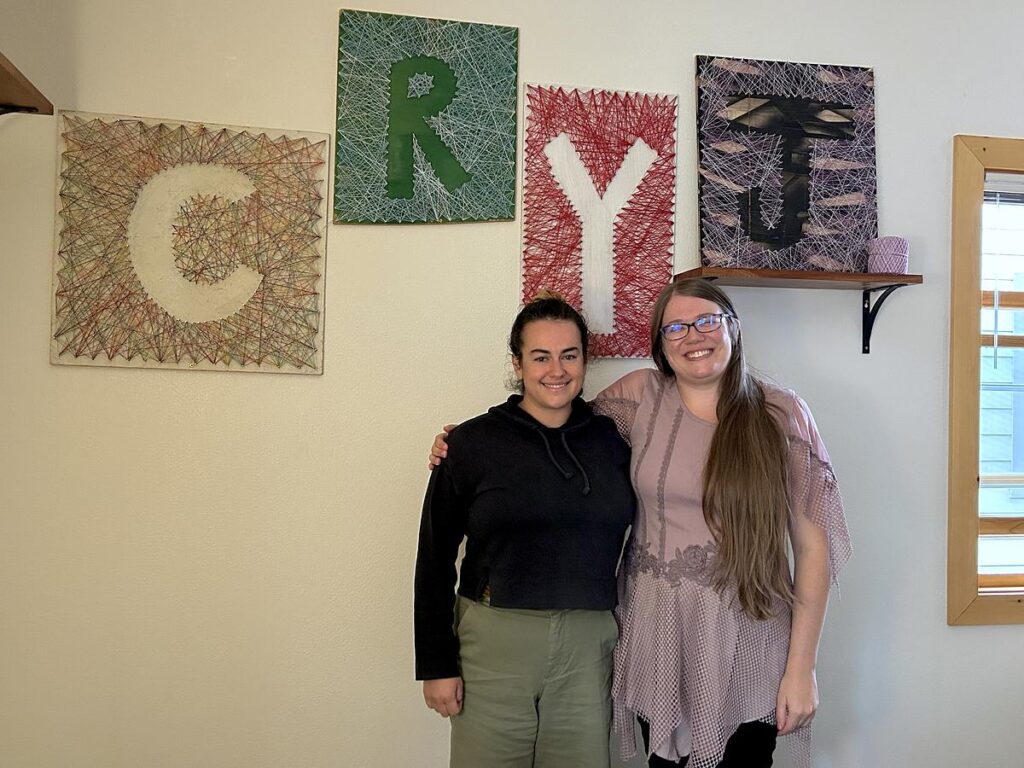
The program, spearheaded by Juda-Nelson and co-director Emma Schmelzer, began in August and addresses issues like substance use, bullying, and theft. Referrals come from school administrators or probation officers. Students go through a family conference and individual meetings, leading to tailored action plans. In cases like marijuana possession, educational workshops explore the root causes of drug use.
Restorative justice involves victim-offender conferences to encourage dialogue, said Schmelzer. “The core of restorative justice is about relationship building between everybody involved,” she explained.
This initiative is more challenging than it seems since it requires honest discussions about actions and their impact, according to Juda-Nelson. In Flathead, the program has successfully reduced juvenile justice entries and recidivism. Data shows that since 2017, referrals to Youth Court have decreased, and suspension rates have dropped. In the 2024/25 school year, CRYJ served 118 youths at a significantly lower cost than detention.
Christine Kowalski, Missoula’s chief juvenile probation officer, hopes to see similar outcomes locally. Informal handling of most juvenile cases in Missoula aligns well with CRYJ’s approach, offering more initial services than Youth Court. Kowalski aims for the program to empower students to avoid future offenses, reflecting a shift toward a restorative justice model that emphasizes rehabilitation over punishment.
LATEST STORIES
A year on the little-bit-of-everything beat
A throughline this year was the overcrowding in Montana prisons. In 2025, the Legislature approved long-term prison expansion, began building additional housing for inmates and scouted locations for new correctional facilities.
The year on the Great Falls beat
Reporter Matt Hudson’s 2025 reinforced the old journalism lesson about the importance of showing up in person.
The year on the Missoula beat
Our Missoula reporter spent several months covering the phased closure of the Johnson Street homeless shelter and a related five-month sprint aimed at permanently housing as many shelter residents as possible. She also learned more about the connection between a person experiencing homelessness and the likelihood they will be involved in the criminal justice system.
“`
—
Read More Montana News