Montana has identified Chronic Wasting Disease (CWD) in four new hunting districts since July 2025, according to the Montana Department of Fish, Wildlife, and Parks (FWP). These districts are located in FWP regions 3, 4, and 6, covering the southwestern, north-central, and northeastern areas of the state. This year, 433 positive CWD tests emerged from 8,574 samples, marking an increase from the previous year. However, FWP stated it’s still too early to determine any definitive trends.
FWP highlights the importance of hunter-submitted data in managing CWD, as it prevents the disease from going undetected, which could lead to long-term declines in herd health and hunting opportunities. In the latest results, 250 white-tailed deer, 179 mule deer, and four elk tested positive. During the same period last year, 356 positive cases were reported from nearly 10,000 samples. However, these samples were collected from areas already known for CWD.
The data is crucial for biologists to track the disease’s movement and inform management actions, such as extending hunting seasons or focusing sampling efforts. Jacobsen from FWP explains that they use data from the past three years to calculate CWD prevalence in hunting districts and monitor new detections. The fourth week of the hunting season, November 13-19, saw a record collection of 1,741 samples.
While CWD prevalence data remains under review, a 2025 hunting season report is anticipated this summer. Some hunting seasons are still ongoing, potentially affecting data outcomes. Hunters typically received test results within 7.6 days on average. CWD is a neurological disease affecting elk, deer, and moose, caused by prions. It spreads through contact with contaminated bodily fluids and is always fatal to infected animals.
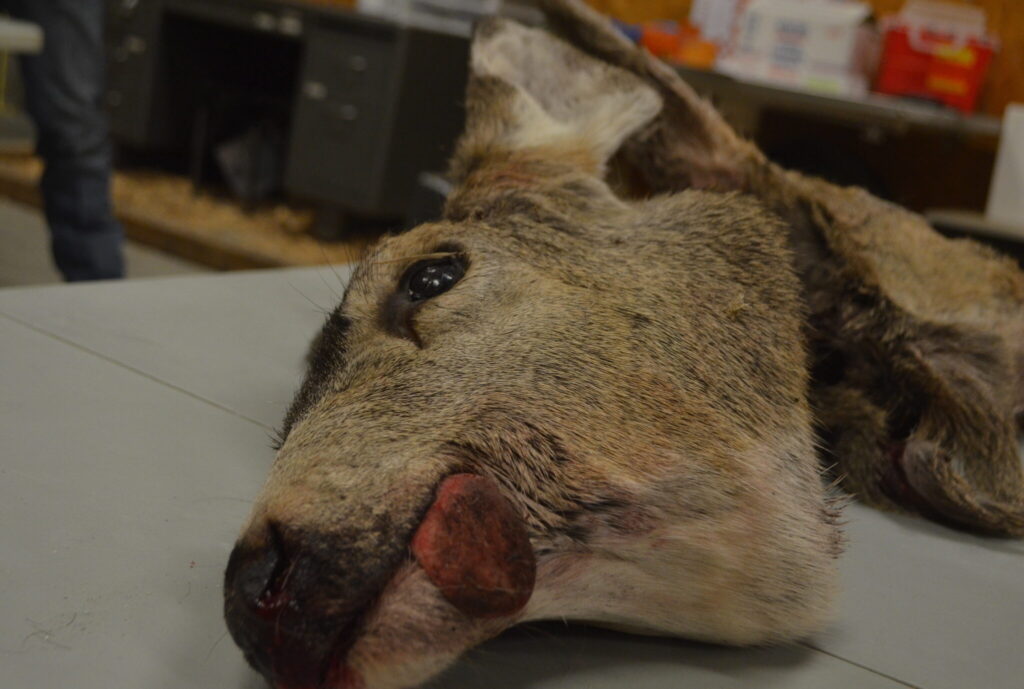
FWP advises against consuming meat from CWD-positive animals despite no recorded human transmission. Hunters can test animals by submitting lymph nodes or bringing the head to regional FWP offices, with online results available. Approximately 30% of Montana’s hunting districts have CWD-positive animals, and the state has been tracking the disease for nearly 30 years.
Extended hunting season
Due to rising CWD cases, FWP has extended the white-tailed deer hunting season in parts of southwestern Montana until February 15, 2026. This includes Hunting District 309 and parts of districts 301, 304, 311, and 312, primarily along the Gallatin River corridor. The extension aims to reduce white-tailed deer population density. Hunters are reminded to check CWD hunt boundaries and adhere to weapon restrictions in District 309.
Region 3 wildlife manager Warren Hansen emphasizes the importance of reducing deer numbers to slow CWD spread, protect mule deer and elk, and maintain a healthier deer herd. For more information on CWD management, visit the FWP official site.
—
Read More Montana News