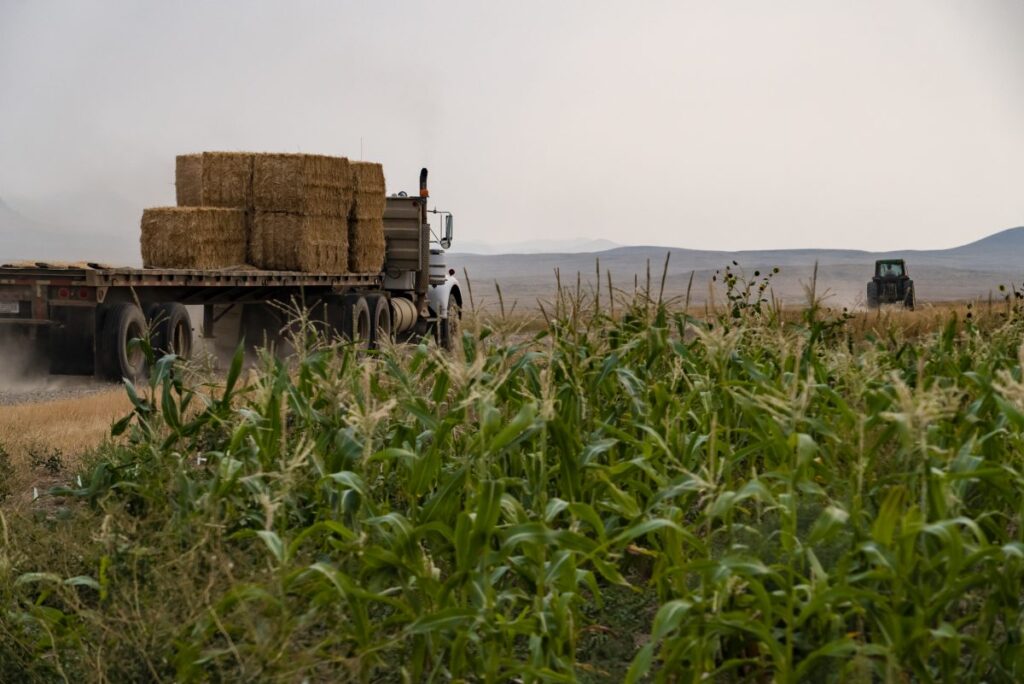
Montana’s farming community offered varied responses after President Donald Trump announced a $12 billion aid package for U.S. farmers impacted by tariffs and market instability. This farm assistance initiative aims to mitigate the effects of reduced crop prices and uncertain foreign markets, though details on fund allocation remain limited. The administration describes the aid as crucial relief against “market disruptions, elevated input costs, persistent inflation, and losses from unfair trade practices.” However, several agricultural groups argue these challenges are exacerbated by the administration’s own trade policies.
Nicole Rolf, the Montana Farm Bureau Federation’s senior director of governmental affairs, voiced optimism regarding the announcement. “We’ve been asking for help for farmers to get through to next year. Twelve billion dollars will help them get through,” Rolf stated. She expressed satisfaction that the program covers all major Montana crops, including wheat, barley, and lentils.
Conversely, Walter Schweitzer, president of the Montana Farmers Union, expressed skepticism. He argues the issues facing farmers, particularly related to tariffs, are not adequately addressed by the proposed aid. Schweitzer remarked, “This ‘bridge’ gets us to the middle of the river. We not only need to build a bridge across the river, but we need to build a road beyond.” He emphasized the need for substantial investment to regain lost markets once trade tensions subside.
The Center for Strategic and International Studies reports a stark $6.8 billion drop in U.S. agricultural exports to China since January, a 73% decline, with soybeans heavily affected. Despite this, Montana’s export reduction to China was less severe at 19%, contrasting sharply with North Dakota’s 85% plunge in shipments to the third-largest U.S. agricultural market.
—
Read More Montana News