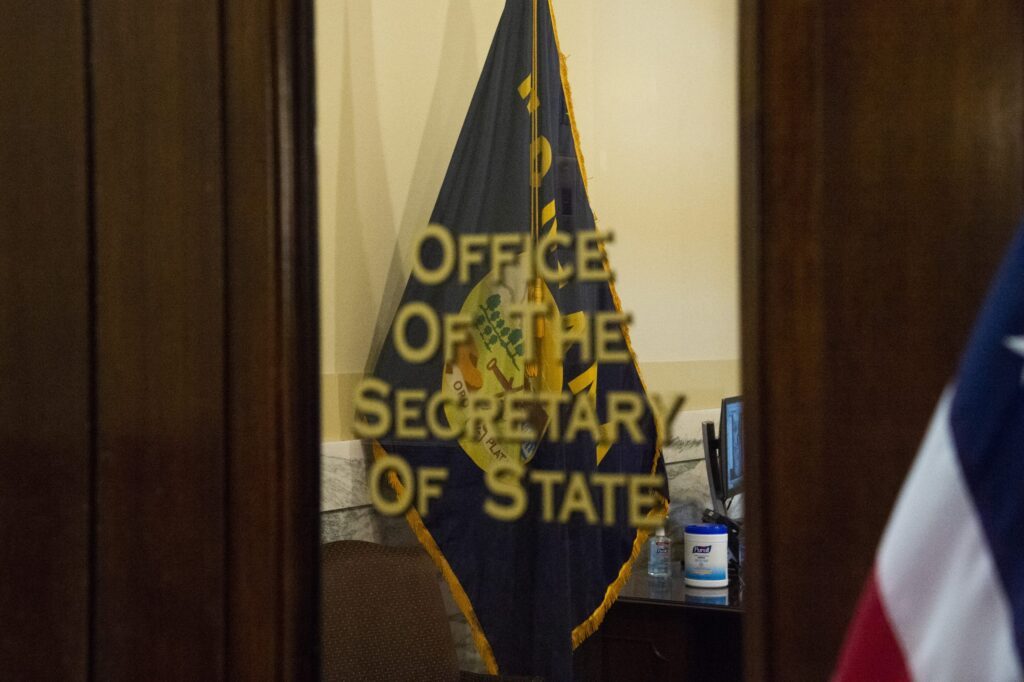
Montana Secretary of State Christi Jacobsen has provided confidential voter data to the U.S. Department of Justice. The Department requested states to remove voters deemed ineligible by federal officials. This move came to light through a Montana Free Press records request, revealing that the DOJ has sought unredacted voter files from most states since spring 2025, and has sued multiple states for non-compliance.
In a July 14, 2025, email, Maureen Riordan, then acting chief of the Voting Section of the Civil Rights Division, stated that Montana’s voting records were needed “to facilitate a review for noncitizens and dead voters via [the Department of Homeland Security].”
The federal push for state voter data intensified in December when the DOJ requested secretaries of state to sign a memorandum of understanding. This agreement would obligate states to enact federally suggested changes to voter rolls and resubmit them for DOJ confirmation. The memorandum also permits sharing voter information with private contractors.
Records reveal that Jacobsen supplied the requested voter information last fall but refused to sign the memorandum, which would allow DOJ to dictate changes to Montana’s voter rolls. The Trump administration has taken legal action against 24 states unwilling to share voter information, which includes sensitive data like partial Social Security numbers, driver’s license numbers, and dates of birth.
Most states provided redacted versions of their voter lists. However, on August 14, 2025, the DOJ legally argued for unredacted files, which Jacobsen subsequently provided. Few secretaries of state have signed the memorandum of understanding, according to the Brennan Center for Justice.
In a December 29, 2025, letter, Jacobsen declined the federal agreement, asserting that Montana would evaluate federal input but wouldn’t guarantee action solely on federal authority. Jacobsen wrote, “Should you find any individuals who are suspected of being ineligible, please send any and all information used to identify the individual.”
Unbeknownst to Montana legislators, Jacobsen’s voter data sharing sparked concern. State Administration and Veterans’ Affairs Interim Committee Chair Sen. Theresa Manzella voiced support for federal cooperation but was not briefed on the data provision. Rep. Marc Lee, unaware of Jacobsen’s dealings, stated, “I don’t recall any information being provided whatsoever concerning that.”
The Civil Rights Act of 1965 allows DOJ intervention when voter rights are denied, but states argue the federal request lacks legal support. The Brennan Center emphasizes the security of sensitive voter information, describing DOJ’s security measures as insufficient. Organized groups, leveraging AI, have generated erroneous ineligible voter lists, raising security concerns.
—
Read More Montana News