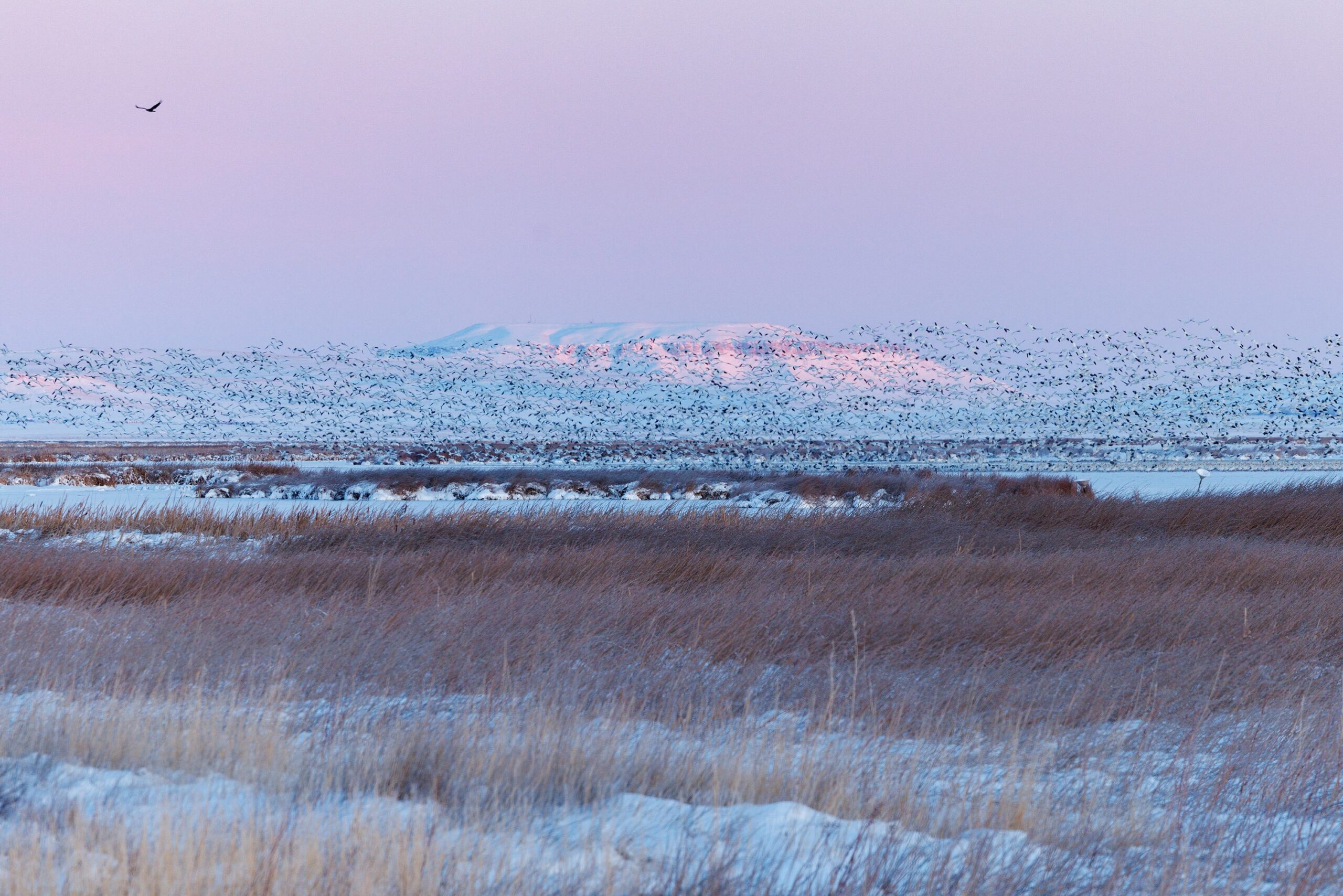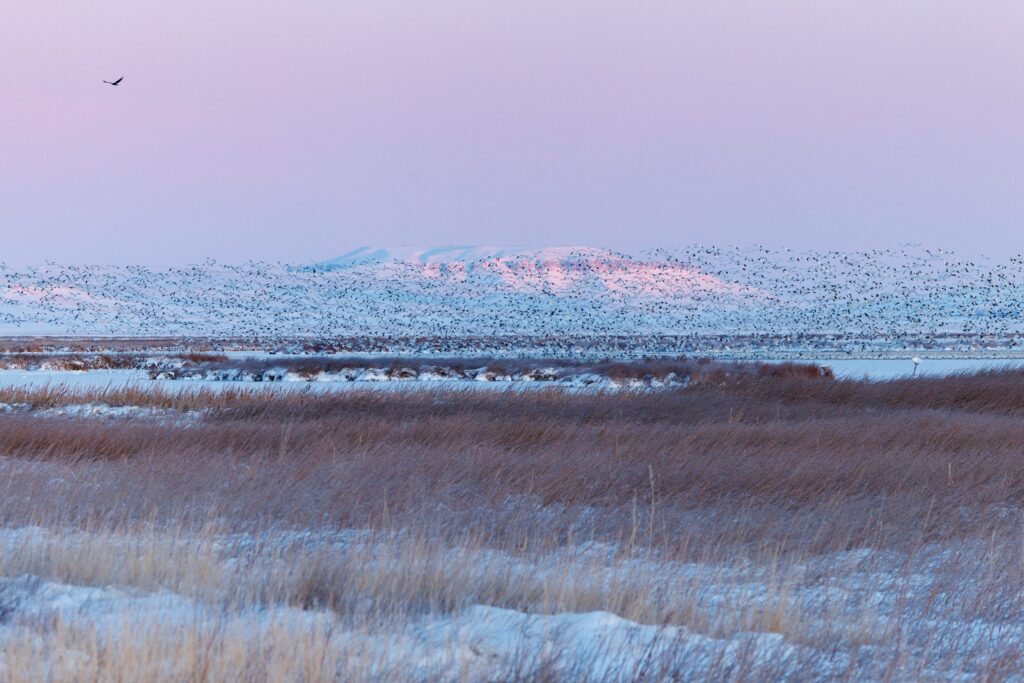
As the sun rises over Freezout Lake near Choteau, Montana, the sound of thousands of flapping wings fills the air. This is the start of an awe-inspiring migration where light geese, swans, and waterfowl gather in the hundreds of thousands. Taking place over a month-long journey spanning up to 3,000 miles, this natural wonder draws visitors nationwide. The peak, anticipated this weekend, offers both spectacle and education.
Beyond the breathtaking view, the event provides a unique opportunity for environmental education. Brent Lonner, a biologist with Montana Fish, Wildlife and Parks, emphasized the significance, stating, “Birding is a huge thing. There is tremendous interest in all things birding.” Sharing insights on bird migration patterns and species information can foster awareness and understanding among visitors.
Situated strategically along both the Central and Pacific Flyways, Freezout Lake serves as a crucial stopover for migratory birds traveling from Central America to the Arctic. This location offers ideal habitats with its lakes and ponds adjacent to agricultural fields. The site provides food, water, and resting places for these birds, while giving visitors a rare chance to observe such a vast migratory pattern up close.
Maggie Carr, a Choteau-based outfitter, highlights the universal appeal of birdwatching. The annual Wild Wings Festival she organizes celebrates this natural marvel. Carr mentioned, “You also don’t have to know that much about birds to be really engaged in the migration, because it’s pretty amazing to watch.”
This year, changing migration patterns may be observed due to recent climatic changes. Warmer, drier conditions impact Montana’s water bodies, including Freezout. Lonner noted that the lake system has reached historically low water levels due to reduced snowpack and higher temperatures. These shifts lead to redistributions of bird populations seeking suitable habitats, particularly affecting swans and ducks that need deeper waters.
Bird enthusiasts visiting Freezout Lake are encouraged to maintain mindful spectating, ensuring minimal disruption to the birds. Lonner advised avoiding close approaches that could trigger take-offs and being mindful of the birds’ typical feeding times. Observing this migration provides a chance for citizen science initiatives, aiding researchers in tracking avian movements and building long-term datasets.
Rob Domenech, founder of the Raptor View Research Institute, underscores the migration’s power to connect people to nature. He said, “The spectacle of the geese migration at Freezout Lake, right on the Rocky Mountain Front, is a great opportunity to watch wildlife.” Such experiences cultivate a deep appreciation for the natural world, linking individuals to larger environmental stories spanning continents.
—
Read More Montana News