President Donald Trump’s recent attempt to control mail-in ballots and voting in the upcoming midterm elections has sparked debate over its constitutionality. The executive order directs the Department of Homeland Security to create a “citizen list” for verifying voters and imposes stricter mail voting rules. Several states, including Arizona and California, have declared the order unconstitutional and plan to sue. This directive follows Trump’s unsupported claims about mail-in voting fraud.
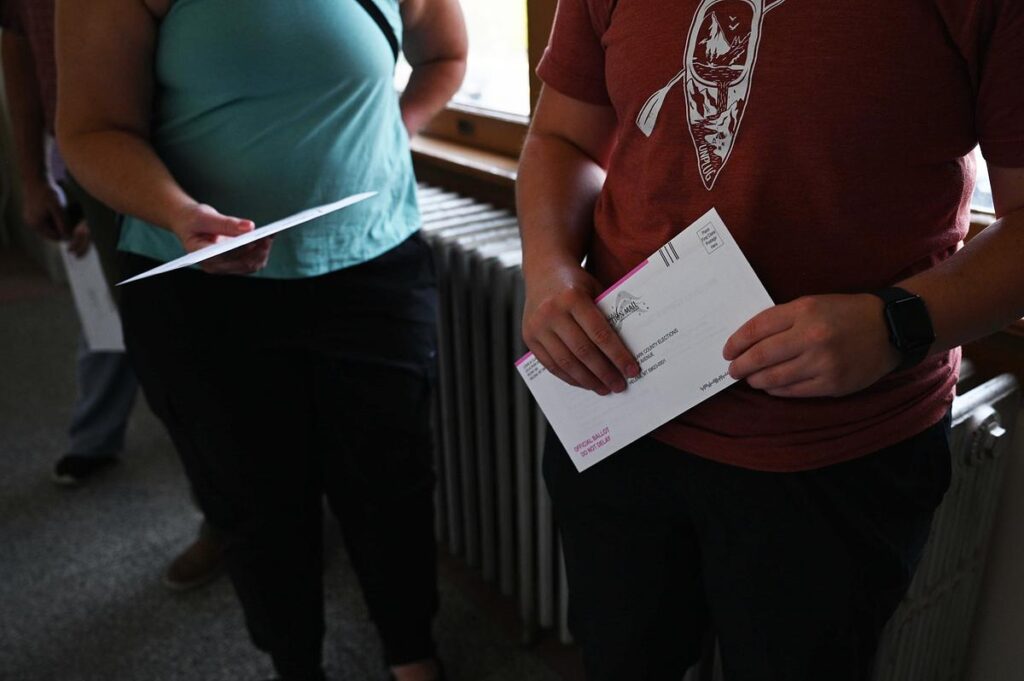
According to the executive order, federal election ballots should only be issued to individuals verified on the citizen list. Additionally, any ballot not featuring a “unique ballot envelope identifier” would be restricted from being handled by the U.S. Postal Service. Election experts argue that this order conflicts with the Constitution, which assigns election regulation powers to states and Congress. Legal challenges are expected from states that primarily vote by mail.
Montana’s congressional response to the order varies. U.S. Rep. Ryan Zinke opposes the directive, citing Montana’s history of secure mail-in voting. Conversely, Montana Gov. Greg Gianforte supports the president’s commitment to tightening voting regulations, emphasizing Montana’s election integrity. The order aligns with Trump’s narratives on noncitizen voting, although recent data shows minimal instances in Montana.
The order mandates the DHS to compile a national voter registry, yet experts question its legal basis. Jonathan Diaz from the Campaign Legal Center criticized the order’s lack of clarity on list coordination among agencies. Molly Danahy from Upper Seven Law highlighted the President’s limited authority under the Constitution to dictate electoral processes.
Alongside the executive order, congressional Republicans push the SAVE America Act, which demands proof of citizenship for voter registration. While the House has passed it, Senate approval remains uncertain. This legislative push coincides with Trump’s efforts to secure Republican congressional seats through redistricting strategies.
—
Read More Montana News