Article Summary –
The Ah Louis Store in San Luis Obispo, California, transforms into a holiday-themed attraction every winter, but this year faced challenges due to economic factors such as tariffs and inflation, leading to more cautious consumer spending and adjustments in the store’s product offerings. Tariffs implemented by the Trump administration have particularly impacted industries like toys, electronics, jewelry, and holiday decor, causing price hikes and supply chain issues, with businesses responding by either increasing prices or focusing on more profitable items. For consumers seeking to avoid tariff-related price increases, suggestions include shopping at secondhand stores and discount retailers, as well as opting for locally produced goods like books, food, and beverages.
NEW YORK (AP) — The Ah Louis Store in San Luis Obispo, California, transforms into a festive destination every holiday season.
Early November sees the historic building, home to the gift shop, adorned with green garlands, nutcrackers, baubles, and bows. Inside, visitors find over 500 ornament types and diverse holiday gift baskets.
“We aim to create a magical experience,” co-owner Emily Butler said. “Spreading holiday joy is our goal, regardless of whether you come inside.”
Butler and her twin sister noticed a need to work harder to convert browsers into buyers. President Donald Trump’s high tariffs on imports made overseas decorations pricier or unavailable. They shifted focus to more profitable items like nutcrackers and gift baskets. Customers are choosing $100 gift baskets over $150 alternatives or opting for single ornaments, Butler noted.
“We’re seeing more cautious spending this year,” she stated.
Tariffs, inflation, and weak hiring have impacted consumer confidence. Most adults noticed increased prices for groceries, electricity, and gifts recently, per a December poll by The Associated Press-NORC Center for Public Affairs Research.
Gallup’s economic conditions index fell to a 17-month low in November. Consumers’ enthusiasm for holiday spending decreased, with gift budgets dropping by $229 from October to November. This dip coincided with the government shutdown, affecting spending plans.
Despite concerns, the worst-case tariff impact economists predicted has not fully developed. Some products have been more affected. Here’s a look at changes in popular gifting categories.
Games and Toys
Games and toys, largely made in China, faced tariff-related price hikes, as reported by The Toy Association. The Trump administration’s tariff rollercoaster ranged from an additional 10% to 55% at its peak, settling at 47%.
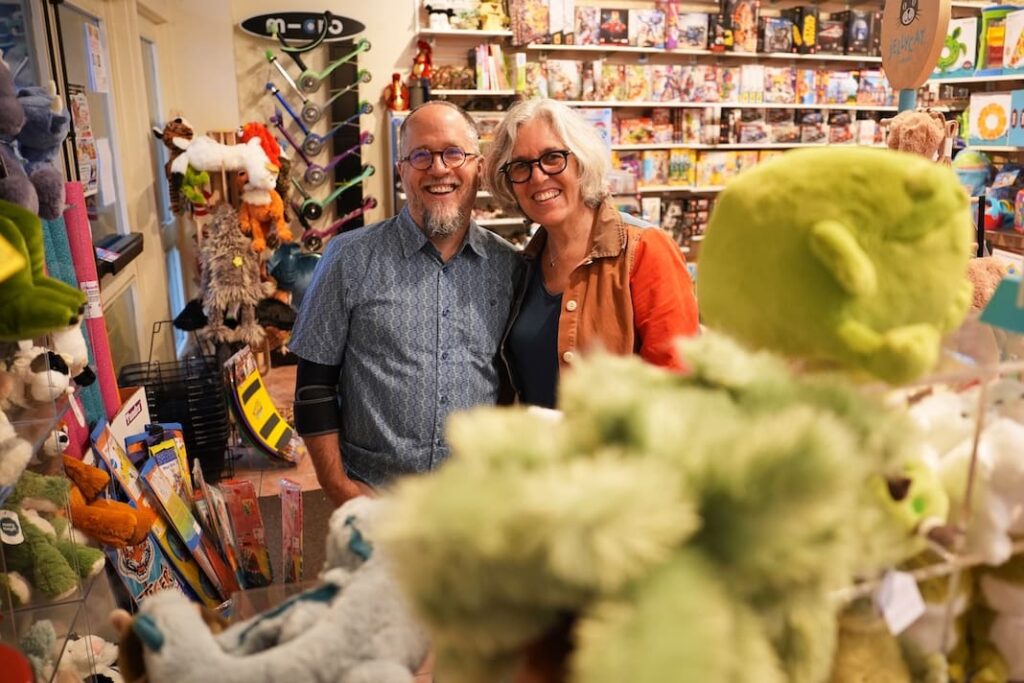
Dean Smith, co-owner of toy stores JaZams in Princeton and Lahaska, noted incremental price increases from Chinese manufacturers. Wholesale prices for 80% of his inventory rose 5% to 20%. A doll previously priced at $20 to $25 now costs $30 to $35.
“For those with limited incomes, this holiday will be tough,” Smith said.
Electronics
Most consumer electronics are produced in China and Asia. In 2023, China accounted for 78% of U.S. smartphone and 79% of laptop imports, according to the Consumer Technology Association.
Best Buy increased prices due to tariffs, but CEO Corie Barry said offering products at varied price levels helped attract lower-income shoppers.
“The consumer is not a monolith,” Barry told reporters.
Popular game consoles saw price increases. Sony raised the PlayStation 5 price by $50 to $550 in August, following price hikes from Microsoft and Nintendo.
Jewelry
Jewelry prices have risen, mainly due to gold prices, not tariffs, said David Bonaparte, CEO of Jewelers of America.
Tariff rates affected jewelry differently. Swiss watches faced a 39% tariff until a new deal reduced it to 15%. India, refining many U.S.-sold diamonds, shipped gemstones before a 50% tariff took effect on Aug. 27. Higher diamond prices may start in 2026, Bonaparte said.
“It depends on what happens after Jan. 1,” he stated. “Tariffs could increase prices.”
Holiday Decor
Holiday decorations mostly come from overseas, especially China.
Jeremy Rice, co-owner of the home-décor shop House in Lexington, Kentucky, noted tariffs slowed fall stock production. He didn’t order some larger items due to high retail costs.
Rice increased prices on available products. Popular red berry stems rose from $8.95 to $10.95 due to import costs.
“Every berry stem sale reminded me of the price it should have been,” Rice said.
Shopping Strategically
To avoid tariff-related price increases, John Harmon of Coresight Research suggests secondhand stores and discount retailers like T.J. Maxx and Marshall’s. These chains source inventory from pre-tariff stock.
Joe Adamski of ProcureAbility recommends domestic gifts like books, food, and beverages.
—
Read More Pennsylvania News