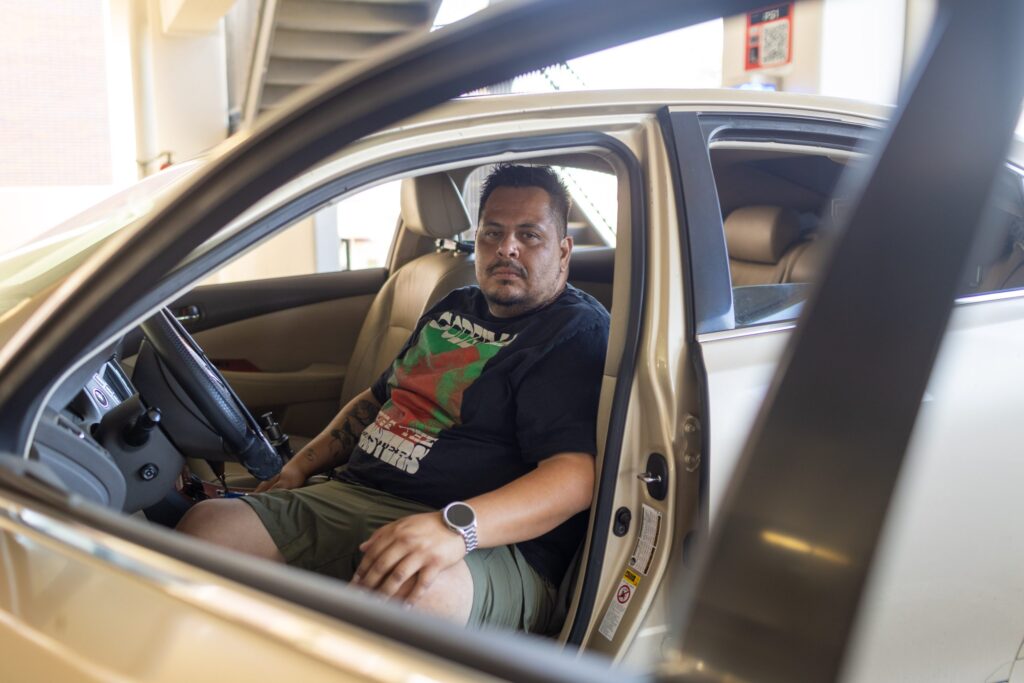
LONG BEACH, Calif. — Edgar Rosales Jr., a promising Long Beach City College student, once called a parking lot his home. This was not the future he envisioned after dropping out of high school decades ago. The Safe Parking Program at LBCC became his refuge, offering him a community he affectionately calls his “roommates” or “neighbors.” This program is a lifeline for students experiencing homelessness, providing a safe place to sleep in their vehicles.
Each evening between 8 and 10:30 p.m., students like Rosales arrive at the parking lot where they can use nearby showers starting at 6 a.m. For Rosales, receiving a key fob to a bathroom was transformative. It symbolized stability for someone who had spent nights on the streets, constantly alert to every sound. His car, once a prison, became a sanctuary where he could finally rest without fear.
Rosales, who had previously dropped a class due to his living situation, found new hope through the Safe Parking Program. With access to outlets and WiFi, he turned his car into a study area. Campus security provided safety rather than threats, allowing him to sleep peacefully. “I could just sleep with my eyes closed the whole night,” he said, highlighting the program’s impact on his life.
Housing insecurity affects nearly 48% of college students, with higher rates among Black students, parents, and former foster youth, according to the Hope Center’s Student Basic Needs Survey Report. The issue is even more pronounced at community colleges like LBCC. Programs like the Safe Parking initiative are crucial in providing temporary solutions, although they are not a replacement for permanent housing.
LBCC’s program is part of a broader trend where colleges are looking internally to address student homelessness. Mike Muñoz, LBCC’s president, aims for students to feel safe and supported on campus. He believes that addressing basic needs like housing can significantly improve students’ academic performance. Research links housing insecurity to lower grades and well-being, emphasizing the need for programs like these.
Despite initial concerns about liability and budget constraints, LBCC launched the Safe Parking Program with pandemic relief funds. The initiative has provided shelter and stability for students like Rosales, who can now focus on their education without the constant fear of being moved along or fined.
Other colleges are adopting similar strategies, offering emergency housing and resources. Partnerships with local organizations and innovative solutions like sleeping pods are helping students find temporary relief. However, there is a consensus that more comprehensive solutions are needed to address the root causes of student homelessness.
For Rosales, the Safe Parking Program has been a lifeline. It provided him with community and support during a challenging time. Now, offered housing through a rapid rehousing program, Rosales is optimistic about his future. “I’m moving ahead,” he said, determined to graduate and achieve his dreams.
—
Read More Kitchen Table News